
Until 1942 the Imperial Japanese Navy, like other navies, flew reconnaissance missions with aircraft designed primarily for defensive or offensive combat. In early 1942 a 17 Shi specification was issued calling for a purpose designed carrier reconnaissance aircraft, with the greatest possible speed and range.
Nakajinia’s design team under Fukuda and Yamamoto fitted a 1358kW Nakajima Homare 11 radial engine engine into the slimmest possible fuselage, and 1360 litres (299.2 Imp gal) of fuel into the small wing. The latter had a laminar flow section, and slats and tabbed Fowler flaps were used to meet the severe limit on landing speed of 70 knots (130 km/h, 81 mph).
Pilot, navigator and radio operator were seated in tandem, the navigator having cameras in the belly and ventral and side observation windows and the radio operator manning a 7.92 mm (0.31 in) Type 1 machine¬gun. The prototype flew on May 15, 1943, and altitude performance proved disappointing.
Eighteen more prototype/pre-series aircraft followed, some with the more powerful 1990 hp Nakajima NK 9H Homare 21 two row 18 cylinder engine, before the type was ordered into production in April 1944 as the Navy Carrier Reconnaissance Plane Saiun (Painted Cloud / Nakajima C6N1).
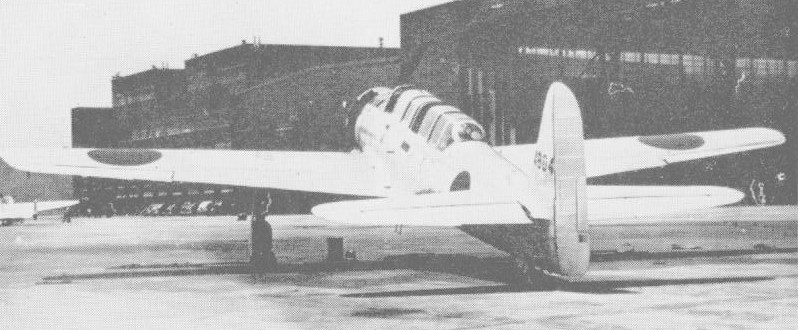
Production aircraft began to be delivered to the JNAF in august 1944 although some of the prototypes had been pressed into service some two months earlier.
After its first action in the Battle of the Marianas it was code named ‘Myrt’ by the Allies. Fitted with a drop tank it had a range of over 5300 km (3300 miles), and despite the shortfall in performance was almost impossible to catch even with a Corsair or Hellcat.
The proposed C6NI B torpedo bomber never flew, but a few aircraft were converted into C6N1 S night fighters with only the pilot and navigator and with two 20 mm (0.79 in) Type 99 cannon mounted obliquely at 30 degrees in a rebuilt rear cockpit. They had adequate speed and climb to intercept the B 29 but at night were severely handicapped by lack of radar. No radar equipped version was plan¬ned, but at the war’s end a C6N2 had flown with turbocharged NK9 L engine giving 1780 hp at 9000 m (29 530 ft) driving a four blade propeller, and this was envisaged as the power plant of an improved night fighter.
A total of 463 had been built’ when production ended in August 1945, the total including the small number of C6N1-S two-seat night-fighter conversions from C6N1 aircraft, and one C6N2 prototype with a 1476kW Homare turbocharged engine.

A Nakajima C6N1-S Saiun (MYRT) was the last aircraft shot down in World War 2. It was shot down by Lieutenant Commander Thomas Reidy of the US Navy, flying a Corsair fighter, on August 15, 1945, a day after Emperor Hirohito’s surrender announcement. The war ended five minutes later.
C6N1
Engine: 1 x Nakajima NK9H Homare-21, 1484kW / 1990 hp
Max take-off weight: 5260 kg / 11596 lb
Empty weight: 2968 kg / 6543 lb
Wingspan: 12.5 m / 41 ft 0 in
Length: 11 m / 36 ft 1 in
Height: 3.95 m / 13 ft 0 in
Wing area: 25.5 sq.m / 274.48 sq ft
Empty weight: 6411 lb
Loaded weight: 9920 lb
Max. speed: 610 km/h / 379 mph at 20,000 ft
Ceiling: 10740 m / 35250 ft
Range w/max.fuel: 5310 km / 3300 miles
Armament: 1 x 7.92mm machine-guns
Crew: 3

 All Aero