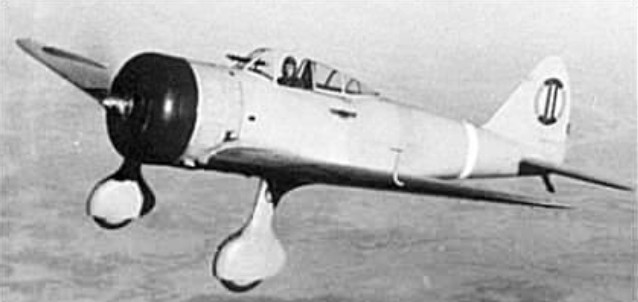
Nakajima’s chief designer Yasumi Koyama had evolved an advanced single seat fighter from the company’s unsuccessful PA or Ki-11 low-wing monoplane prototype during 1934. While this private -venture low wing cantilever monoplane was still under development, Japanese army air headquarters issued a requirement to three major aircraft manufacturers, including Nakajima, for a similar aircraft in mid-1935. Nakajima responded with a single-seat monoplane fighter derived from the company’s Type P.E., which it had started to develop as a private venture.
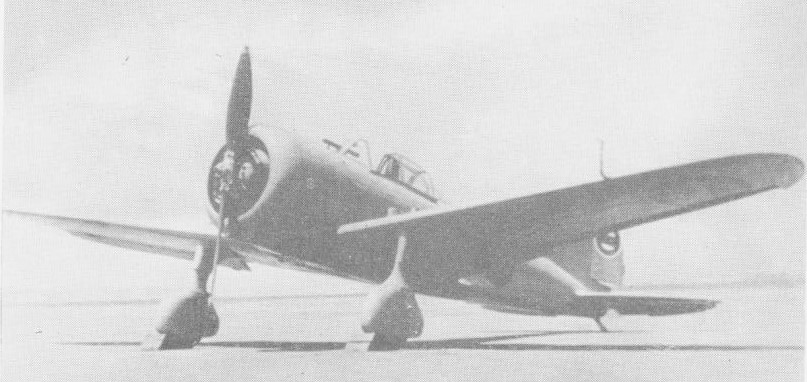
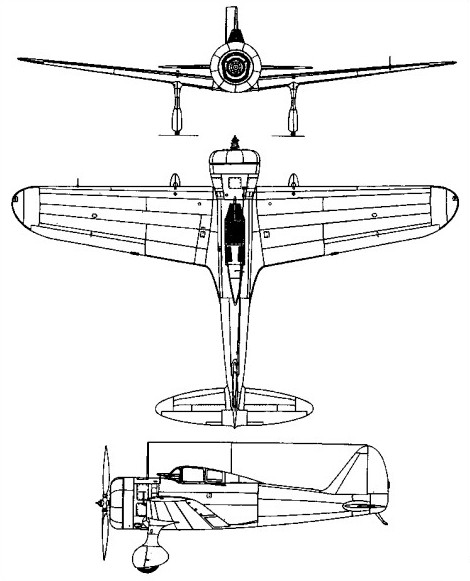
The Ki 11 first flew in July 1936; the first prototype Ki 27, built to the official requirement, flew three months later. They differed only in detail, both being powered by a 650hp Nakajima Ha la radial engine and having a fixed, spatted cantilever single strut undercarriage. The Ki 27 had a redesigned and fully enclosed pilot’s cockpit canopy, and there were changes in the engine cowling, wheel spats and fin and rudder. A second Ki 27 prototype flew in December 1936, followed by ten pre-production aircraft. Different wing forms were tested and the Ki 27s were flown against rival prototypes Kawasaki’s Ki 28 and Mitsubishi’s Ki 33 developed from the navy A5M carrier fighter. Although achieving a maximum speed of’467 km/h (290 mph) at 4000 m (13 120 ft), it was still 15 km/h (10 mph) slower than the Ki 28 and took 28 seconds longer than its rival to reach 5000 m (16400 ft). The Ki 27 was nevertheless preferred to the Kawasaki fighter because of its outstanding manoeuvrability, due in part to the remarkable lightness of the structure and to the special aerofoil section developed by Koyama’s team.
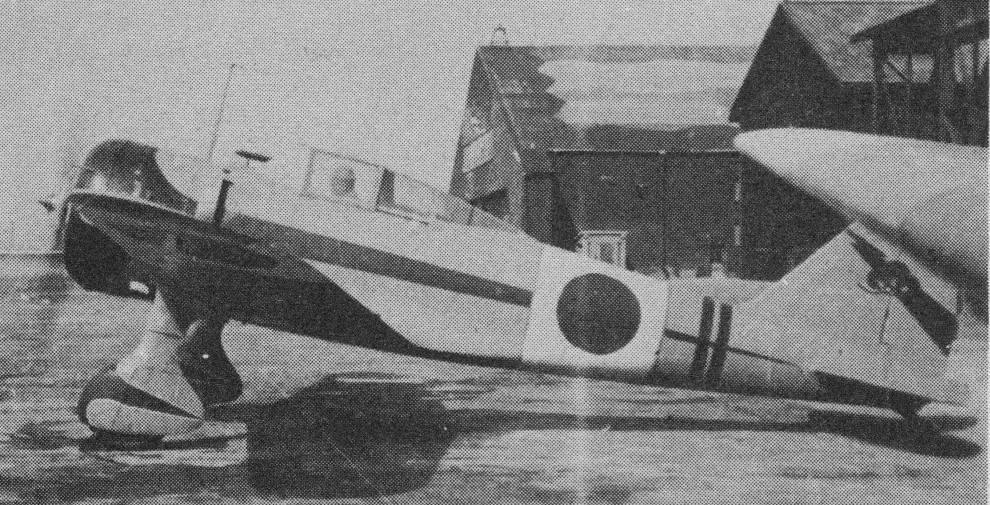
Pre-production Ki 27s had a wing with span increased to 11.31 m (37 ft 1 in) which became standard on Ki 27a production aircraft. These appeared from December 1937 onwards, designated as the Army Type 97 Fighter. The standard engine was the Ha 1b developing 780 hp at 2900 m (9510 ft).
The original allied name assigned to the Ki.27 met in China by the CBI, “Abdul” was also called “Nate” by Col. MacCoy. The name Abdul was still caried in Naval recognition manual as late as February 1943. It was finally dropped in favour of the officially adopted “Nate”.
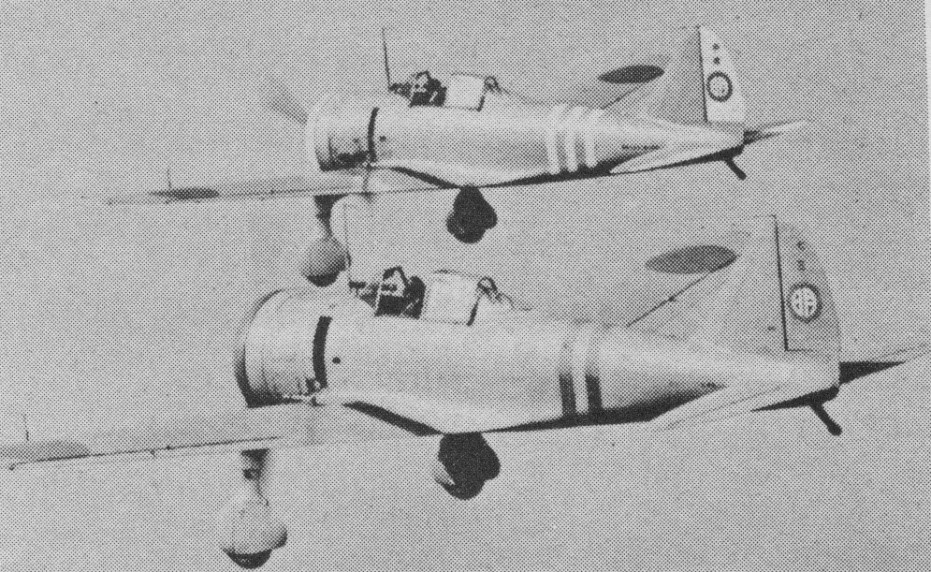
From spring 1938 Ki 27a fighters flew in northern China, and before the end of 1938 six Sentais (groups) newly established by the army were fully equipped with the Ki 27a. The Ki 27a model was, however, soon phased out of production in favour of Ki 27b, which had a wholly glazed pilot’s canopy and provision for two 130 litre (29 Imp gal) slipper type underwing drop tanks or four 25 kg (55 1b) bombs.
Ki 27s were again in action in May 1939 when fighting broke out between Japanese and Soviet troops at Nomonhan along the border with Outer Mongolia. About 200 were ultimately engaged in full scale air battles with Soviet Polikarpov I 15bis biplanes and I 16 monoplanes. The Japanese acquitted themselves well in a most bloody conflict, and claimed many victories. The highest score of 58 enemy aircraft destroyed was claimed by Sergeant Shinobara of the 11th Sentai.
The poor state of the Allied air forces in the Far East in 1941 42 allowed Nakajima’s nimble fighter, despite its poor armament of twin synchronized 7.7 mm (0.303 in) Type 89 machine guns, to control the air over Burma, the Philippines and the Dutch East Indies. British, American, Australian and Dutch pilots all acquired a healthy respect for ‘Nate’, as the type was codenamed by the Allies, and they were careful to avoid getting entangled with it in an old style close dogfight. The Ki 27 achieved the distinction of shooting down the first Allied aircraft of the Pacific war, when an aircraft of the 1st Sentai destroyed a Consolidated Catalina flying boat of No 205 Squadron RAF while covering Japanese landings on the Malayan coast.
With the advent of newer types, Ki 27s were relegated to advanced training or home defence. In the latter role they were at a stroke rendered impotent when the Boeing B 29 Superfortress came on the scene, and as the war drew to a close, Ki 27s were adapted as suicide attackers, a number of their pilots sacrificing themselves while endeavouring to crash into enemy ships or land positions carrying a 500 kg (1100 lb) bombload.
Mansyu Kikoki Seizo K K (Manchurian Aeroplane Manufacturing Company), based in the Japanese puppet state, built 1379 Ki-27s at its Harbin factory as against 2020 built by Nakajima up to December 1942, when all production by the parent firm ceased. Production included two Ki 27 Kai prototypes, even lighter than the standard machine, which reached a maximum of 475 km/h (295 mph) during tests in summer 1940.
In 1942 Mansyu redesigned the Ki 27 as an advanced trainer which went into production the same year as the Army Type 2 Advanced trainer.
Ki-27a
Engine: 1 x Nakajima Ha-1b, 529kW
Max take-off weight: 1790 kg / 3946 lb
Empty weight: 1110 kg / 2447 lb
Wingspan: 11.31 m / 37 ft 1 in
Length: 7.53 m / 24 ft 8 in
Height: 3.25 m / 10 ft 8 in
Wing area: 18.55 sq.m / 199.67 sq ft
Max. speed: 470 km/h / 292 mph
Ceiling: 12250 m / 40200 ft
Range w/max.fuel: 625 km / 388 miles
Armament: 2 x 7.7mm machine-guns
Crew: 1
Ki-27b
Engine: Hitachi Ha-1b, 750 hp
Wing span: 11.31 m / 37 ft 1 in
Wing area: 18.56 m2
Length: 7.53 m / 24 ft 8 in
Height: 3.28 m / 9 ft 2 in
Empty weight: 1110 kg / 2447 lb
Loaded weight: 1547 kg / 3946 lb
Max speed: 470 km/h at 3500 m
Max speed: 286 mph at 16,400 ft
Time to 5000m: 5m 22s
Service ceiling: 12,250 m
Service Range: 627 km
Max range: 1100 km
Armament: 2 x 7,7-mm Type 89 machine guns
Crew: 1
Bombload: 220 lb
 All Aero