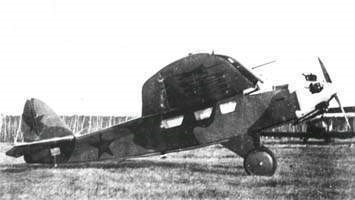
In parallel with the development of the RM-1 interceptor, Moscaliev ‘s OKB was engaged in the design of a new version of the SAM-5-2bis transport, which was designed as a staff liaison and light transport aircraft.
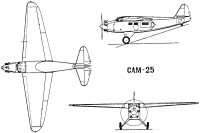
The Moscaliev SAM-25 (Russian: Москалёв САМ-25) six-seat aircraft was modified with a new, more mechanized wing with TsAGI R-2s profile, featuring leading and trailing edge flaps. The leading edge flaps were automatically engaged when the aircraft reached certain angles of attack. The ailerons could be used together with the flaps during takeoff and landing, which gave it excellent characteristics in these operations. Despite the low power of the 140-hp M-11E engine, the aircraft guaranteed an excellent speed of 230 km/h and a load capacity of 505 kg. The rest of its characteristics fully matched those of the SAM-5-2bis and SAM-14 aircraft.
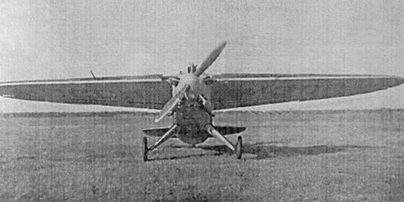
In the spring of 1943 the prototype was ready for state tests, which were carried out at the range of the Air Landing Troops.
At this time there was a difficult situation with the guerrilla groups from Belarus. The fascists had created non-regular groups in that region, formed in many cases by Soviet traitors who looted and plundered villages and towns, terrorizing and massacring the civilian population. The civilian settlers ran to the forests in search of support from the guerrillas. This resulted in the guerrilla camps being filled with civilians, mainly women, children and the elderly, which worsened the situation of these forces, as they lost their mobility and found it difficult to feed and maintain all those people. To assess the situation created from Moscow, the official Schervakov flew there, who, after analyzing the situation, informed Stalin that it was necessary to proceed without delay.
This was the cause of the urgent request to Moscaliev to proceed with the construction of 50 AM-14 gliders with great urgency.
Stalin ordered Schervakov to return to Moscow, but the task was beyond the reach of any of the VVS planes.
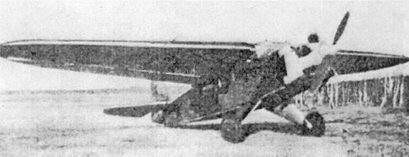
Only the SAM-25, which was being tested, had excellent takeoff characteristics, with a run of only about 40 meters, which suggested a chance of success. The SAM-25 also had excellent range. On this plane the pilot A. Dabajov managed to pick up Schervakov and transport him to Moscow.
The SAM-25 aircraft was evaluated positively and the Landing Air Forces (VDV) raised their need for an aircraft like this, with takeoff and landing characteristics close to that of the German Fieseler Fi-156 Storch. The VDV command requested an urgent delivery of a series of aircraft to be built at Factory No.499 in 1944, which at that time had the productive capacity for its production. The request was not approved and the head of the NKAP 11 directorate, IV Kulikov, who called Moscaliev to Moscow and forbade him to take the request from the military. This decision marked the fate of the new model.
Developments of the basic model as a night bomber, attack plane and ambulance did not go beyond the drawing board, mainly due to the end of the war.
SAM-25
Engine: 140 hp M-11E
Wingspan: 11.49 m
Wing area: 21.86 m²
Length: 8.02m
Height: 3.86m
Empty weight: 846 kg
Maximum weight: 1280 kg
Power load: 5.5 kg/hp
Fuel load: 95 kg
Oil load: 10 kg
Maximum speed SL: 228 km/h
Maximum speed at altitude: 170 km/h
Cruising speed: 168 km/h
Practical range: 1760 km
Service ceiling: 4850 m
Payload: 6-7 passengers
Crew: 1
 All Aero