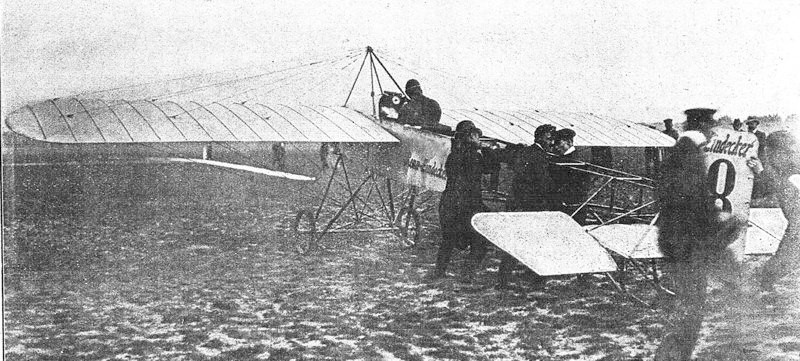
The Morane-Borel monoplane (sometimes referred to with the retronym Morane-Saulnier Type A or simply the Morane monoplane; company designation Bo.1) was an early French single-engine, single-seat aircraft.
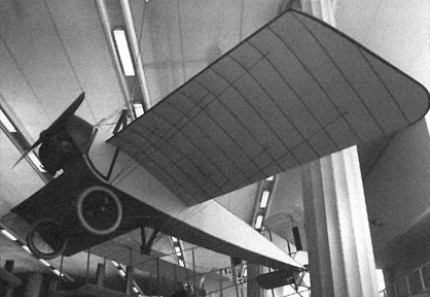
Designed by Raymond Saulnier, the Monoplane was a mid-wing tractor configuration monoplane powered by a 50 hp Gnome Omega seven-cylinder rotary engine driving a two-bladed Chauvière Intégrale propeller. The fuselage was a rectangular-section wire-braced box girder, with the forward part covered in plywood and the rear part fabric covered: the rear section was left uncovered in some examples. The two-spar wings had elliptical ends and were braced by a pyramidal cabane in front of the pilot and an inverted V-strut underneath the fuselage, behind the undercarriage. Lateral control was effected by wing warping and the empennage consisted of a fixed horizontal stabiliser with tip-mounted full-chord elevators at either end and an aerodynamically balanced rudder, with no fixed vertical surface. In later examples the horizontal surfaces were modified, and consisted of a fixed surface with balanced elevators hinged to the trailing edge. The undercarriage consisted of a pair of short skids, each carried on a pair of struts, and a pair of wheels on a cross-axle bound to the skids by bungee cords, and a tailskid.
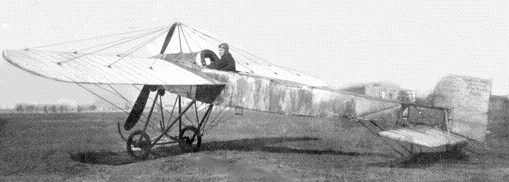
Manufactured by the Morane brothers and Gabriel Borel, the machine was flown by Eugen Wiencziers in the 11 June – 10 July 1911 Deutsche Rundflug, where he was the sixth biggest money winner, winning a total of 26,673 Mark out of the massive 442,606 Mark prize fund. The 1,854 km tour of northern Germany started and finished in Berlin-Johannisthal and visited twelve other towns. It was won by Benno König in an Albatros, and 8 of the 24 entrants completed the course.
The Monoplane achieved fame when Jules Védrines flew one to victory in the 1911 Paris-to-Madrid air race, the only competitor to finish the four-day course. Later in the year he came second in the Circuit of Britain, flying an aircraft powered by a 70 hp Gnome.
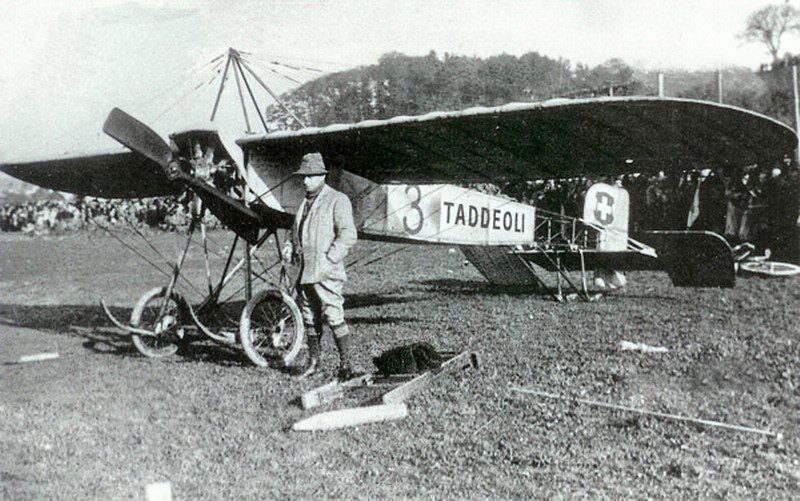
Another was flown by André Frey in the Paris-Rome race in 1911, finishing third. Emile Taddéoli was another owner of a Morane monoplane.
A two-seat version was later produced, with the fuselage lengthened to 7.0 m (23 ft) and wingspan increased to 10 m (34 ft).
A two-seat version, powered by an 80 hp Gnome was entered for the 1912 British Military Aeroplane Competition.
Operators included the Argentine Air Force, Brazilian Naval Aviation, Romanian Air Corps, and the Royal Naval Air Service.
A Morane-Borel, acquired from Earl Daugherty, ended up as a display relic, at the Tallmantz Movieland of the Air (aka Intl Museum of Flight at Orange Co CA Airport) in the 1960s. Modified to some unknown extent—perhaps just renamed—as the Mathis-Mestach Exhibition Monoplane c.1911.
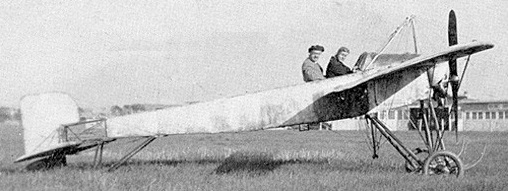
As of 2007 a single example remained extant, undergoing conservation work at the Canada Aviation Museum.
Powerplant: 1 × Gnome Omega, 37 kW (50 hp)
Wingspan: 9.50 m (31 ft 1 in)
Wing area: 14 m2 (151 sq ft)
Length: 6.50 m (21 ft 6 in)
Empty weight: 200 kg (441 lb)
Gross weight: 430 kg (948 lb)
Maximum speed: 111 km/h (69 mph, 60 kn)
Crew: one
 All Aero