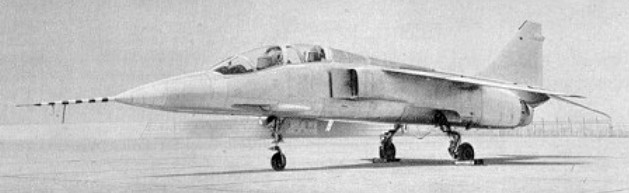
The T-2 was the first supersonic aircraft developed by the Japanese aircraft industry. It is a twin-engined two-seat jet trainer designed to meet the requirements of the JASDF. The first XT-2 prototype took to the air on 20 July 1971 and flew supersonically for the first time in level flight (Mach 1.03) during its 30th flight on 19 November 1971.
Armed with the 20mm Vulcan rotary cannon, production orders were placed for 92 T-2s: 28 T-2 advanced trainers, 62 T-2A combat trainers, and two as prototypes for the F-1 close-support fighter version. All of them retired from service by 1988.
Two T-2s were converted to a single-seat fighter variant and redesignated FS-T-2 Kai. The Mitsubishi FS-T2 Kai single seat close support fighter prototype (59 5107) was the first to fly on 3 June 1975, a conversion of the third production T 2 trainer. Designated F 1 in production form.
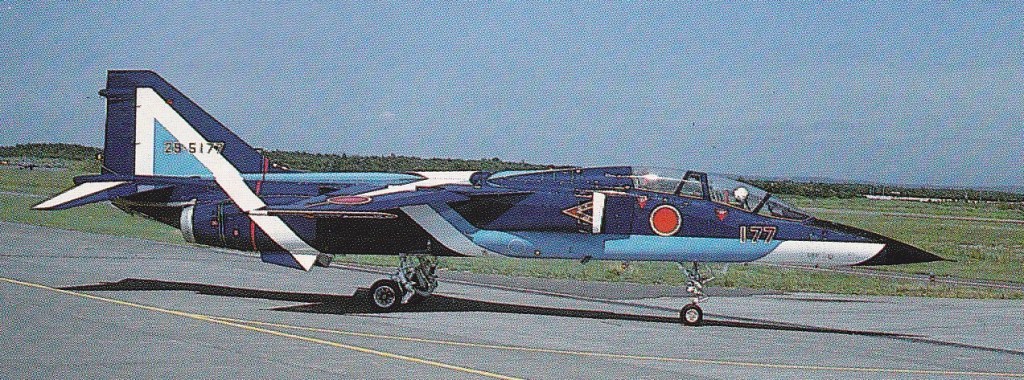
A T-2 supersonic twin-turbofan advanced trainer modified to serve as a Control Configured Vehicle (CCV) testbed and distinguished by new horizontal canard and vertical control surfaces flew in August 1983. An extensive test programme undertaken by the JASDF/TRDI had achieved a total of 138 flights by March 1986, exploring all flight regimes including relaxed-stability and direct side force control.
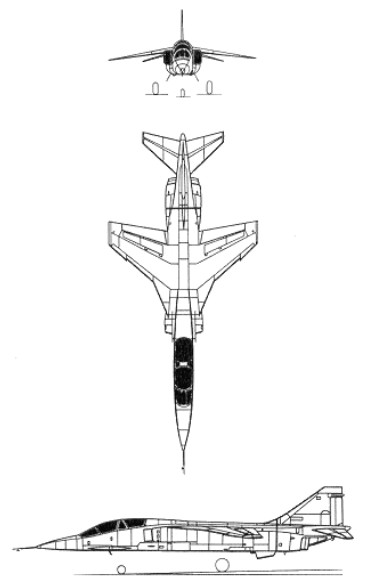
Engines: 2 x Rolls Royce Turbomecca Adour turbofan, 22.8kN / 70 lb
Wingspan: 7.9 m / 25 ft 11 in
Length: 17.9 m / 58 ft 9 in
Height: 4.5 m / 14 ft 9 in
Wing area: 21.2 sq.m / 228.19 sq ft
Max take-off weight: 9650 kg / 21275 lb
Empty weight: 6200 kg / 13669 lb
Max. speed: M1.6
Ceiling: 15250 m / 50050 ft
Range w/max.fuel: 2870 km / 1783 miles
Armament: 1 x 20mm cannon, 8-12 bombs, 2-4 missiles
Crew: 2
 All Aero