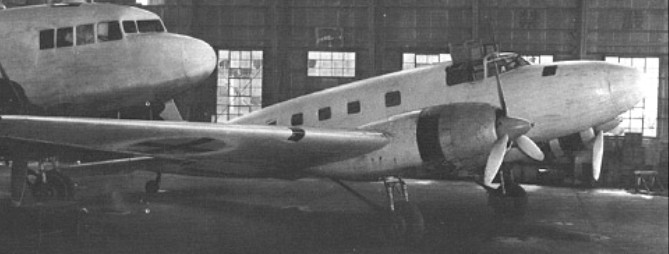
With interest shown by Japan Air Lines for a civil version of the Mitsubishi Ki-21 bomber, the company built a Mitsubishi Ki-57 prototype with the civil designation MC 20, which was flown in August 1940.
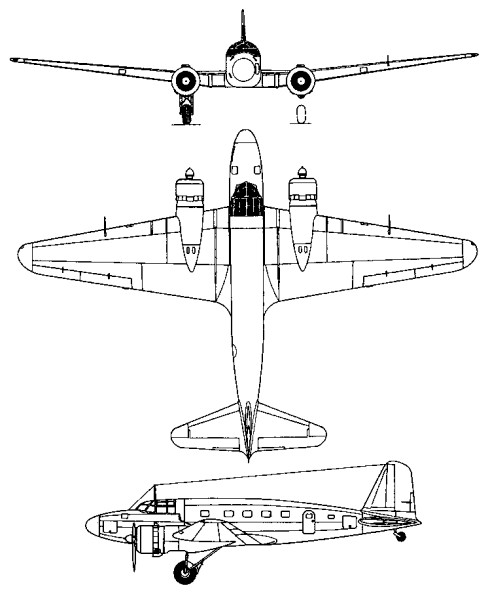
Essentially, the Ki 57 (Topsy to the Allies) was a low wing version of the Ki 21 I bomber, except for a redesigned fuselage which accommodated a crew of two and up to 11 passengers. The powerplant consisted of two 950 hp Nakajima Ha 5 Kai 14 cylinder radials. The main wheels retracted into the engines nacelles.
Following satisfactory testing the type was ordered into production in 1940 for civil and military use under the designations MC-20-1 and Army Type 100 Transport Model 1 respectively (Mitsubishi Ki-57-I), 100 series aircraft being built.
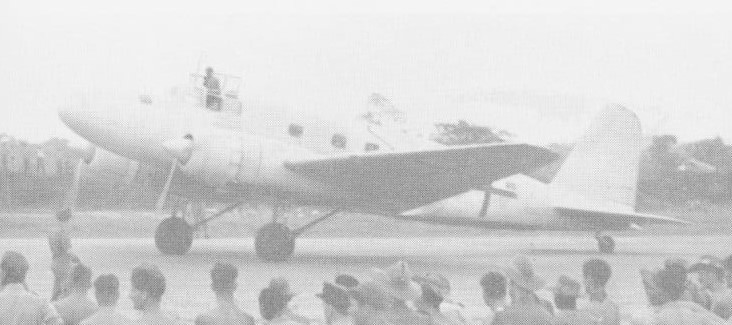
After 101 of these had been built, Mitsubishi in 1942 replaced this version on the production line with the Ki 57 II Army Type 100 Transport Model 2 /MC 20 II, generally similar but with 1080 hp Mitsubishi Ha 102 radials. They continued in production until January 1945, by which time 406 of this improved model had been completed.
A small number of Ki-57-IIs transferred for use by the Japanese navy were redesignated L4M1 or Navy Type 0 Transport Model 11, and all of these versions had the Allied codename ‘Topsy’.
The Ki 57 featured most notably in the paratroop attack on the airfield at Palembang and neighbouring oil refineries in February 1942.
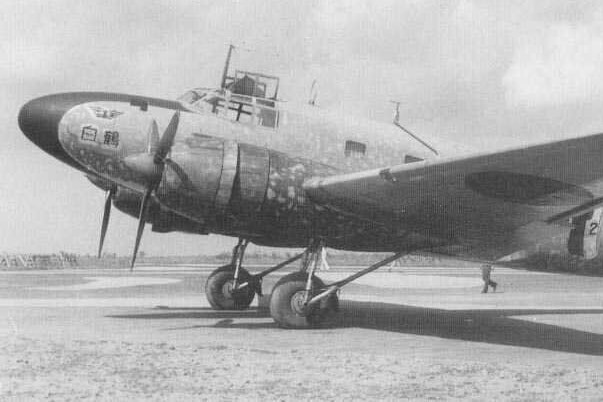
Ki-57-II
Engine: 2 x 1080 hp Mitsubishi Ha 102, 810kW
Wingspan: 22.6 m / 74 ft 2 in
Length: 16.1 m / 52 ft 10 in
Height: 4.77 m / 15 ft 8 in
Wing area: 70.08 sq.m / 754.33 sq ft
Max take-off weight: 8173-9120 kg / 18018 – 20106 lb
Empty weight: 5585 kg / 12313 lb
Max. speed: 470 km/h / 292 mph
Ceiling: 8000 m / 26250 ft
Range w/max.fuel: 3000 km / 1864 miles
Range w/max.payload: 1500 km / 932 miles
Crew: 2
Passengers: 15
 All Aero