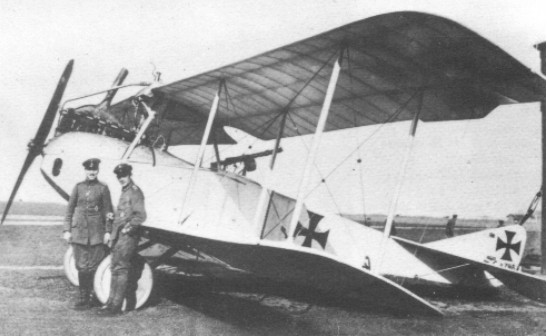
Used for reconnaissance and bombing, a small number of L.V.G.s were in the German air force at the outbreak of war in 1914. Like their British counterparts, they were unarmed and suffered heavy losses. This resulted in the much improved C.V, armed with machine¬guns, which proved a formidable adversary, in spite of the pilot’s exceptionally poor view forward.
A two-bay biplane, the two spar wooden wings were fabric covered. Plywood covered the wooden fuselage, with integral upper and lower tail fins. Fabric covered wooden tailplane. All control surfaces were welded steel-tube construction, with fabric covering. Ailerons were on the top wing only.
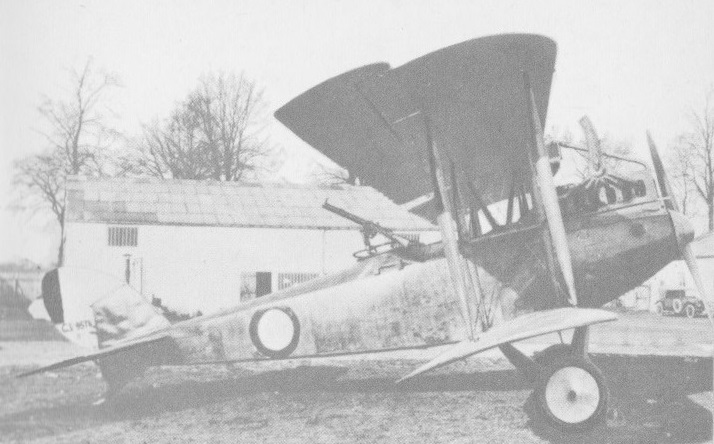
About 500 C.V’s and C.VI’s were in frontline service in the summer of 1918.
Engine: One 200 h.p. Benz Bz.IV
Wing span 42.75 ft (13.02 m.)
Wing area: 459.6 sq.ft
Length 26.5 ft (8.07 m.)
Height: 10 ft 6 in
Weight empty 1,860 lb. (843 kg.)
MTOW: 3141 lb
Fuel capacity: 52.5 Imp.Gal
Max speed: 102 m.p.h. (164 km.p.h.) at 6000 ft
Service ceiling: 16,500 ft. (5,000 m.) fully loaded
Endurance: 3.5 hours
Seats: 1 pilot and 1 observer
Armament One fixed Spandau machine gun firing forward, one Parabellum mg rear cockpit
 All Aero