
The first US Navy contract for two XP2V-1 Neptune maritime-reconnaissance bombers was placed in April 1944.
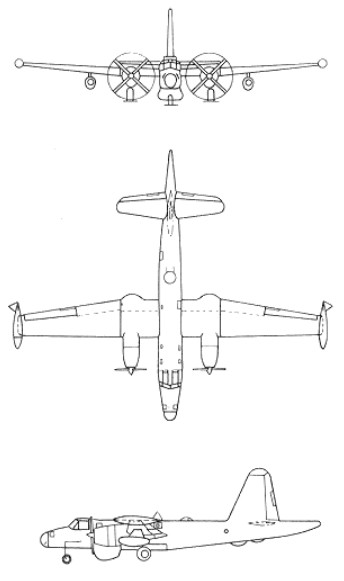
The P2V / P-2 has mid-set unswept wing, unswept tail surfaces, and conventional control surfaces. The ailerons drop 10 degrees when the Lockheed-Fowler flaps are fully extended. The tricycle undercarriage has a single wheel on each unit with the nosewheel retracting rearward and mains forward into the engine nacelles.

The first prototype flew on 17 May 1945. From then Lockheed received contracts for the P2V-1 to P2V-7 versions which were subsequently redesignated in the P-2 category.
Last versions in operational service were the P-2E (formerly P2V-5) which introduced the glazed nose, MAD tailboom, Julie/Jezebel ASW systems, etc, and later fitted with auxiliary underwing turbojets; SP-2E, as for the P-2E but with modernised equipment; P-2H, the first version to introduce auxiliary underwing turbojets and incorporating equipment and detail changes; and the SP-2H, as for the P-2H but with modernised equipment. These served with the Argentinian Navy (P-2H), Australian Air Force (SP-2H), Brazilian Air Force (P-2E), French Navy (P-2H), JMSDF (P-2H, and Kawasaki P-2J), Netherlands Navy (SP-2H), Portuguese Air Force (SP-2E) and the US Navy (SP-2H).
The USA supplied Britain with P-2 Neptune under the Mutual Defence Aid Pact. British Neptunes served in four squadrons from 1952 to 1957.
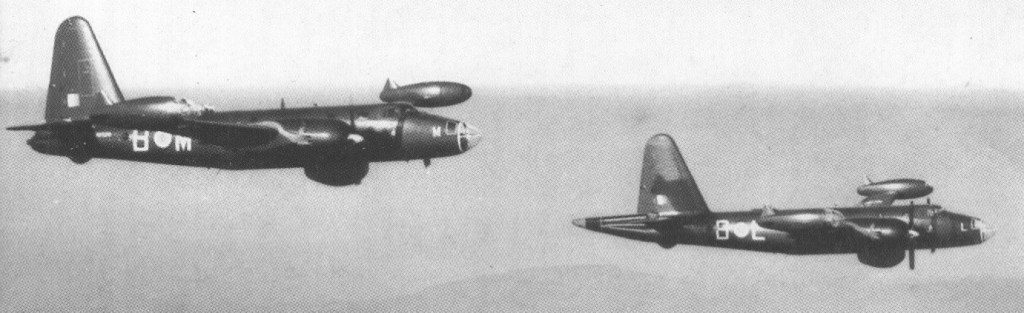

In 1946 US Navy Neptune ‘Truculent Turtle’ flew non-stop 11,229 miles from Perth, Australia, to Columbus, Ohio.
The P 2H Neptune was a variant used by the Maritime Patrol Command of the Canadian Armed Forces.
On 6 November 1951 a Lockheed P2V Neptune from VP-6 Squadron of the US Navy was shot down over the Sea of Japan near the Soviet naval base at Vladivostok. The Neptune, with a crew of 10 on board, was to have reconnoitred the weather near the Siberian coast.
On 18 January 1953 an American P2V-5 Neptune maritime reconnaissance aircraft was shot down by Chinese MiG fighters near (over?) the coastal town of Swatou, opposite Taiwan. All thirteen crew were killed. The number of occupants appears to be a little on the high side for a normal patrol flight. In those days it was not unusual for American aircraft to drop secret agents over the People’s Republic of China. Such ‘cover-flights’ were usually flown from Nationalist Chinese Taiwan.
On 4 September 1954 the third Neptune went down. A P2V-5 of the American Naval Squadron VF-19 was shot down by two Soviet MiG-15 over the Sea of Japan, about 40 miles from the Siberian coast. The Neptune, originating from Atsugi airbase in Japan, forced-landed in the sea after the attack. Nine of the ten crew escaped and were rescued later.
On 22 June 1955 Soviet jets attached an American P2V-5 Neptune from Patrol Squadron VP-9 over the Bering Strait. With the starboard engine on fire the Neptune had difficulty in fore-landing near Gambell on St. Lawrence Island, barely 60 miles / 100 km from the Soviet coast but United Stated territory. Three crew members were injured during the Soviet attack. Washington demanded compensation of $724,947 but later accepted a Soviet offer of half that.
A small number of P2V 2 and P2V 7 Neptunes were in service with ski landing gear for operations in the Antarctic.
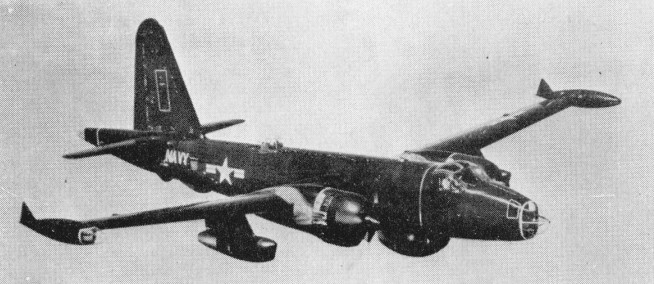
Kawasaki developed from the Lockheed P 2H Neptune a new ASW and maritime patrol bomber which has the designation P 2J. First flown in July 1966, the P-2J ¬differed from the P-2H in having a lengthened fuselage, and 2,850 ehp General Electric T64-1HI-10 turboprops replacing original piston engines, plus underwing 3,085 lb st (1400 kgp) J3-1H1-7C turbojets.
Entering service with the JMSDF in 1969, the last of`82 production aircraft was delivered in 1979. Sixteen P2V-7 were supplied from the USA before Japanese production began. Armament of the P 2J comprises up to 8,000 lb (3,628 kg) of bombs, depth charges, or tor¬pedoes carried internally, and 16 5 inch rockets underwing.
An approach in Vietnam was the monitoring of electronic sensors on the ground, the signals being received by the AP 2E Neptune.
Between 1945 and 1962, 1195 were manufactured.
The CIA purchased seven Lockheed P2V-7U Neptunes for the USAF for clandestine missions along the Iron Curtain and beyond. The US Navy had not wished to be involved but the Navy bought the aircraft and the USAF operated them, with USAF markings. The USAF stated at the time they were purchased as RB-69 radio trainers.
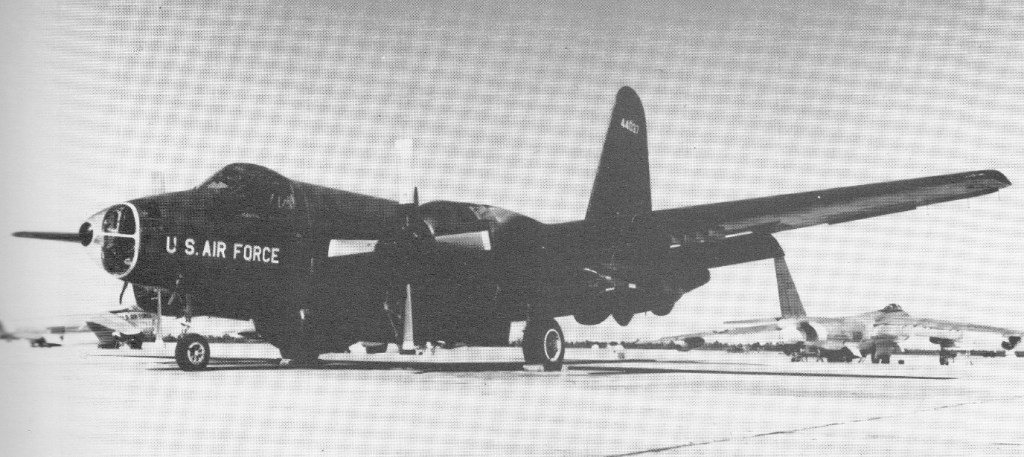
The RB-69 were converted by Lockheed into multi-purpose spying aircraft. They were able to perform low-level photographic reconnaissance, and with advanced ELINT equipment, electronic surveillance flights. Agents could be dropped through a panel in the belly, and tens of thousands of pamphlets could be dropped. Flights were planned from Eglin Air Base in Florida.
The USAF Neptunes were observed from 1957 in Taiwan, in Japan, and on Wiesbaden airbase in West Germany. From Wiesbaden the blue-black RB-69 flew with a number of additional bulges and with two pencil-shaped antennas alongside the fuselage. The aircraft carried the first sideways-looking radar system and operated until modified to ordinary SP-2H Neptunes for anti-submarine warfare.
Hawkins & Powers enveloped civil conversions of C-130 and P2V-7 under TC A19NM, A30NM, and A34NM in the Restricted category as borate bombers for forest fire control.
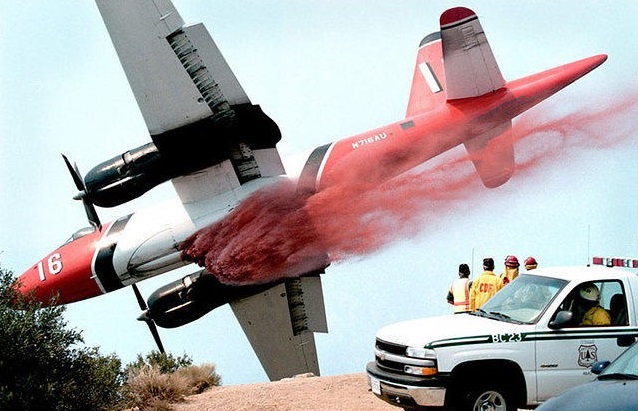
P-2 Neptune
Engines: 2 x Wright R-3350-32W, 2575kW
Max take-off weight: 36191 kg / 79788 lb
Empty weight: 22592 kg / 49807 lb
Wingspan: 31.7 m / 104 ft 0 in
Length: 27.9 m / 91 ft 6 in
Height: 8.9 m / 29 ft 2 in
Wing area: 92.9 sq.m / 999.97 sq ft
Max. speed: 648 km/h / 403 mph
Ceiling: 6800 m / 22300 ft
Range w/max.fuel: 5930 km / 3685 miles
Armament: 2 x 12.7mm machine-guns, bombs, missiles, torpedos
Crew: 7
P2V-5 Neptune
Engines: 2 x Wright, 3250 hp.
Wing span: 102 ft 0 in (31.08 m).
Length: 81 ft 7 in (24.87m).
Height: 28 ft 1 in (8.56 m).
Max TO wt: 76,152 lb (34,542 kg).
Max level speed: 341 mph ( 549 kph).
P2V Neptune
Length: 91.667 ft / 27.94 m
Height: 29.331 ft / 8.94 m
Wingspan: 103.904 ft / 31.67 m
Max take off weight: 80085.6 lb / 36320.0 kg
Max. speed: 309 kts / 573 km/h
Service ceiling: 22014 ft / 6710 m
Range: 3202 nm / 5930 km
Engine: 2 x Wright R-3350-32W, 3452 hp
Crew: 7
Armament: 3630kg
P2V-7 Neptune
Engines: 2 x Wright R3350-30W Turbo-Cyclone 3,250 hp, 2 x Westinghouse J34 turbojets, 3600 lb
Wingspan: 103 ft. 10 in
Length: 91 ft. 8 in.
Height: 29 ft 4 in
Wing area: 1000 sq.ft
Empty weight: 49,808 lb
Loaded weight: 72,000 lb
Fuel capacity: 1832 gal
Opt bomb bay fuel: 583 gal
Crew: 7
Max speed: 421 m.p.h.
Ceiling: 31,000ft
Service ceiling: 22,000 ft
Range: 3,700 miles at 175 mph at 1000 ft
Armament: 2x.50 in. machine-guns later 4 x 20mm canon
Bombload: 2×294 mm. rockets or 8,000 lb; plus 16 x 5-in. rockets under wings.
AP 2E
Kawasaki P 2J
Wing span is 97 ft 8.5 in (29.78 m).
Max cruise: 250 mph (402 km/h).
 All Aero