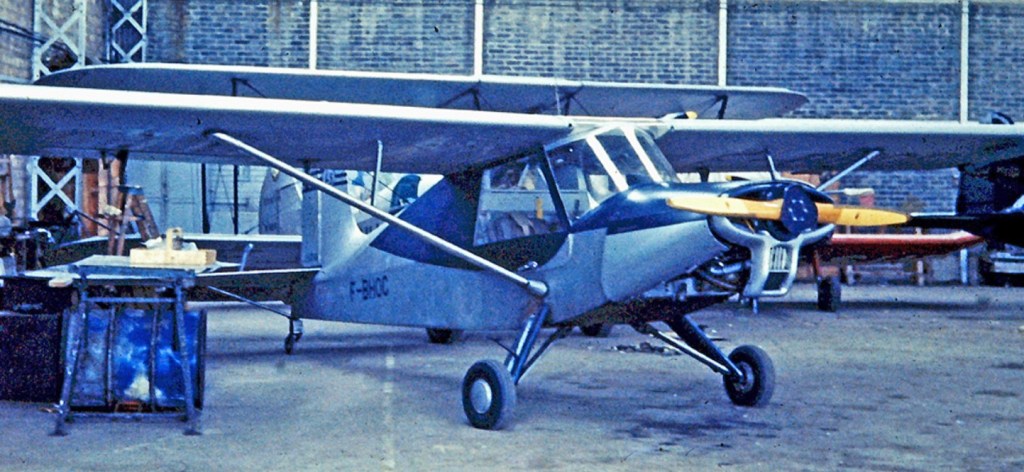
The LS 50 was designed to be suitable for touring, training, or towing. The craft is of mixed wood construction allowing sub-contracting and prefabrication.
On the prototype several components, such as cowling panels, wheel discs, spinner and door sills, had been made of fibreglass. The fuselage is basically rectangular, rigid wood box built up on four longerons. At the sear is a post for the rudder.
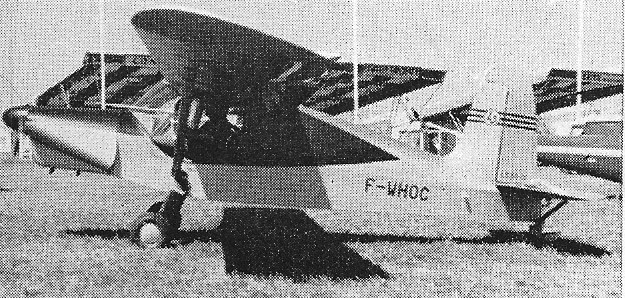
At the front a metal frame unites the cabin and wing supporting structure, the two side-by-side seats, the control column and its mechanism, and the undercarriage and shock absorbers. This welded steel structure supports the controls, flap mechanism, radio, doors and instrument panel. Full dual controls are fitted as standard, and the various trim controls are placed on the centrally mounted flap lever in the cabin roof, accessible to both seats.
The wing is built up on a single spar at 25% chord, and forward of this spar is plywood covered, forming a torsion box. The ailerons are cable-operated, the flaps by torsion tube. Ribs are built up of wood and the whole wing, braced by a single strut each side, is fabric covered. The tail unit is constructed of welded steel tube with a fabric cover.
Only the one was built.
Engine: 90 hp
Wingspan: 31 ft 6 in
Length: 21 ft 0 in
Height: 6 ft 6 in
Empty weight: 979 lb
Loaded weight: 1527 lb
Max speed at 3000ft: 118 mph
Cruise at 3000ft: 104 mph
Landing speed: 41 mph
Range: 620 mi
ROC: 700 fpm
Seats: 2
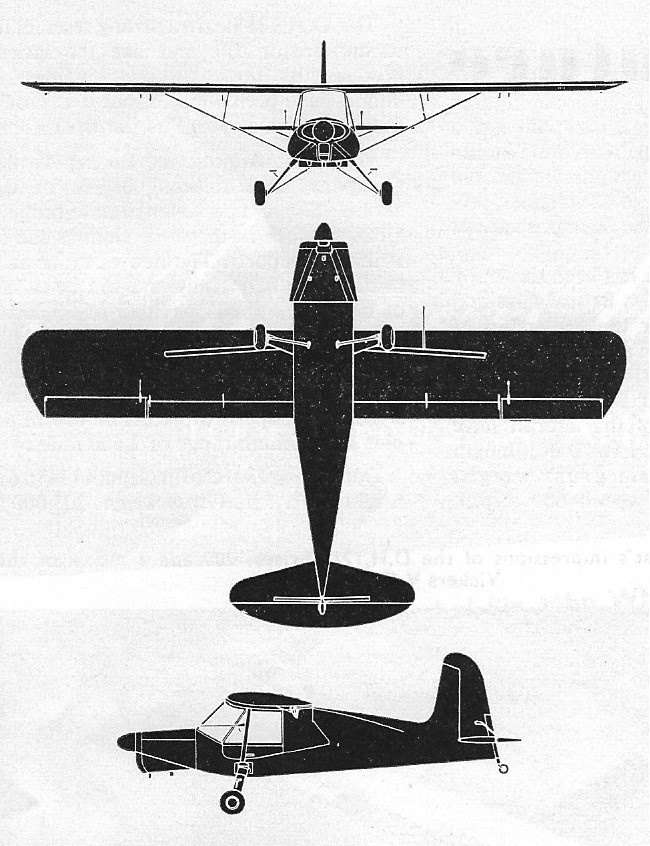
 All Aero