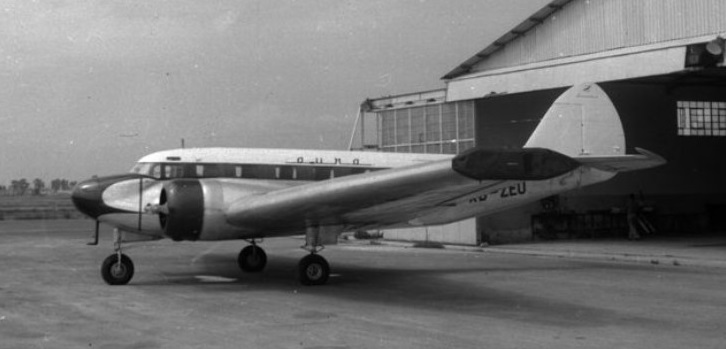
Ángel Lascurain y Osio wanted to manufacture an aircraft designed for the regional airlines of some parts of Mexico that required short airstrips in rugged terrain.
Lascurain determined that regional airlines required a twin-engine plane with fixed landing gear that was affordable, capable of landing at low speed on short runways. The aircraft had to have a high rate of climb to overcome the mountainous areas.
In 1955 Ángel Lascurain went with the architect Juan Cortina Portilla, beginning the design of the aircraft based on the Turkey Buzzard, a bird for which Lascurain had fascination.
The aircraft was a twin-engine monoplane with a mid-wing monocoque fuselage built in duralumin that was capable of holding 12 people in 2 rows of 6 seats plus a bathroom lobby, with the option of 14 seats without the bathroom, plus two pilots. The fuselage was part of the wings through beams. Each wing had between the engine and the fuselage two compartments for luggage of 0.65 cubic meters each, the aircraft had two tanks of fuel of 200 liters each that fed to the Jacobs R-755 engines by gravity and pumps besides two auxiliary tanks located at the outer wing of 50 liters each.
It was the largest aircraft designed and built in Mexico.
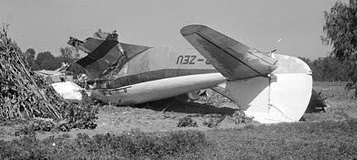
On December 24, 1957, during a routine flight of the Lascurain Aura XB-ZEU at the Mexico City Airport for no apparent reason, both engines of the aircraft were stopped and the pilot attempted to land at the airport. planning for runway 13, they crashed a few meters before the runway, killing the pilot Carlos Castillo Segura and Angel Lascurain.
Powerplants: 2 × Jacobs R-755-A1, 245 hp (183 kW)
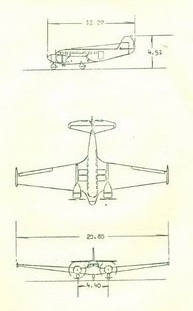
Wingspan: 68 ft 3 in (20.8 m)
Length: 40 ft 1 in (12.22 m)
Height: 14 ft 10 in (4.51 m)
Gross weight: 4,409 lb (2,000 kg)
Fuel capacity: 132 USgal. (500 L) (with reserves)
Maximum speed: 120 kn (140 mph, 220 km/h)
Cruise speed: 107 kn (123 mph, 198 km/h) at 75% thrust
Minimum control speed: 30 kn (35 mph, 56 km/h)
Range: 430 nmi (500 mi, 800 km)
Service ceiling: 26,900 ft (8,200 m)
Rate of climb: 1,033 ft/min (5.25 m/s)
Crew: two
Capacity: 12 or 14 passengers
 All Aero