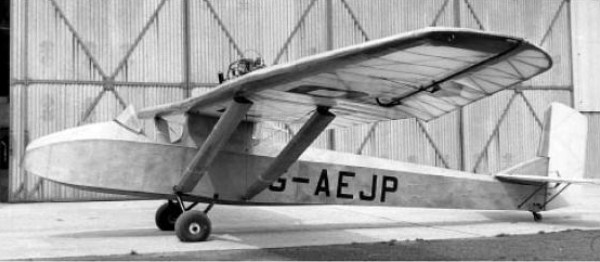
The 1932 Planette was a powered development of the B.A.C.VII. A single-seater, four were built.
A further development was the single-seat, single engine Drone of 1935. A lightly laden high wing monoplane of 40 ft span, the Drone was devised by Charles Herbet Lowe-Wylde by fitting a motor-cycle engine to his sailplane. The idea was to give cheap training to pilots who had already gone solo. The pusher engine was mounted on top of the wing, behind the cockpit. Two were produced and two conversion were made.
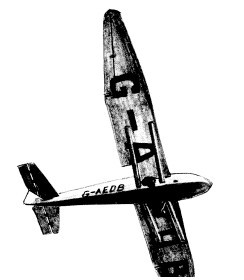
The BAC Drone was the production version of the Lowe-Wylde Planette and was first produced in 1933. B.A.C (1935) Ltd was formed in 1935 to take over production and development of the Drone.
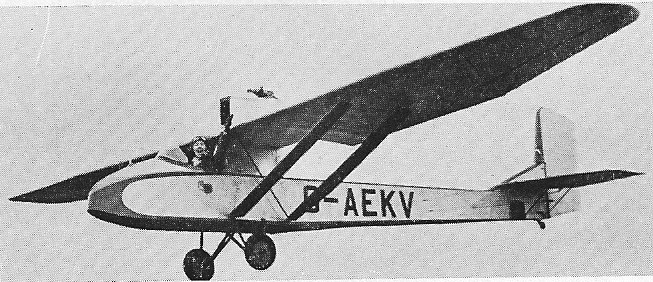
In 1935 twenty-five of the further developed Super Drone were produced, plus 1 conversion.
The final B.A.C.VII development was the Drone de Luxe of 1935. One was built and one conversion made.

In 1936 Kronfeld built 20 Drone monoplanes.
In 1937 the Carden Ford 10 engine of 30 hp was fitted, along with the 32 hp Bristol Cherub 3.
The Drone was also built under licence at Issy les Moulineaux in France by the Societe Francaise des Avions Nouvelles (SFAN), and at Ghent in Belgium by the Societe Gantoise des Avions sans Moteur.
British Aircraft Co Drone
Engine: Douglas Sprite 600cc
Span: 40 ft
Seats: 1
Max level speed: 73 mph
Cruise: 65 mph
Ceiling: 12,500 ft
Range: 340 miles
Price 1936: £295
BAC Drone
Engine: Carden Ford 10, 30 hp
Wingspan: 39 ft 8 in
Length: 22 ft
Height: 8 ft 4.5 in
Empty weight: 453 lb
Loaded weight: 670 lb
Max speed: 73 mph
Cruise: 65 mph
Range: 300 mi
 All Aero