
After a preliminary experiment using a Polikarpov U-2, Professor Sergei Grigorevich Kozlov, of the Nikolai Zhukovsky Air Force Engineering Academy, modified a Yakovlev AIR-4, in 1935, to produce the Kozlov PS (Prozrachnyy Samolyot — transparent aircraft). Fabric covering on the fuselage and wings was replaced with a transparent plastic material, called ”Cellon” or ”Rhodoid”, and the opaque structure was painted with a white paint mixed with aluminium powder. Trials with ground and airborne observations confirmed Kozlov’s theories, with the bonus of excellent visibility for the crew. After the initial success, the film was found to become opaque through dirt collection and the effects of the sun, diminishing the ”invisibility effect”.
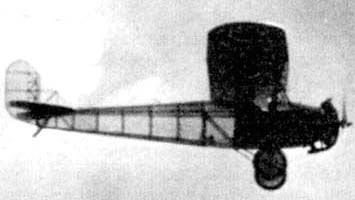
Kozlov proposed an invisible single-seat reconnaissance aircraft using the transparent plastic material, but doubts about structural strength of the material precluded development. Further studies into transparent aircraft were ordered from the experimental institute headed by Pyotr I. Grokhovskii but no more transparent aircraft were built using Kozlov’s methods.”
 All Aero