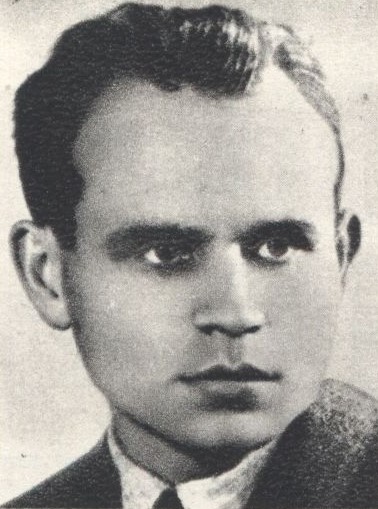
Antoni Kocjan was the son of Michal Kocjan and Franciszka Zurowska, born in the village of Skalskie near Olkusz, Poland, on 12 August 1902. He finished the Gymnasium of Casimir III in Olkusz in 1923 and served in the army during the Polish-Soviet war. Subsequently, he studied at the Warsaw University of Technology in the department of electrical engineering and aviation and at the Warsaw Agricultural University. He married Elizbieta Zanussi on 30 November 1939. During his studies he collaborated with the plane constructors of group RWD.
In 1929 he finished a pilot’s course and in 1930 won the second award at the Young Pilot’s Championship. Later he was part of crew in flights on the airplanes RWD-2 and RWD-7, which beat the world’s height record. In 1931 he obtained an engineer’s degree and began work at the Experimental Aviation Workshops in Warsaw. In the same year he constructed his first plane “Czajka”, a trainer glider that was later put into serialized production in several designs.
Kocjan became the head constructor of the Glider Workshops on the Mokotów Field in Warsaw in 1932. While there he designed the training glider “Wrona” and in 1933 the training-sport glider “Komar”. These three successful gliders and their improved versions, “Czajka-bis”, “Wrona-bis” and “Komar-bis”, became mass-produced in Poland and in lesser quantities under license abroad in Estonia, Finland, Yugoslavia, Bulgaria, and Palestine. In 1934 Kocjan designed a trainer glider “Sroka” that was also built in significant numbers. Subsequently, he designed the aerobatic glider “Sokol” and in 1936, together with Szczepan Frzeszczyk, the aerobatic glider “Mewa”. In 1937 he built his most known single-person aerobatic glider “Orlik”. The version “Orlik 3” took second place in the competition of standard gliders for the anticipated 1940 Summer Olympics. The version “Orlik 2” in the years 1948-49 was piloted by the American Paul MacCready on which he set the world’s height record for gliders of 9,600 metres (31,500 feet). In 1937 Kocjan also designed the motor glider “Bąk” of which ten units were built. The production of “Komar” was also renewed after the war.
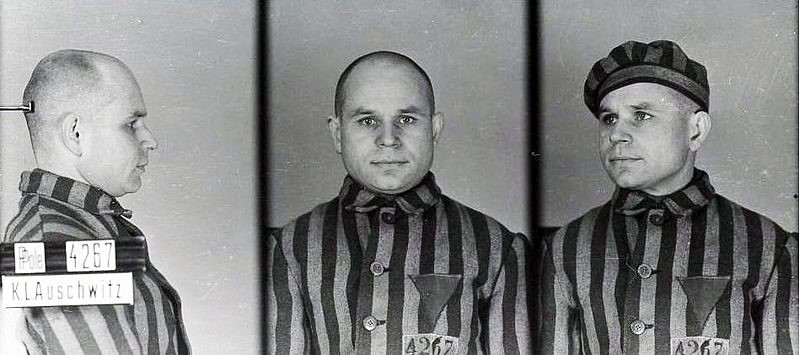
In the first days of World War II, Kocjan was wounded by bomb shrapnel. After the defeat of Poland in 1939, he became a soldier of the underground ZWZ which later became the Home Army. On 19 September 1940 he was caught in a street raid and sent to Auschwitz concentration camp. However, he was released after ten months.
He was characterized by a large degree of daring in planning of actions of the Polish resistance, particularly in connection to the underground production of weapons. He made a significant contribution to the identification of Peenemünde as the testing site of the German Wunderwaffen and recovery of V-2 rocket engine and steering components into London.
On 2 June 1944, he was arrested together with his wife and imprisoned in the Pawiak prison. The Gestapo murdered him on 13 August in the last group of forty prisoners of Pawiak during the Warsaw Uprising.
 All Aero