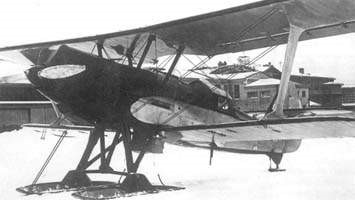
In 1932 the Kochierigin and Tupolev collectives were ordered to work on a light reconnaissance aircraft intended to replace the Polikarpov R-5. Tupolev was immersed in the development of large bombers and his project was not finished.
In 1933 the collective led by SA Kochierigin developed a light reconnaissance aircraft which received the designation LR. Being the first aircraft built after Kochierigin ‘s designation as TsKB brigade director at Factory No.39, the model was designated TsKB-1 (Russian: Кочеригин ЛР (ЦКБ- 1)). The Polikarpov R-5 itself had been taken as the basis for its development.
The LR was designed as a traditional single-engine sesquiplane of mixed construction, and powered by a 650-hp Mikulin M-34.
The fuselage was of welded tubes. The front portion was covered in aluminum. The rest of the fuselage and the tail consisted of a lightweight fabric-covered duralumin structure.
The wings were made of wood. The empennage was made of duralumin with a textile covering. The stabilizer trim angle could be changed in flight.
The construction was very light. Without the motor the structure weighed only 640 kg.
The landing gear was of the conventional type with a tail skid, quite similar to that of the R-5, but with hydro-pneumatic shock absorbers. The wheels featured disc brakes, a first for the USSR.
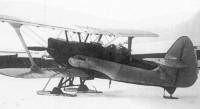
The cockpit was open with the left side folding to allow access to the cockpit. The gunner’s cabin was closed and covered with a protective screen that rotated 360º. On the left side there was a small door for access.
The powerplant was installed on a casing that was fixed to the airframe by four bolts. The radiator was located in the lower part of the fuselage.
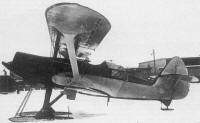
Using a more powerful engine, more refined aerodynamics, and lower flying weight, the LR outperformed the R-5, and even the I-5 fighter. With a flying weight of 2426 kg the maximum speed of the LR at sea level reached 271 km/h and at 5000 m it was 247 km/h. The height of 3000 m could be reached in just 7.3 minutes and the sharp turn was made in 17 seconds.
Armament consisted of a pilot-operated PV-1 synchronized machine gun and a gunner-operated ShKAS from the second cockpit. The aircraft could also carry up to 200 kg of bombs in 8×25 kg or 2×100 kg configuration.
The first prototype was ready in July 1933. During a test flight on January 27, 1934 with the pilot Yu.I. Piontkovsky at the controls, there were problems because the operators had interchanged the aileron control cables. No one was injured and the plane received light damage.
A second prototype was developed in 1934 with a more powerful Mikulin M-34N powerplant with turbo-charger (hence the N – Nagnitatiel) and a nominal power of 752 hp, which brought about a noticeable increase in performance.
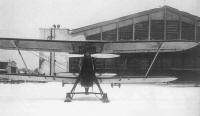
With a takeoff weight of 2,590 kg, the LR M-34N had a speed of 282 km/h at sea level and at 4,000 m it was 319 km/h. Climb time to 3,000 was 6 minutes and turn time to 1,000 m was 17 seconds. The take-off and landing runs were 210 and 250 meters respectively and the range was 340 km.
With a normal bomb load the flight weight reached 2800 kg and the maximum speed at sea level decreased to 273 km/h and at 3700 m it was 303 km/h.
State tests of the M-34N-powered LR were rated as very positive. The aircraft could easily be used as a light attack aircraft by reinforcing the armament. During the tests, refinements were made that allowed the weight to be reduced by about 100 kg.
The report of the state tests, signed by the head of the VVS RKKA Yákov I. Álksnis on October 3, 1934. In it, some deficiencies were pointed out, among which the poor visibility from the second cabin, the tendency to deviate to the left during the takeoff run and the poor completion of the prototype developed in Factory No. 39.
The report also requested to prepare on the basis of the LR M-34N and after solving the problems presented, the serial production of the model as a light reconnaissance and attack aircraft.
It was also proposed to improve the installation of the gunner, increasing the range of the aircraft to 400 km and achieving a speed at 4000 meters of 360 km/h.
However, this machine did not go into series production either. The industry rejected new welding and metal working technologies. Priority was given to the Polikarpov RZ light attack aircraft, obtained as a development of the R-5, but with reduced dimensions and an M-34RN engine (with reducer and compressor) with a nominal power of 750 hp. For the factories that produced the R-5, it was easier to transfer to this model.
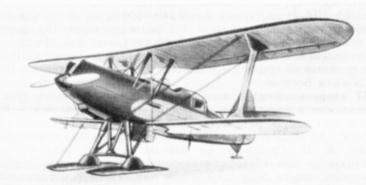
LR M-34
Powerplant: 1 x 650/750 hp M-34
Wingspan upper plane: 13.00 m
Wingspan lower plane: 10.80 m
Wing area: 36.52 m²
Length: 8.64m
Empty weight: 1,734 kg
Normal takeoff weight: 2,426 kg
Wing loading: 66.5kg/m²
Power load: 3.7kg/hp
Maximum speed at sea level: 271 km/h
Maximum speed at altitude: 247 km/h
Landing speed: 93 km/h
ROC: 455 m/min
Time to 1000m: 2.2min
Time to 2000m: 4.6min
Time to 3000m: 7.3min
Time to 5000m: 15.6min
Practical ceiling: 7,400 m
Practical range: 700 km
Armament: One pilot-operated PV-1 synchronized machine gun and one ShKAS in the second cockpit.
Bombload: 200 kg (8 х 25, 4 х 50, 2 х 100 kg)
Accommodation: 2 (pilot and gunner)
LR M-34
Powerplant: 1 x 750/815hp M-34N
Wingspan upper plane: 13.00 m
Wingspan lower plane: 10.80 m
Wing area: 36.52 m²
Length: 8.64m
Empty weight: 1,812 kg
Normal takeoff weight: 2,626 kg
Wing loading: 72.5kg/m²
Power load: 3.5kg/m²
Maximum speed at sea level: 282 km/h
Maximum speed at altitude: 314 km/h
Landing speed: 94km/h
Ascent speed: 455 m/min
Time to 1000m: 2.0min
Time to 2000m: 4.6min
Time to 3000m: 6.0min
Time to 5000m: 10.7min
Practical ceiling: 9,100 m
Practical range: 800 km
Take-off run: 250 m
Landing run: 210 m)
Armament: One pilot-operated PV-1 synchronized machine gun and one ShKAS in the second cockpit.
Bombload: 200 kg (8 х 25, 4 х 50, 2 х 100 kg)
Accommodation: 2 (pilot and gunner)
 All Aero