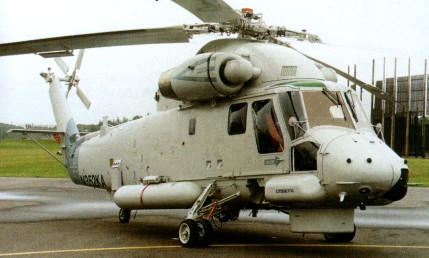
The basic Seasprite design won a US Navy design competition during 1956 for a high performance, all-weather, multi-role utility helicopter, then designated the HU2K-1. The prototype Seasprite first flew on July 2, 1959 and an initial contract was for four prototypes and twelve production Kaman helicopters, now known as the UH-2A and given the name Seasprite. The initial production UH-2A models were powered by one engine, however, they were equipped for IFR operations and a total of 88 were ultimately built. The UH-2B was VFR equipped and 102 in total were built with fully retractable forward mounted main landing gears.
The UH-2A and UH-2B could each carry a 1814 kg (4,000 1b) slung load or 11 passengers, and work in planeguard, SAR, fleet reconnaissance, vertrep (vertical replenishment) and utility transport duties, operating from many surface warships as well as at shore bases.
The UH-2C, a re-definition of the UH¬2 and UH-2B, was the first to be fitted with two engines.
From 1967 Kaman converted of 88 earlier SH-2D Seasprites to the SH-2F version in May 1973. The SH¬2F “Super Seasprite” has “up-rated” engines and the LAMPS system (light airborne multi¬purpose system). Fifty-two new SH-2Fs were delivered from 1981. Deliveries of the SH-2F version began in May 1973 after completion of 190 early-model UH-2A/B SAR helicopters. Before manufacture was suspended 88 SH-2Fs were built. Deliveries from resumed production began in 1983, and Seasprites delivered after October 1985 have an increased gross weight of 6,124kg, compared with the 5,805kg of earlier SH-2Fs.
With a crew comprising pilot, co pilot and sensor operator, the SH 2F can carry MASW gear including Canadian Marconi LN 66HP surveillance radar, towed ‘bird’ for the AN/ASQ 18 MAD, AN/ALR 64 passive detection receiver, Difar passive and Dicass active sonobuoys, and comprehensive nav/com and display systems. The 4,000 1b (1814 kg) cargo ability remains, and a 600 1b (272 kg) rescue hoist is standard.
Production of the twin-turbine SH-2F Seasprite Mk.1 light airborne multipurpose system (Lamps I) restarted in 1982, to meet a US Navy requirement for up to 60 helicopters to equip vessels too small for the SH-60B Seahawk. Up to FY1986 54 new-build SH-2Fs had been authorised, and six more were requested in FY1987. These will join some 79 SH-2Fs from earlier production which were still in service at the beginning of 1986, some of which were upgraded SH-2Ds. Ten new SH-2Fs were delivered in 1986.
A re-engined version of the Seasprite, the YSH-2G, flew on April 2, 1985, powered by two General Electric T700 turboshafts similar to those used in the SH-60B and giving improved range, reliability, and maintainability. Evaluation of the prototype YSH-2G was completed in 1985. In general terms, the SH-2G is a retrofit of the SH-2F model.
The heart of the SH-2G(NZ)’s weapons platform is its Litton ASN-150/1553B tactical data system, APS-143 (V) 3 radar, Doppler APN-217 (V) 6 radar, FUR Systems AAQ-22 forward-looking infrared system, and Litton Amecon LR-100 electronic support measures ESM sensor system. These systems are operated from the two pilot analogue cockpit, with the observer (air¬borne warfare officer) occupying the left-hand seat. The helicopter’s missions are primarily surface sur¬veillance and anti-surface warfare, where the helicopter will conduct surveillance tracking and targeting and, if necessary, engage surface targets, but it is also capable of sub-surface weapon delivery and utility support, including search and rescue, replenishment, medical evacuation, naval gunfire spotting and troop transport for boarding operations.
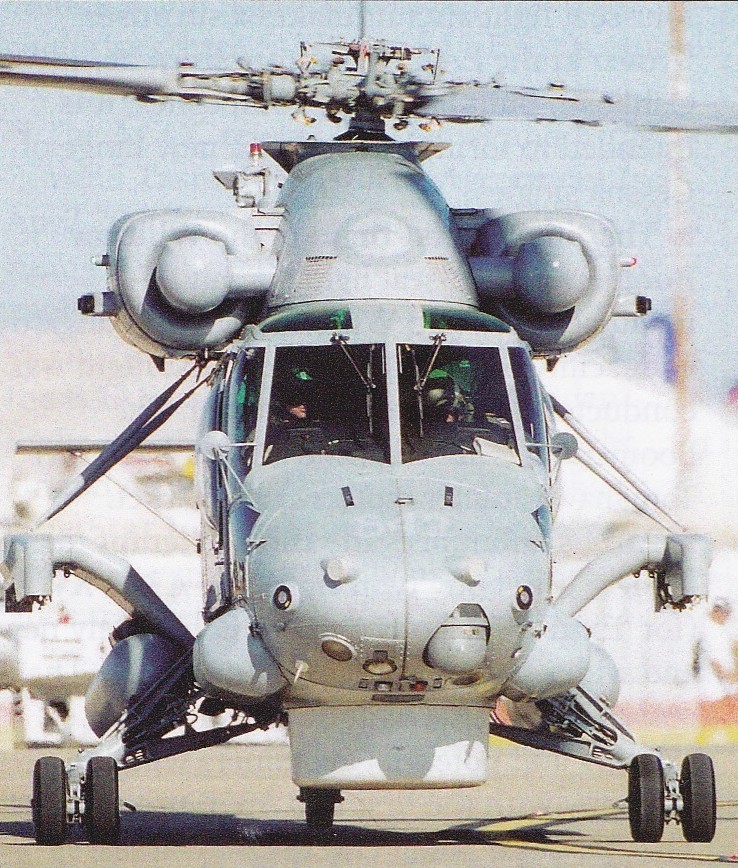
In May 2006 the Royal Australian Navy’s fleet of 11 SH-2G(A) Super Seasprite was grounded with problems with their avionics and electronics systems. Service entry had been delayed by five years due to serious systems integration and software problems.
H-2 experiments included stub wings serving as sponsons and gunship version with Minigun chin turret among other weapons.
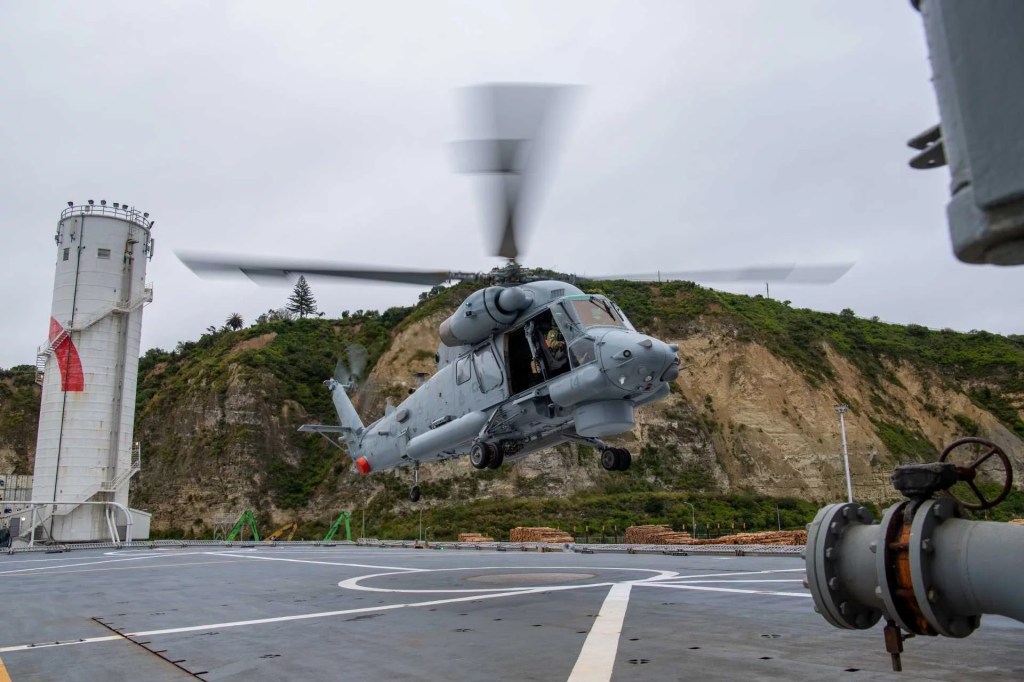
Kaman Aerosystems, are powered by two General Electric T700 turbines rated at 1,600 hp each. Measuring 16 meters in overall length with a 13.5-meter rotor diameter, they have a maximum take-off weight of 6,441 kg, a range of approximately 275 nautical miles, and a maximum endurance of around two hours and 45 minutes. Capable of reaching airspeeds near 130 KCAS, they feature a standard crew of three: a pilot, an observer responsible for warfare and mission coordination, and a helicopter loadmaster managing utility operations. Armament options include Penguin anti-ship missiles, Mk 46 torpedoes, and a door-mounted MAG 58 machine gun.
The SH-2G lineage traces its origins to the United States, where the type was developed in the 1980s as a modernized version of the SH-2F for use on naval vessels unable to accommodate larger helicopters like the SH-60B Seahawk. The SH-2G introduced more powerful engines, a reinforced upper fuselage, and improved avionics, including an Integrated Tactical Avionics System (ITAS) and digital automatic flight controls. Despite its eventual phaseout in the U.S. by 2001, the type continued to serve internationally, including with the Egyptian, Polish, and Peruvian navies.
The SH-2G(I)’s design emphasizes multi-role capability, supporting missions such as over-the-horizon surveillance using radar and FLIR systems, anti-ship strike with guided missiles, underwater warfare with torpedoes, as well as disaster response, medevac, and transport operations.
UH-2A
Engine: 1 x GE T58-GE-8B, 1250-hp.
UH-2C
Engine: 2 x T58-GE-8B.
HH-2D
Engines: 2 x General Electric T58 GE 8F turboshafts, 1,350 hp each.
Length: 38 ft 4 in.
Rotor dia: 44 ft.
Speed: 168 mph.
Ceiling: 22,500 ft.
Range: 445 miles.
SH-2F Seasprite
Engine: 2 x GE T58 8F turboshafts, 1,350 shp (1007 kW).
Installed pwr: 2041 kW.
Rotor dia: 13.4 m (44 ft 0 in).
Main rotor disc area 141.25 sq.m (1,521.0 sq ft).
Fuselage length: 12.3 m (40 ft 6 in), (folded): 11.7 m.
Height: 4.72 m (15 ft 6 in).
No. Blades: 4.
Empty wt: 3193 kg (7,040 lb).
MTOW: 6033 kg (13,300 lb).
Max speed: 265 km/h (165 mph).
ROC: 744 m/min.
Ceiling: 6860 m.
HIGE: 5670 m.
HOGE: 4695 m.
Fuel cap (+aux): 1500 lt ( 455 lt ).
Range max¬ internal fuel: 680 km (422 miles).
Crew: 3.
Armament: one or two AS torpedoes (usually Mk 46).
SH-2G Super Seasprite
Engine: 2 x GE T700-401.
Instant pwr: 1259 kW.
Rotor dia: 13.41 m.
MTOW: 6124 kg.
Payload: 2107 kg.
Useful load: 987 kg.
Max speed: 141 kts.
Max cruise: 136 kts.
Max range: 869 km.
HIGE: 17,600 ft.
HOGE: 14,600 ft.
Service ceiling: 20,400 ft.
Crew: 3.
Pax: 8.
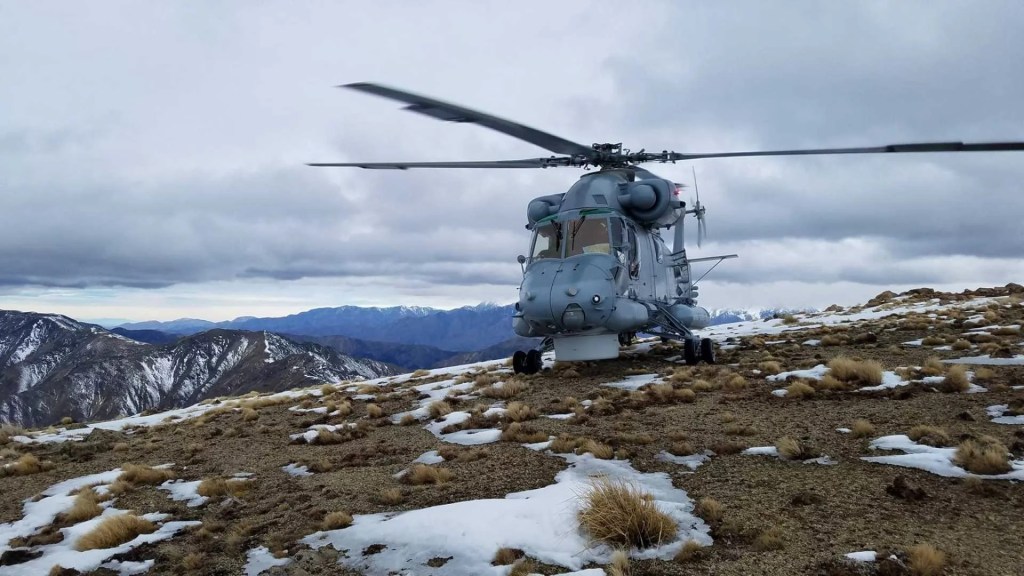
SH-2G(NZ)
Engines: 2 x T700 GE-401 gas turbines of up to 1723 shp each, plus one Garret GTCP36-150 APU.
 All Aero