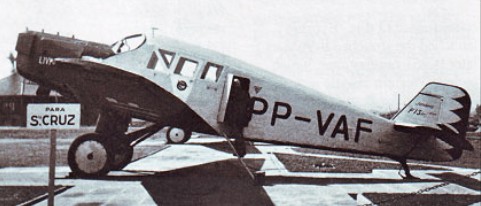
The Junkers F 13 was the product of the Junkers Flugzeug- und Motorenwerke AG (Junkers Aircraft and Motor Works) of Dessau, Germany. With Germany’s defeat in 1918, the Armistice ordered the transfer of all military aircraft to Allied authorities and the Treaty of Versailles prohibited Germany from ever fielding an air force. In the face of this, Dr. Hugo Junkers and his chief aircraft designer, Otto Reuter, set to work on a concept for a single engine civilian aircraft drawn up in broad strokes during the war. Originally called the J 13, the result of their labor would become known as the Junkers F 13, the world’s first all-metal transport plane to enter mass production and worldwide service, which first flew on June 25, 1919 (as the J 13).
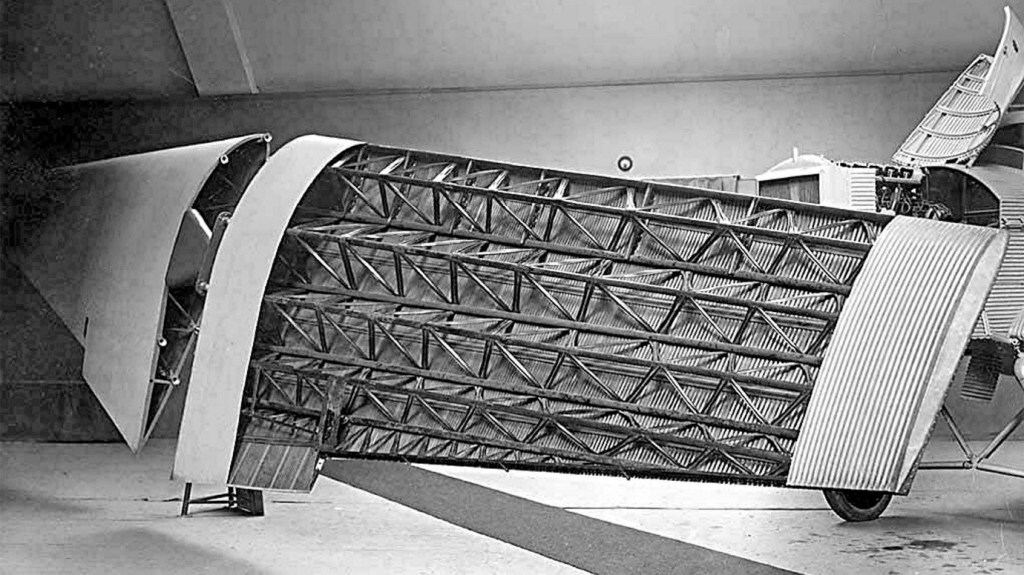
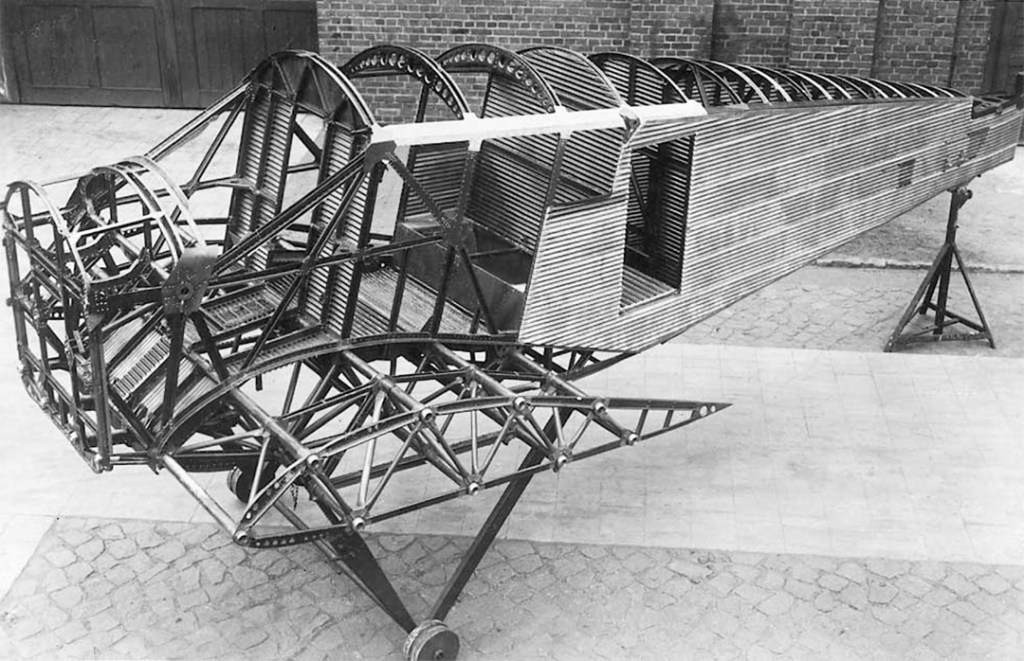
Compared to the contemporary wood and canvas biplanes that dominated the aviation market at the time, the Junkers F 13 was a night and day difference. Its skin was made of corrugated duralumin alloy riveted over spars and struts in the wings and fuselage.
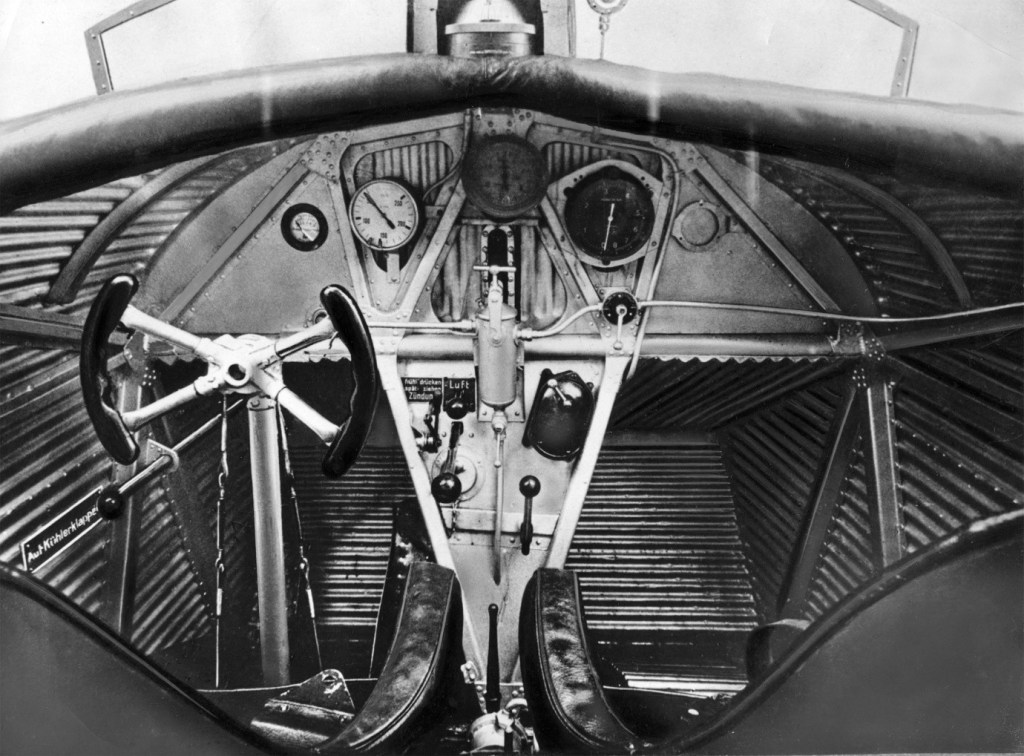
The aircraft would carry a crew of two pilots in a semi-open cockpit and four passengers in an enclosed cabin – even fitted with seatbelts. The F 13 was also very adaptable, being able to swap its fixed landing gear for floats or skis depending on operating conditions, and many were powered by Junkers’ own L5 six-cylinder inline engine, along with a variety of additional powerplants.
Negotiations by the new Soviet government for the production of Junkers aircraft in Russia were started in 1919; they resulted in German assembly in Russia of the F.13 transport from German manufactured parts.
Deutsche Luft Hansa was a significant purchaser (of 72 examples).
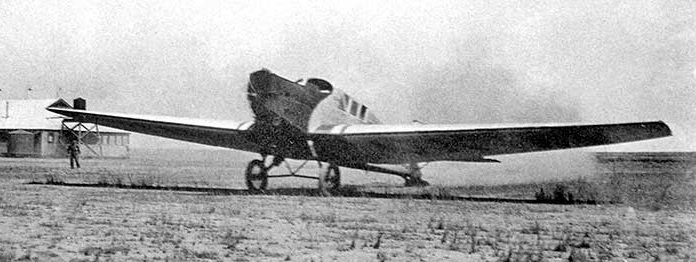
Estimates of total production vary between 318 and 370, over a decade of production, and there were more than 60 variations of the basic design built up to 1932. The seaplane version was fitted with larger wings than the land based version.
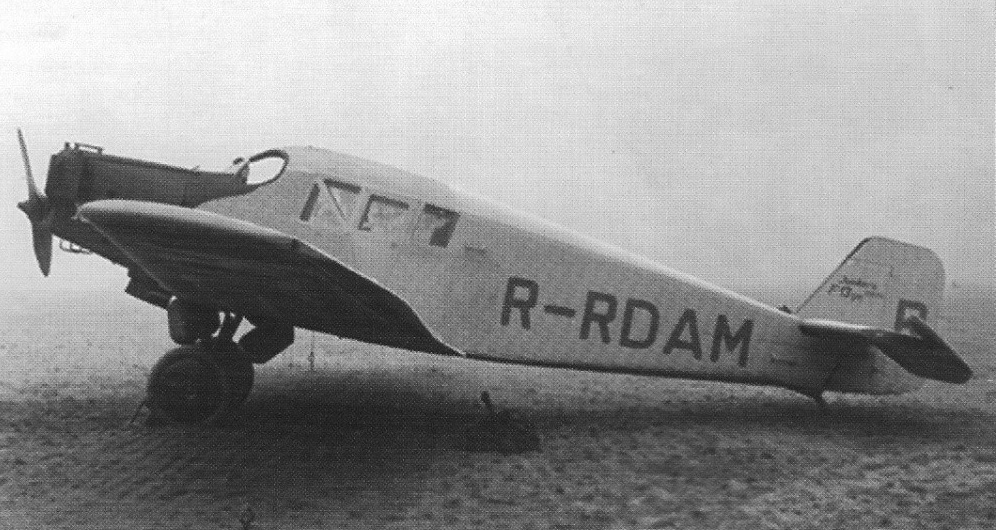
After the F13, Junkers was forced to stop work on an advanced cantilever wing monoplane transport because of the restrictions on the performance of German airplanes.
The F 13 was also produced outside Germany in Sweden, the Soviet Union, and even the United States, and was flown as far as Afghanistan, Bolivia, South Africa, and Hungary among many other nations around the world, representing an estimated 40 percent of global air traffic in 1925.
Over 300 F 13s were produced during the 1920s and 1930s, but today only five examples have been preserved around the world.
One was still active in Brazil as late as 1952.
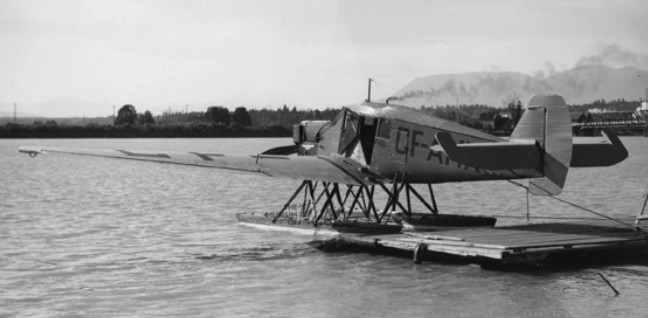
In 1919 John M. Larsen intended to sell U.S. aircraft in Denmark, but during his stay in Europe he also saw the Junkers F13 and was interested in selling the Junkers F13 within the USA. Together with Junkers he founded the Junkers Larsen Corporation in 1920, which was responsible for the marketing of Junkers aircraft in the USA. Larsen managed to sell some of the modified F13 as JL6 to the U.S. Army and to the U.S. Postal Office. But due to a series of crashes the JL6 was grounded by both. Larsen also converted one JL6 to a war machine as JL12, but the U.S. Army was not interested in this aircraft and the joint venture was stopped after a few sales, in 1920.
Replica:
Morszeck Junkers F 13
Engine: Mercedes, 160 hp
Range: 725 km / 450 mi
Seats: 4
F.13a
Engine: 1 x 265hp BMW III
Max take-off weight: 2703 kg / 5959 lb
Wingspan: 17.75 m / 58 ft 3 in
Length: 9.60 m / 31 ft 6 in
Height: 3.61 m / 11 ft 10 in
Max. speed: 177 km/h / 110 mph
Cruise speed: 140 km/h / 87 mph
Range: 648 km / 403 miles
Crew: 2
Passengers: 4
F 13ke
 All Aero