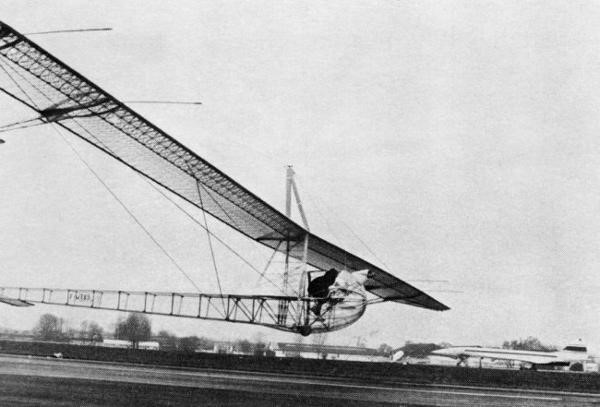
On the Aviette, Hurel used an aerodynamic solution to a structural problem. On this plane stabilising surfaces were attached on mini-tail-booms behind each outer wing. Just as the effect of a tailplane is to tend to return the entire aircraft to a level attitude from a non-level attitude, so the effect of these surfaces is to tend to hold the wing-tips at a constant angle relative to the airflow. The conventional constructional techniques of the time were used, materials being spruce, Balsa and Melinex.
Hurel’s 1976 Aviette aircraft had a 137 feet (42 m) span and a 12 feet (3.7 m) diameter propeller.
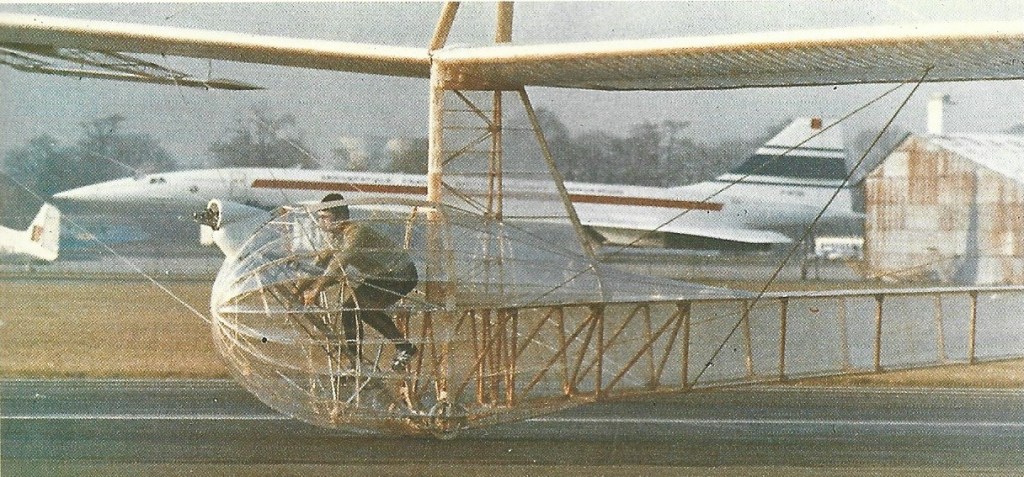
The Aviette flew at Le Bourget, largely through national recognition of the designer’s contribution to industry throughout his working life.
In 1974 the Aviette recorded flights of 1100 yards (1000 m).
The French entry to the Kremer Prize, the Hurel Aviette, might have been going into a museum. Unfortunately, at the time of the 1973 Paris Air Show, the airplane had to be moved from its hangar. Exposed to the elements, it was promptly chewed up by a dog.
 All Aero