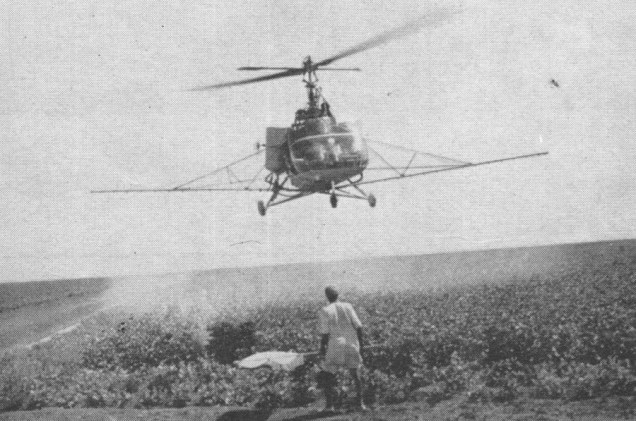
Stanley Hiller Jr designed the two-seat Model 360 which first flew in 1948. It was derived from the UH-5 which had proved very unstable during trials and had subsequently been fitted with a new stability system patented as the Hiller ‘Rotormatic’. It entailed fitting the two-blade rotor with two small paddles which acted as a control rotor and were also connected to a hanging stick. This servo ‘paddle control’ system tilts the rotor head and actuates the cyclic pitch control.
Of all-metal construction with fixed tricycle undercarriage. Equipped with a fully enclosed cabin and rear fuselage, an overhead mounted control stick is attached to a Hiller rotor control. Power is by one 175hp Franklin 6V4-178-B32 engine. The prototype was registered N68940.
It received its FAA (Federal Aviation Administration) approval in October 1948 and a year later a production model designated Model 12 made the first transcontinental helicopter flight across the USA in the summer of 1949. At that time it still had an open cockpit, and the 178hp Franklin 6V4-178-B33 was in an open engine bay.
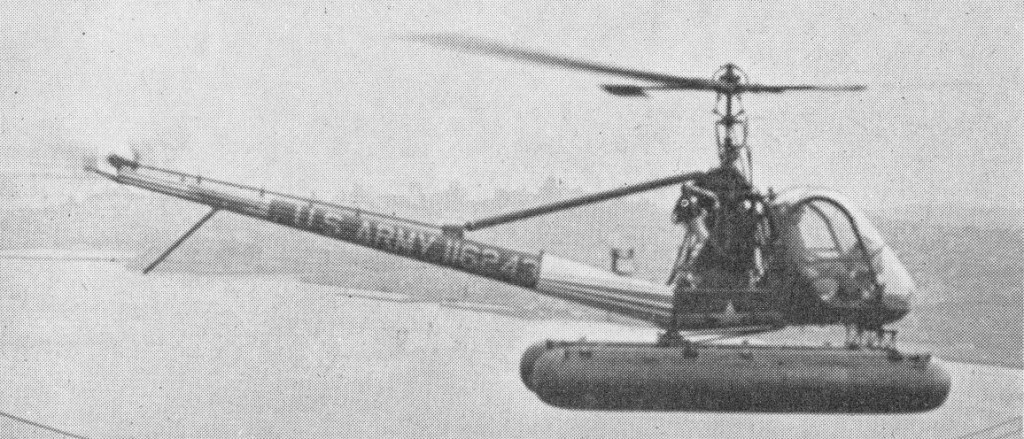
In 1949 a Hiller 360 demonstrated a pilot-less cross-country flight with two observers well away from the pilot’s seat. The 25 mile flight over San Francisco Bay was at 3800 ft after a normal piloted take off.
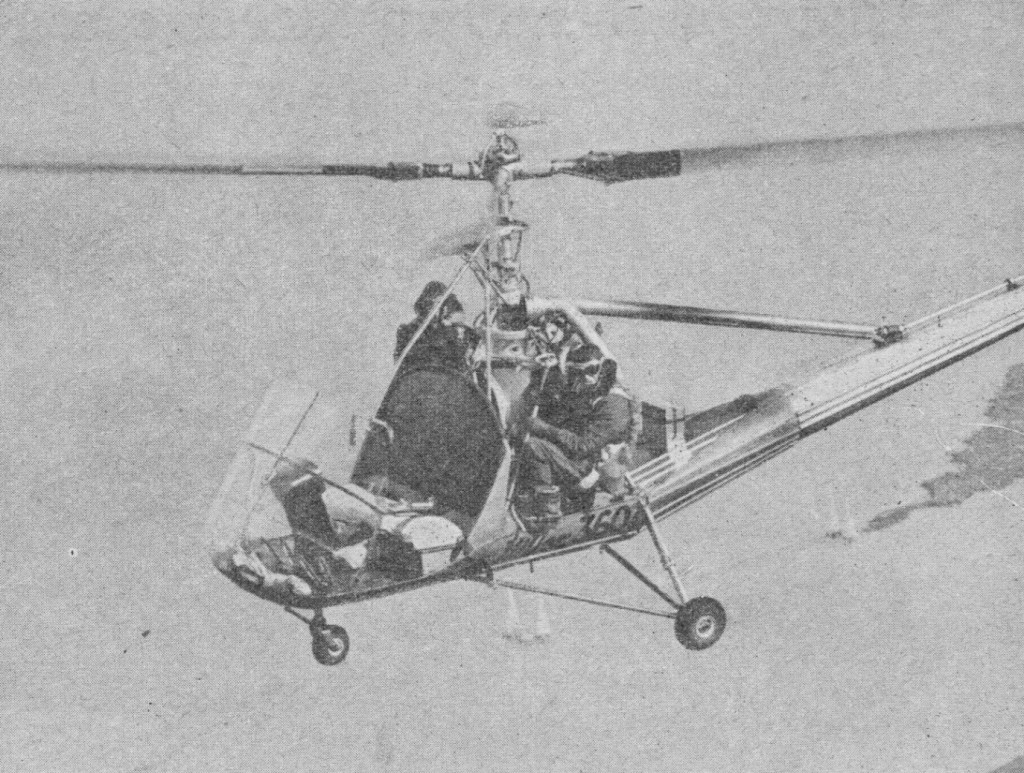
Hiller 360
Engine: Franklin 6V4-200-C33, 200 h.p.
Rotor diameter: 35 ft.
Rotors: 2-blade main; 2-blade tail
Fuselage length: 27 ft. 6 in.
Loaded weight: 2,500 lb.
Max. speed: 84 m.p.h.
Ceiling: 9,400 ft.
Typical range: 135 miles at 70 mph
Seats: 3.
HTE-1
Engine: Franklin 178 hp
Undercarriage: 3-wheel

 All Aero