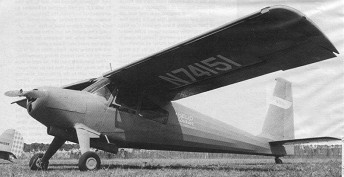
Using the knowledge gained from the Vaga¬bond experiment, Koppen went back to the drawing board and came up with the prototype Helio Courier with full span automatic leading edge slats, large flaps and drooped ailerons. Aileron-linked airflow interceptors provide excellent lateral control while large slotted flaps on the trailing edge, working in conjunction with the slats on the leading edge, double the lift of the wing.
It had four seats, an 11 foot prop and a 145 hp Continental engine. With an all-moving stabilator for pitch control and a tall, swept fin, and rudder for its direction control, the two Courier models possess maximum stability during slow flight.
By the time the production model was certificated in 1954, it had five seats, a 260 hp Lycoming and a smaller prop.
The original Courier prototype was a converted Piper Vagabond. Superseded by the H-391B, H-395 and H-395A Super Couriers introduced from 1958. Helio H-250 and H-295 six-seat utility aircraft flew in 1964 and 1965 respectively, and were produced for both civil and military use; Super Couriers in USAF service designated U-10.
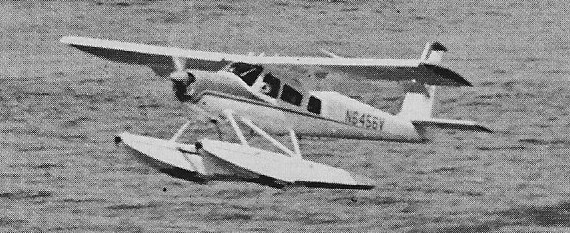
In April 1964 it was announced that a lower priced six-place STOL with higher payload and better economy than standard Helio Couriers that went into production during May. Called the Caballero, it was to sell for $33,400, Helio factory advertisement brochure showing N5444E with a H-395 style cowling (no landing lts). It was also labeled as a Mark II Caballero H-250A Model other pictures show that the first 5 H-250s had the same H-395 style cowling. It appears that the Caballero was dropped.
The H-391 was powered by a 260-hp Lycoming and offered seating for four to five. The H-395 followed in 1959 with its 295-hp engine and five seats. The H-295 first appeared in 1965 and featured increased seating and the same 295-hp engine. Its counterpart was the H-250 powered by the 250-hp Lycoming.
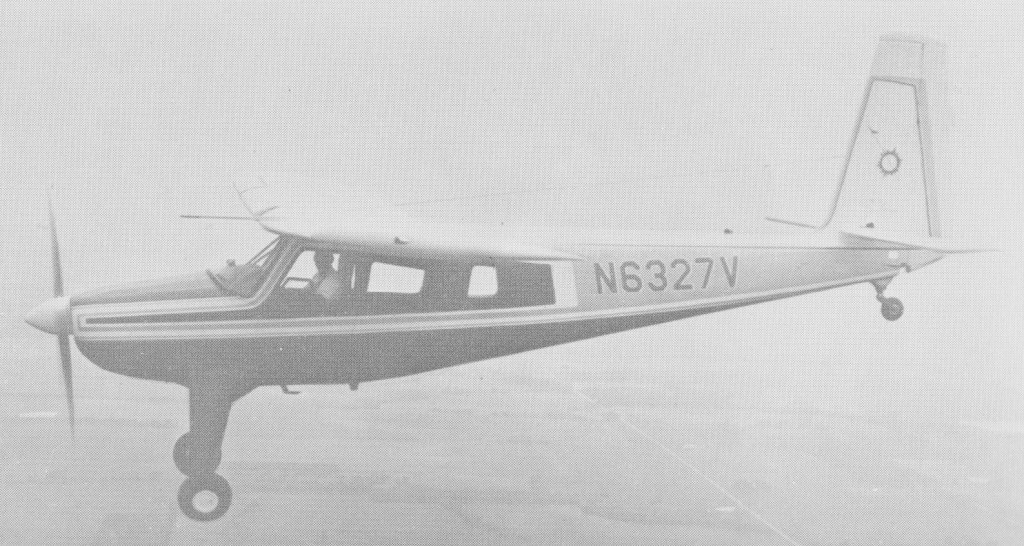
An early Helio Courier was evaluated by the Army in 1955 as a YL 24 but no order resulted. The YL-24 is a cantilever monoplane with full span automatic wing slats and drooping ailerons, which enable it to land in 50 yards and fly under perfect control at less than 30 mph. Powered by a 260 h.p. Lycoming engine, it is a four-seater.

Helio produced more than 450 piston engined Helio Couriers. Of these, 131 U 10s were delivered to the USAF under six separate fixed ¬price contracts between 1959 and 1968.
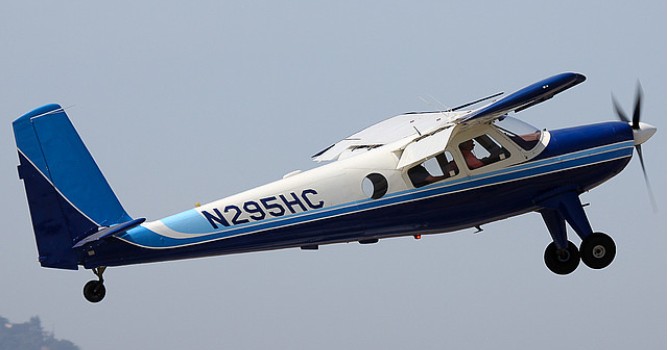
Two commercial versions of the Helio were the Super Courier H-295 with nonretractable conventional landing gear and the Tri-gear 54-Courier HT-295 with nonretractable tricycle gear. Three models are flown, by the U.S. Air Force: the U-10A with a fuel capacity of 60 gallons; the U-10B, a long-range version with tankage for 120 gallons; and the U-10D, an improved long-range version with a fuel capacity of 120 gallons and a gross weight boosted to 3,600 pounds.
Delivery of the initial four-set H-391 began in July 1954. Few were produced before the introduction of the H-391B, and a specialised high-altitude photographic version, the H-392 Strato-Cruiser, was powered by a 340 hp Lycoming GSO-480-A1A6.
The first model to be built in quantity was the H-395 Super Courier four/five seater first flown in 1958. After evaluation of three by the USAF, a number were ordered in 1962 for the USAF Tactical and Strategic Air Commands, and in 1963 twenty were ordered for the US Army and 24 for the Air National Guard, the military version designated U-10A.
The H-395A Courier is similar to the H-395 but has 260 hp GO-435-C2B2-6 engine, and 250 Couriers had been delivered by the end of 1963.
Approximately 450 Helio Couriers were built over 20 years.
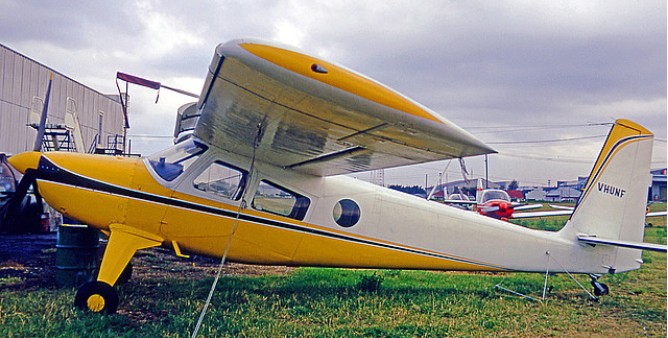
Courier
Engine: 145 hp Continental
YL 24 Courier
Engine: 260 h.p. Lycoming
Span: 39 ft. Weight: 3,000 lb
Cruising Speed: 157 mph
Seats: 4
U 10B Super Courier
Super Courier H-295
Engine: 1 x Lycoming GO-480-G1A6, 295 hp.
Prop: 3 blade, CS, 8 ft 0 in / 2.44 m
Wingspan: 39 ft 0 in / 11.89 m
Length: 31 ft 6 in / 9.61 m
Height: 8 ft 10 in / 2.69 m
Wheel track: 9 ft 0 in / 2.74 in
Max TOW: 3000 lb / 1360 kg
Empty weight: 2080 lb / 940 kg
Equipped useful load: 1251 lb.
Payload max fuel: 543 lb.
Fuel cap – std: 50 Imp.Gal / 60 USG / 229 lt
Fuel cap: 351/708 lb.
Wing loading: 14.7 lb/sq.ft.
Pwr loading: 11.5 lb/hp.
Max range MTOW: 690 mi / 1120 mi / 600 nm
Range max fuel/75% pwr: 1028nm/7.1hr.
Range max fuel / 55% pwr: 1165 nm/ 9.3 hr.
Service ceiling: 20,500 ft. 75% cruise: 144 kt.
Max level speed: 170 mph / 274 kph / 147 kt at SL
55% cruise: 126 kt.
Cruise 75% 8500 ft: 168 mph / 270 kph / 146 kt
Stall flaps up: 50 mph / 80 kph / 43 kt
Stall flaps down: 30 mph / 48 kph / 26 kt
1.3 Vso: 34 kt.
Initial ROC: 1150 fpm / 350 m/min
Best climb speed: 65 mph / 105 kph / 56 kt
TO to 50 ft: 495 ft / 151 m
Approach dist from 50 ft / 15 m: 253 ft / 78 m
Ground roll: 240 ft / 74 m
Min field length: 610 ft.
Undercarriage: Fixed tail wheel.
Seats: 6.
Loading: +3.8g, non-aerobatic
Base price 1970: £17,500 / $41,900
Courier H-250
Engine 250-hp Lycoming.
Seats 6
Gross wt. 3,400 lb
Empty wt. 1,890 lb
Fuel capacity 120-270 USG
Top speed 160 mph
Cruise 152 mph
Stall 31 mph
Initial climb rate 830 fpm
Ceiling 15,200 ft
Range 644-1,288 miles
Takeoff distance (50ft) 750 ft
Landing distance (50ft) 520 ft
H-395 Super Courier / U-10A
Engine: 295 hp Lycoming GO-480-G1D6
Wingspan: 39 ft
Length: 30 ft 9 in
Height: 8 ft 10 in
Wing area: 231 sq.ft
Empty weight: 2037 lb
Max loaded weight: 3920 lb
Max speed: 176 mph
Cruise 75%: 170 mph at 8200 ft
Econ cruise: 150 mph
ROC: 1350 fpm
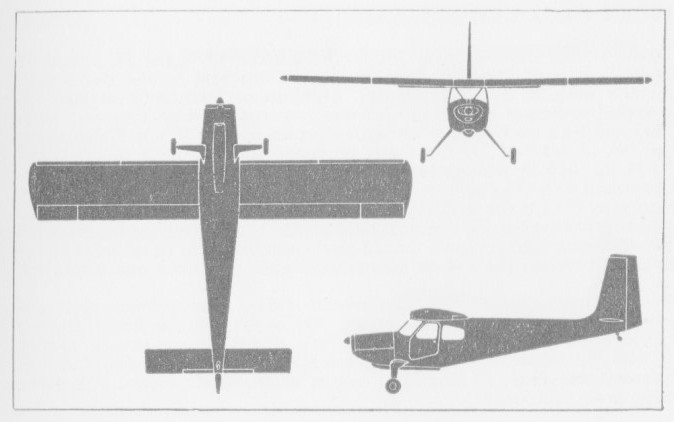
 All Aero