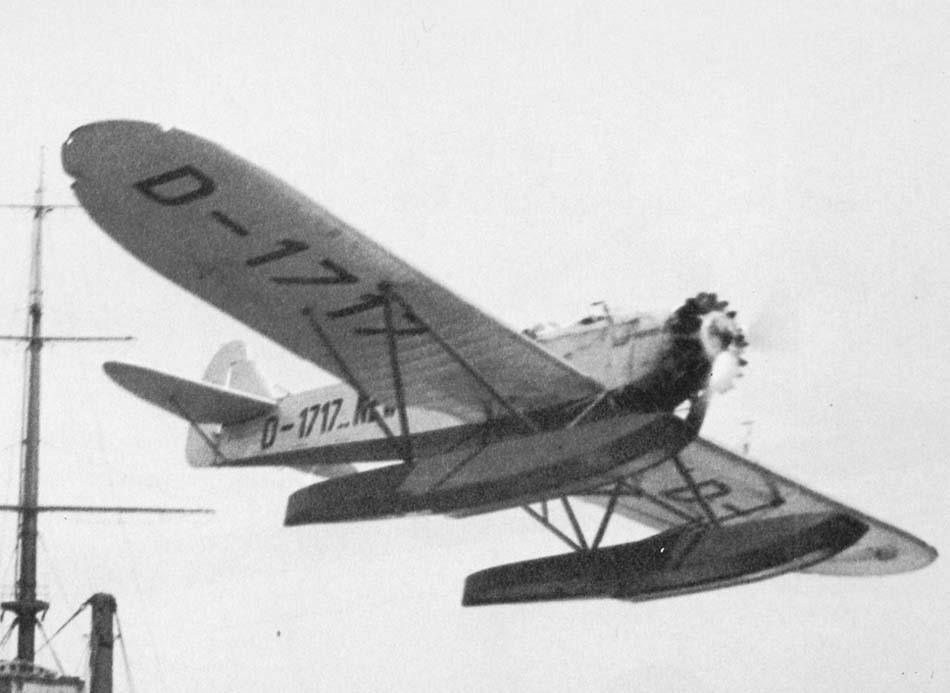
The Heinkel HE 12 was a pontoon-equipped mail plane built in Germany in 1929, designed to be launched by catapult from a liner at sea.
The concept was hit upon after Norddeutscher Lloyd (NDL) had carried a Junkers F.13 seaplane aboard the Lutzow during 1927 to provide joyrides for passengers when the liner was in port. NDL officials realised that a seaplane based on a liner could have a more practical commercial application, taking off with the liner’s airmail while still a long distance from port, therefore drastically cutting down time taken for the mail to arrive. Heinkel designed a catapult, which NDL planned to install on its new liners, the Bremen and Europa, and an aircraft to carry the mail. Since the crew of Lutzow had trouble providing the necessary maintenance for the F 13, Deutsche Luft Hansa agreed to provide the operational support for the venture, and when Bremen departed on her maiden voyage in 1929, a single HE 12 (D-1717) was carried aboard.
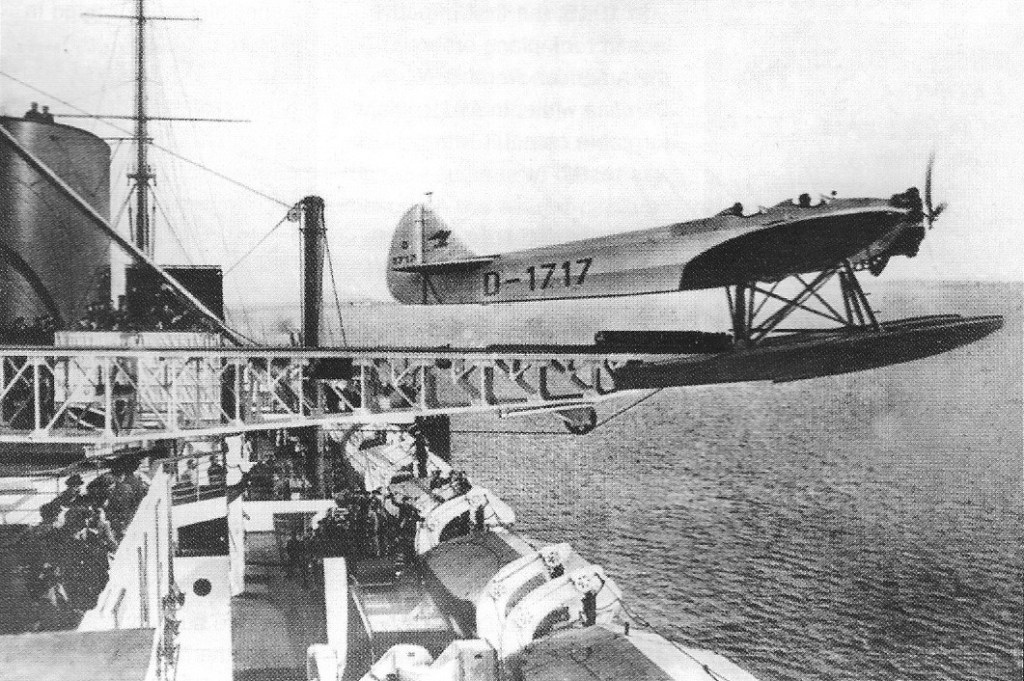
With the catapult the aircraft took-off at 110 kph / 69 mph at the nd of a ramp 20 m / 65 ft long.
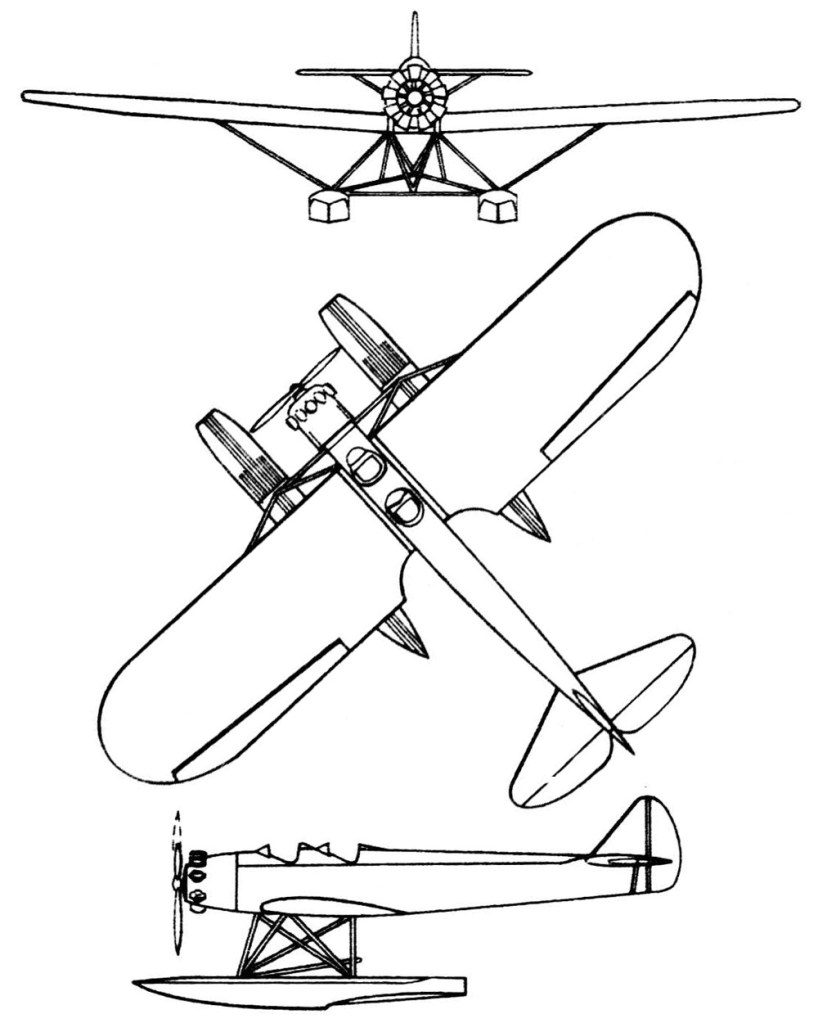
The HE 12 was a derivative of the military HE 9 design; a conventional, low-wing, strut-braced monoplane. The pilot and radio operator sat in tandem, open cockpits with the mail carried in a compartment behind them.
On 22 July, while still 400 km (250 mi) out of New York City, Bremen successfully launched the HE 12. When the seaplane was unloaded 2+1⁄2 hours later, mail from Berlin had taken just 6+1⁄2 days to reach New York. The next day, in front of a crowd of 3,500 people, mayor Jimmy Walker christened the HE 12 with the name of the city. On the return journey, the newly christened New York launched from Bremen near Cherbourg on 1 August, landing in Bremerhaven four hours later, in time for the mail to be transferred to another aircraft and arrive in Berlin the same afternoon, 5+1⁄2 days after leaving New York. Use of the seaplane saved around 20 hours on the westward trip, and 1–2 days on the eastward journey.
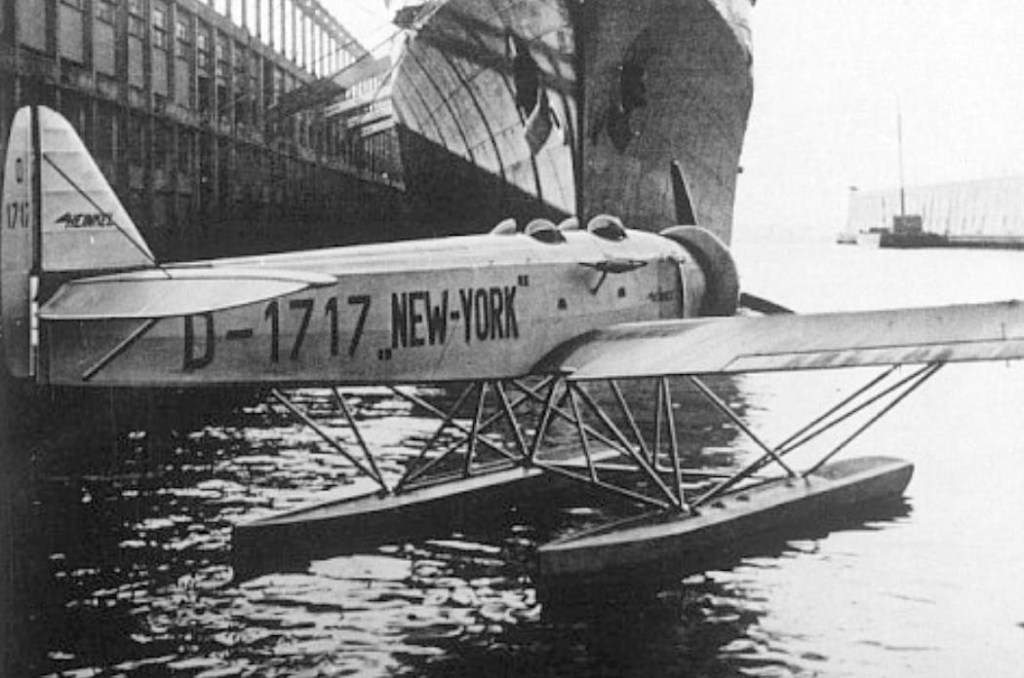
HE 12 (D-1717, New York) flew regularly from Bremen until severely damaged in an accident at Cobequid Bay on 5 October 1931.
Engine: Pratt & Whitney Hornet, 450 hp
Wingspan: 16.7958 m (55 ft 1.25 in)
Wing area: 48.46 sq.m (522 sq ft)
Length: 11.56 m
Height: 4.60 m (15 ft 1 in)
Empty weight: 1580 kg (3,483 lb)
Normal take-off weight: 2600 kg (5,732 lb)
Payload: 200 kg mail
Maximum speed: 216 km/h
Cruise: 192 km/h (119 mph, 103 kn)
Range: 1600 km
Service ceiling: 3,800 m (12,500 ft)
Crew: 2
 All Aero