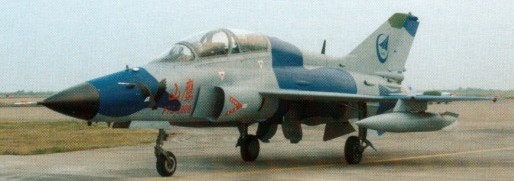
In 2001, Guizhou began development of a new trainer aircraft to replace the JJ-7 (MiG-21) trainers and better prepare pilots for flying the J-11 (Su-27) and J-10. To reduce costs and development time, Guizhou based their design off of the JJ-7. It uses the same fuselage and wings of the late-model JJ-7s, while radically redesigning the forward fuselage. The intakes were moved to the sides of the fuselage, allowing for a solid nose holding a radar. To improve the view for the instructor, the tandem cockpits were stepped. While intended as a trainer, it retains secondary attack capabilities. It comes standard with an ECM suite and a radar warning receiver, as well as an inflight refueling probe. Armament consists of an internal 23mm cannon and five hardpoints for unguided air-to-ground munitions and short-range AAMs.
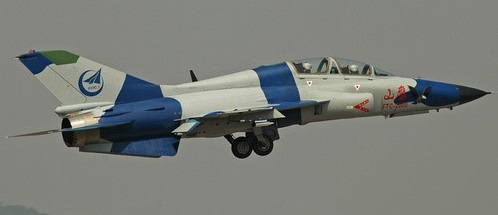
Also known as the FTC-2000 Mountain Eagle, on December 13, 2003, the JL-9 derivative of the JJ-7 first flew, from An Shun/Huang Guo Shu (AVA) airport. Involving little change from the JJ-7, the JL-9 took 28 months from design to first flight.
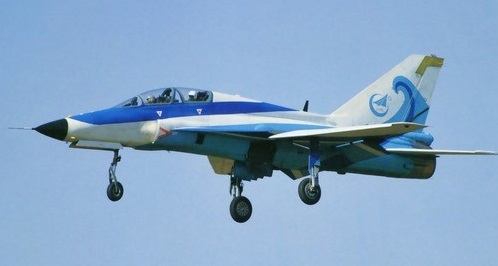
The PLAAF began service trials of the JL-9 in 2006, while Guizhou continued to upgrade the onboard systems. In 2009, the JL-9 passed trials, and began production.
Meanwhile a navalized variant for the PLANAF has arose, incorporating several major modifications. The nose intakes were modified to prevent engine stalls at high angles of attack, the vertical stabilizer and leading-edge root extensions were enlarged, and the ventral fins were deleted to make space for the landing hook.
 All Aero