
In the winter of 1929-1930 the OGPU leadership decided that it would be necessary to continue the chain of success of the TsKB -39 with a new bomber. In the spring of 1930 and again with great pressure on design and construction times, the requirements were delivered.
There is a version that alleges that the initiator of this idea was the then head of the TsKB-39 Ye. S. Paufler, who, seeing a high-wing aircraft with engines under the wings in a Farman promotion, decided that he should build something like that. All the builders refused except Grigorovich, who decided to take up the challenge.
Be it this way or not, the documents confirm that in the spring of 1930 and practically without the traditional approvals, the TsKB-39 was given the task of building a heavy bomber that was named Airplane-8 or TsKB-8. The VVS however refer to the model under the designation TB-5 (Russian: Григорович ТБ-5).
The deficit in aluminum production seems consistent that the air forces had opted for the creation of a model built from more affordable materials.
By the early 1930s, a new “Sháraga” or Special Technical Bureau (OTB) of the OGPU dedicated to the development of aircraft engines had appeared in the Soviet correctional system. Noted builders such as BS Stiechkin, NR Brilling, AA Bessonov were there.
This group was given the task of designing, testing and producing a 24-cylinder engine that was known as FED (an acronym for Félix Edmúndovich Dzerzhinski). This engine with 4-row distribution in X and central injection system, had to develop a power of 1,100 – 1,250 hp at an altitude of 3,000 meters and its construction was directed by AA Bessonov. These values were considerable for the time.
The FED was conceived as the power plant for the new TB-5 bomber and its installation was planned in two variants: on the wing leading edge or in gondolas fixed to the wing intrados. Different situations led to the FED not being available at the established time, so the TB-5 had to be equipped with 4 Gnôme-Rhône 9Aq engines , a licensed copy of the excellent British Bristol Jupiter VI engine later built under license in the Zaparozhie Factory No.29 as M-22. The engines were located in tandem under each wing console. Despite the fact that the total power was almost similar to that calculated, the new drive installation had much more frontal resistance and the efficiency of the propeller was reduced by the tandem configuration, which had a negative impact on performance.
Practically all the personnel of the TsKB and a large part of the personnel of the VR Menzhinski Factory No.39 in Khodinka were mobilized for the work on TB-5, where Paufler’s “Sháraga” would be transferred from the Butirka prison.
Airplane-8 was built in just one year, which was record time for such a large and complex aircraft. Grigorovich in the same period, in parallel, worked on the IZ fighter. The appearance of both models in May 1931 (and the resounding success of the I-5) practically caused Grigorovich to receive amnesty.
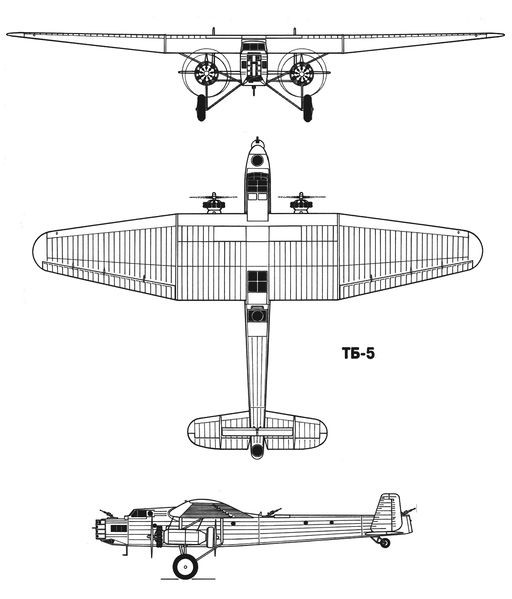
The TB-5 was designed as a high-wing bomber with a double tail unit. Its construction was mixed, with little use of aluminum, a metal short in the USSR of those years.
The spacious fuselage featured a skeletal structure constructed from fabric-covered welded steel tubes. For ground transportation, the fuselage could be divided into three sections: the forward section to the wing trailing edge, the intermediate section to the beginning of the stabilizer, and the tail section.
The TB-5 wing featured a three-spar structure and constant rib pitch. The stringers were built with special profiles made of duralumin and tubes. The ribs were formed by stamping. The construction of the wing was quite complex, especially when it came to covering the fabric.
The airfoil selected was the R-II with 18% in the midplane area and 12% in the extremes. The wing had some small bracing supports that also helped to give the necessary rigidity to the power plant.
The tail was built on the basis of a fabric-covered aluminum frame. The horizontal plane presented a second, thinner unit, located at a greater height and called “stabiliron”, creating a kind of biplane box. Its function was to decrease the force on the joystick during landing operations and trim changes.
In the TB-5, on each side of the fuselage, under the wing, two 480 hp Gnôme-Rhône 9Aq engines were installed in tandem, so that they moved a propeller with two wooden blades in a driving configuration and another in a driving configuration. This engine would later be built under license under the designation M-22. In order to improve cooling, the rear engine was fitted with a Townend ring around the cylinder head.
The projected bomb load (with the use of the FED engines reached 2,500 kg) was located in an interior hold in the fuselage. DER-18 supports were located on the sides of this hold, allowing the crew to move freely inside the aircraft.
Defensive armament consisted of three TUR-5 turrets with paired Degtyaryov light machine guns for aircraft. The first of these turrets was located above the forward navigator’s position, just in front of the cockpit; the second just behind the wing and the third in the tail section of the fuselage. Apart from these positions in the bow there was a mobile firing tower, developed in the armament section under the direction of AV Nadashkievich. This can be considered the first Soviet attempt to obtain a remotely operated turret using mechanical and electrical controls.
This tower was built in the form of a cylindrical tank that rotated around its vertical axis. In the front part it had a slot that allowed the vertical displacement of the two machine guns. The horizontal movement of the machine guns was ensured by the rotation of the tower. The gunner was located inside the tower and if necessary, could leave it using a rear door towards the nose of the aircraft. For the first time in the USSR two PV-1 machine guns were installed here, built on the basis of the infantry Maxim, but using air cooling instead of water. For the first time, uninterruptible belt feeding was also used.
The rotation of the tower was carried out by means of an electrical system and the vertical movement of the machine gun was carried out by the shooter, located in a small seat.
Pilot and co-pilot were located in a closed cabin, with seats side by side. The crew of the TB-5 had some facilities that could be considered a novelty for the time: a toilet and four hammocks for resting.
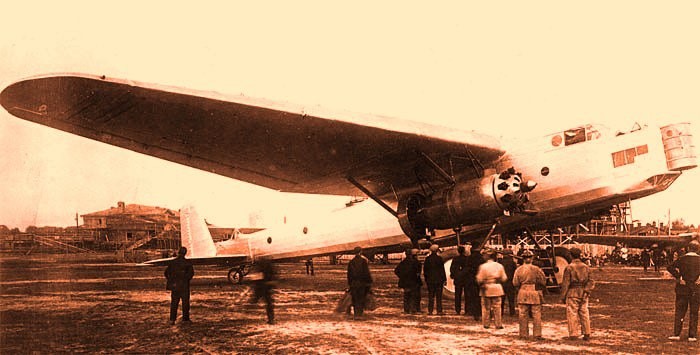
In the early summer of 1931 the TB-5 was first brought out onto the airfield. After engine tests and a few runs, the decision was made to allow the flight. On June 30, 1931, test pilot B. Buxgolts made the first test flight over Jodinka airfield.
After landing, Buxgolts came down from the cabin smiling and said:
- “Stability in the air is good. Ease of control excellent. Very little pressure on the rudders.”
By July 20, the plane had made four successful flights. With a weight of 11,200 kg and a fuel capacity of 1,850 kg, it had managed to cover a distance of 1,100 km during 6.7 hours of flight with an average speed of 162 km/h and a ceiling of 3,000 meters. Range with maximum fuel load of 2,410 kg and takeoff weight of 12,060 kg (including 500 kg of bombs) was 2,100 km. The maximum speed recorded was 180 km/h, the ceiling was 3,500 meters and the take-off run was about 400-420 meters.
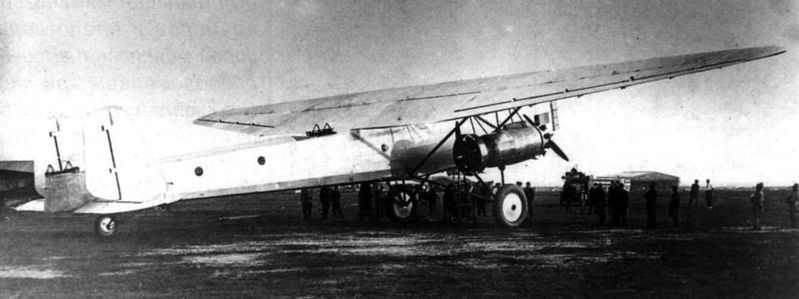
The performance obtained was not high, especially when compared to the Tupolev TB-3 bomber that had already been flying for a few months. The main cause of these results was the powertrain. The propellers used were more suitable for a fighter than for a bomber of that size. To make matters worse the rear propeller had to be shortened so that it could operate under the wing.
Despite these difficulties, the TB-5 presented a not insignificant set of advantages, among which stood out a better distribution of defensive weapons, better distribution of the bomb load on the plane, smaller dimensions and weights, much lower cost and simpler construction. The group of builders did not lose hope of being able to count on the promised FED engines, with which performance should be increased significantly. It should be noted that by the summer of 1931, Factory No.24 had 12 engines of this type in production and had aggregates and components for another 10 units.
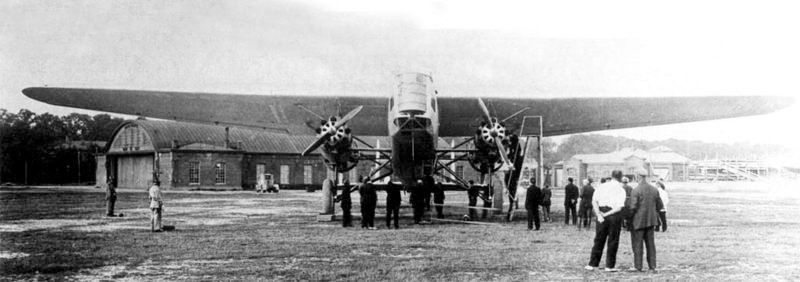
All these possibilities were evaluated and finally on July 25, 1931 the Labor and Defense Council (STO) asked the Pan-Soviet Aviation Union to prepare the conditions to produce six TB-5 bombers (one as a prototype of the series and the other 5 to perform military operation tests). Almost in parallel with this decision, these specimens were included in the plans for the formation of the new bomber squadrons for 1932.
The head of the VVS PI Baranov considered that, due to the delay presented by the FED engines, it was advisable to postpone the manufacture of the TB-5 copies for the year 1932 and he sent a request with these reasons to the United Council of the Economy of the USSR (VSNJ according to the initials of Vsiesoyuzni Soviet Narodnovo Jozyaistva). However, the chairman of the Council of People’s Commissars (SNK) VM Molotov had other ideas, so he ignored Baranov’s request and instead requested to take the necessary measures to speed up the construction of the series. According to M. Maslov the reasons for this decision could be of a political nature. The TB-5 bomber had been created within the OGPU and just a few days before, on July 6, 1931, this organization had given Stalin a demonstration of its achievements. There he was shown the I-5 fighter, the R-5 reconnaissance aircraft, the TSh-1 attack aircraft, the TB-5 bomber and the modern IZ gun-wielding fighter. Stalin was widely pleased and hinted that the OGPU leadership seemed to have succeeded in finding the most productive formula in aeronautical development. As a collateral consequence of this presentation, on August 27, 1931 the TsKB and the TsAGI would be unified under Czech control in the TsKB-TsAGI organization headed by Ye. S. Paufler.
During this time the TB-5 had received a significant group of improvements. In the month of June 1931, work was done on the structural reinforcement and the fixing system of the engines. The cockpits were fitted with upper access hatches, glazing was introduced in the midplane trailing edge area, the Townend ring was removed from the rear engines.
During the winter of 1931-1932 the bomber was prepared to operate with skis and several flights were made to analyze its behaviour. The design group was working on improving the conditions for installing the still awaited FED engines, but other variants of installing engines on the leading edge of the wing were analyzed. Works on this configuration were led by SA Kochierigin. Scale models with this configuration were tested in the TsAGI wind tunnel.
During this stage, other aeronautical constructors such as BI Cheranovski, VP Yatsenko and AN Refaeliants worked on the plane.
Unfortunately, the construction of the series could not be carried out, mainly because Factory No.39 was overloaded with the production of several experimental models.
The TB-5 flights continued and Soviet pilot MM Gromov would participate in them.
During one of the days of May 1932 and during a flight at a height of 800 meters a strong vibration began. The cause was that the left rear engine detached from the mounting bracket and the propeller broke the fuselage and embedded itself in a wooden bomb mock-up. The fuel caught fire.
Gromov ordered to shut off the fuel supply to the engines and began to glide with dives over the left wing to try to put out the fire. Eventually this was achieved and the pilot made a forced landing at Factory No.22 airfield in Fili. Only at this moment did they become aware that when the flames intensified the engineer AV Chesalov, who was in the wing area, had parachuted down to land without difficulty.
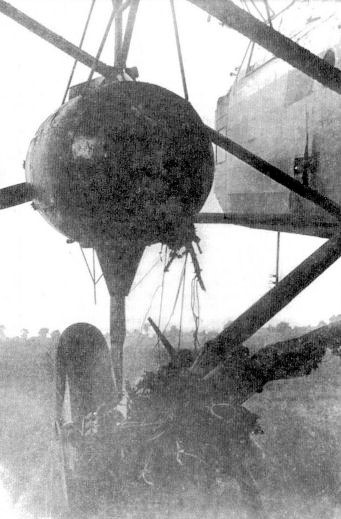
After this mishap, the TB-5 remained in Fili until December, without repairs being attempted. Grigorovich had switched to the development of fighters.
At the end of 1932, after verifying that the manufacture of the Túpolev TB-J bomber (military version of the ANT-14) was even more complicated than those of the TB-3, it was decided to return to the subject of the TB-5.
To assess the possibility of re-establishing the TB-5, a commission was created led by the representative of the TsAGI VN Chernishevich, who worked on December 1, 1932. As expected, the competing aircraft was harshly criticized: the aircraft was valued as overweight, with poor motor installation and design problems. On the other hand, the TB-5 had had its engines, part of the flight instruments, and weapons disassembled, and it was estimated that to give the bomber full flight capacity again, it would be necessary to invest 75 or 100 thousand rubles.
The commission considered that to improve the bomber it would be necessary to reinstall the engines on the wings, which would guarantee an increase in speed, which would reach 190-200 km and a ceiling of 4000 m, but the cost of the modifications would amount to 200 thousand rubles.
Incredibly, despite these assessments, it was decided to restore it with the proposed modifications, for which it would be returned to Factory No.39. A short time later, at a meeting of the VVS management, it was recognized that even with the modifications, the benefits of the TB-5 did not satisfy the requirements of the moment.
In the month of February 1933 the head of the GUAP Baranov instructed:
- “The plane disarm it. Works on him stop them.”
With this it all ended. TB-5 was not restored and its remains were handed over to the TsAGI structural resistance department. The Tupolev TB-J also did not see the light of day, as by the end of 1933 the specifications for bombers had grown considerably.
On the basis of the TB-5 in 1931 Chertverikov developed the reconnaissance flying boat MDR-3 or TsKB-11, which kept the design of the wing, tail and structural elements of the bomber. Finally, this design would not be produced either.
TB-5
Powerplant: 2 × 480 hp M-22 ( Bristol Jupiter VI
Wingspan: 31.00m
Wing area: 150.00 m²
Length: 22.10m
Height: 5.02m
Empty weight: 7483 kg
Normal takeoff weight: 12535 kg
Wing loading: 83.5 kg/ m²
Power Load: 7.0kg/hp
Fuel + lubricant capacity: 3300 kg
Top speed: 200km/h
Cruising speed: 182km/h
Range: 2100 km
Ceiling: 3500 m
Accommodation: 5 – 7
Armament: 3 x TUR-5 type turrets with paired Degtyaryov light machine guns / 1 x pair of PV-1 machine guns
Bombload: 1000 kg
 All Aero