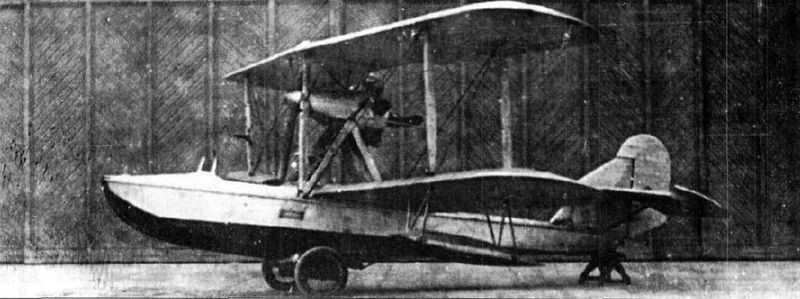
Attempts to modernize the M-5 flying boat gave no improvement and the objective could only be achieved through a totally new construction. Grigorovich decided to take on the task. The new design would see the light as MU-2 (Russian: Григорович МУ-2) or Morskoi Uchebni – 2 (Naval Trainer).
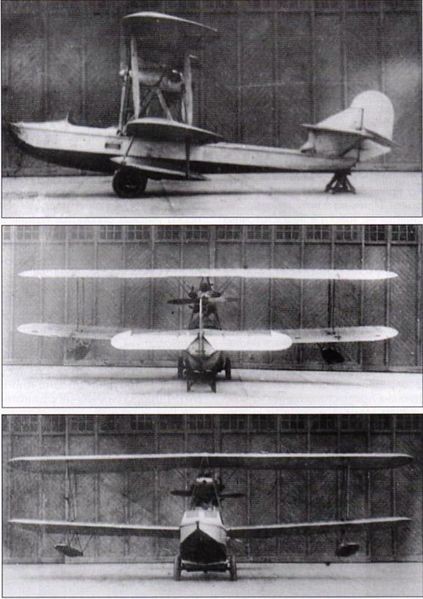
For the MU-2 Grigorovich selected the 100 hp Soviet M-11 engine. The hull was built entirely of metal and featured a new deck design with straight contours and an angular groove, which should give it good seaworthy characteristics, apart from being easier for production. The structure of the MU-2 contained 27 frames, of which 5 constituted the supports for the watertight compartments of the hull.
The wooden wing had a double spar structure with an Eifel-367 profile. The interplane uprights were also made of wood. Ailerons were on both planes.
The structure of the tail was made of duralumin, covered with fabric.
The shrouded M-11 radial engine sat on a pyramidal structure of metal tubes and drove a pusher propeller. The main fuel tank, with a capacity of 105 liters, was located in the hull, behind the cockpit. An auxiliary tank for direct supply to the engine, with a capacity of 11 litres, was located in front of it, protected by the elongation of the cabin. The transfer of fuel from the main to the auxiliary tank was carried out by a compressor or a manual reserve pump.
The MU-2 flying boat featured an open cockpit with a windshield for its two crew members sitting side by side. The control was by lever and the instrumentation was duplicated. The pilots’ pedals were synchronized.
Construction of the MU-2 began in 1927 at GAZ No.3 “Krasni Liotchik” from Leningrad and was completed without the presence of Grigorovich, who was in prison at the time.
During the construction process it was found that the MU-2 would be 150-200 kg heavier than the calculated values. The empty weight reached 820 kg, of which 220 corresponded to the hull. This was because the dimensions of the hull remained generally similar to those of the M-5, when according to the regulations, taking into account its metallic construction, they allowed a 10% decrease in size. Although the construction was quite careful, it was impossible to maintain the 660 – 700 kg of the project.
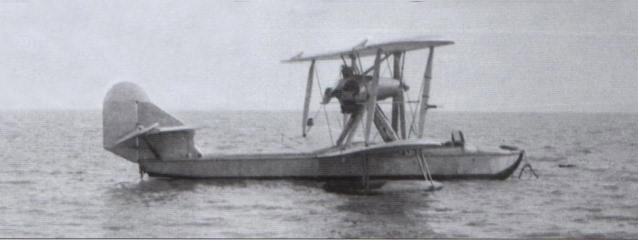
The tests of the flying boat began on August 29, 1929 at the testing station of Factory No.31 in Taganrog with the naval pilot ST Rybalchuk as responsible.
On September 6, 1929 the future of the MU-2 was discussed during a meeting of the Technical Committee of the Aviatrust. The most renowned shipbuilders of the time were present at this activity: Richard, Artamonov, Zhuravchenko, Samsonov, Chetverikov and Polikarpov.
MU-2 was reported to be at Taganrog, where the pilot Rybalchuk had executed the first flight. Preliminary results showed that the cabin was narrow, but the access hole was very wide. The flying characteristics of the flying boat were assessed by the pilot as rather poor and he also stated that the plane would not be able to get out of a spin. The climb did not stand out either, since the MU-2 reached 3,500 meters after 85 minutes of flight. The take-off run was quite long.
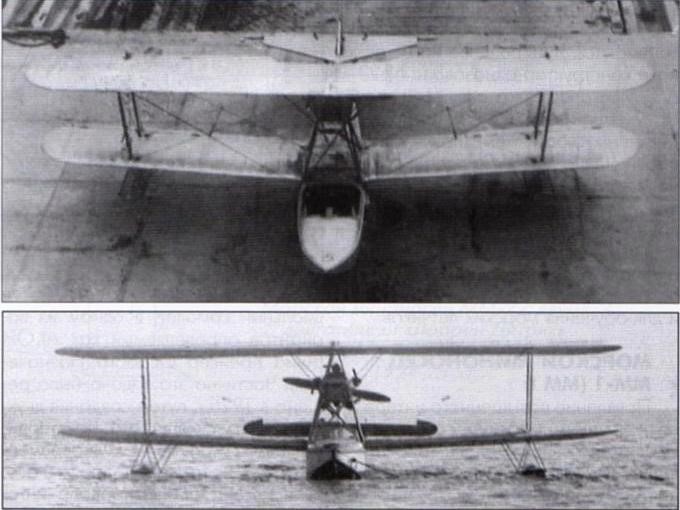
It was further noted that the centering of the MU-2 was similar to that of the Italian model Savoia S-16, located at 38% of the length, so it was proposed to carry out tests in the wind tunnel of the TsAGI and then proceed to improve the apparatus.
In practice nobody did anything to improve the MU-2. Shortly after, using this design as a basis, the builder of Factory No.23, A. S. Moscaliov, would present his project for a wooden-hulled training flying boat that would receive the name MU-3. This model was built during 1931 and later successfully tested, but would not go into series production as it was displaced by the Shavrov Sh-2.
Powerplant: 1 × 100 hp М-11
Wingspan: 11.80m
Wing area: 35.60 m²
Length: 8.60m
Empty weight: 820kg
Normal takeoff weight: 1086 kg
Fuel weight: 90kg
Maximum load capacity: 266 kg
Wing loading: 30.5 kg/m²
Power Load: 10.9kg/hp
Maximum speed at sea level: 136 km/h
Cruising speed: 108km/h
Landing speed: 70km/h
Practical range: 380 km
Endurance: 3 hours
Practical ceiling: 3150 m
Time to 1000m: 10.8min
Time to 2000m: 26min
Time to 3000m: 53min
Turn time: 18 sec
Take-off run time: 35 sec
Landing run time: 12 sec
Accommodation: 2
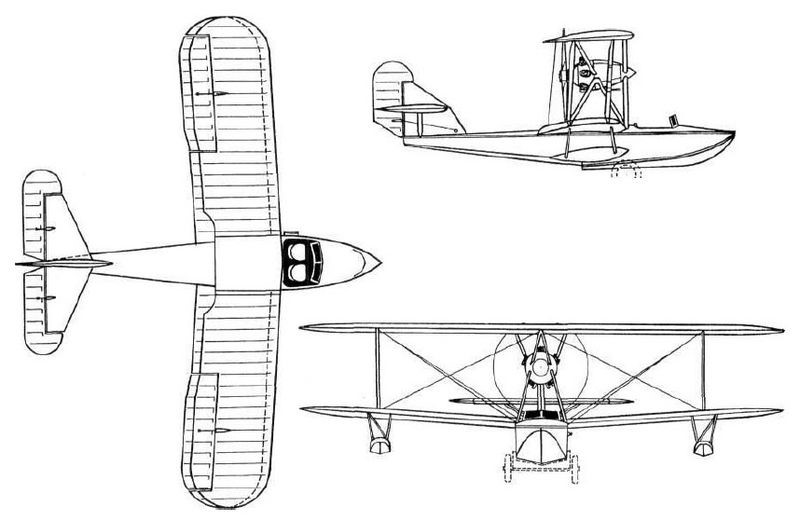
 All Aero