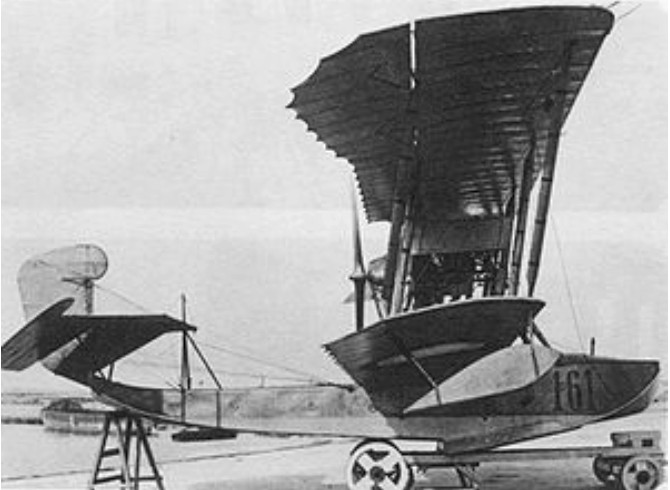
In 1915 the leadership of the Fleet, encouraged by the success of the M-5, decided to ask Schetinin for a larger flying boat. The task of development was assigned to the technical director of DP Grigorovich. The main problem facing the builder was the selection of contours. In the search for the optimal hull, the M-6, M-7 and M-8 were be developed.
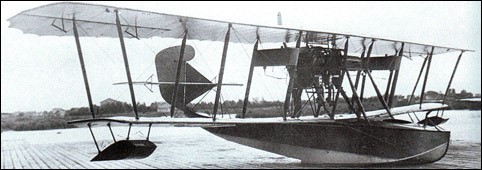
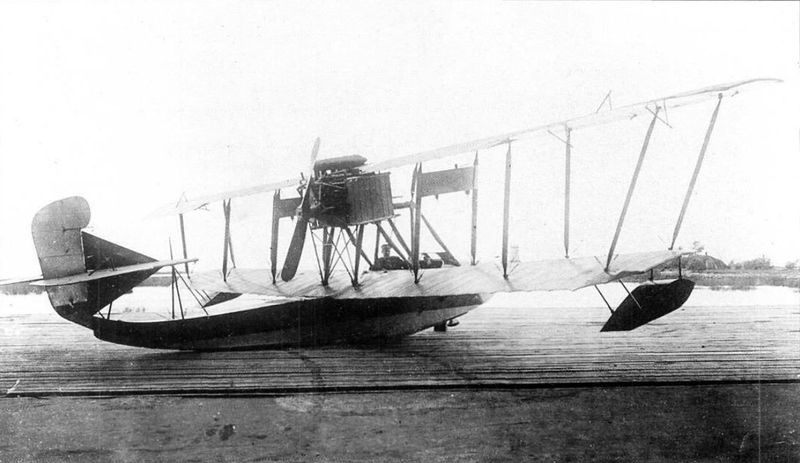
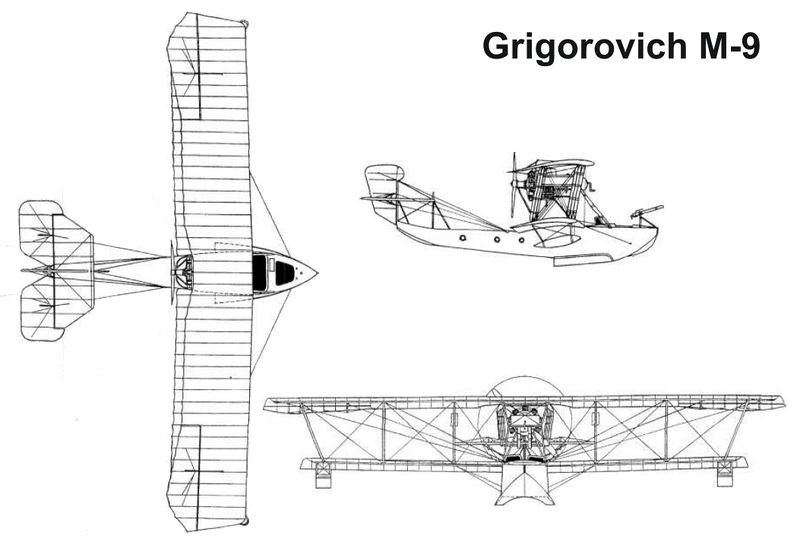
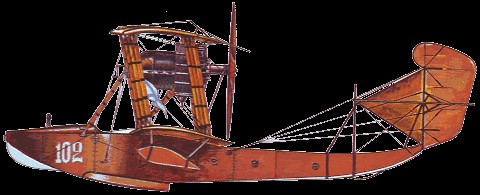
The Grigorovich M-9 (Russian: Григорович М-9, also known as the ShchM-9 or Gidro-9,) was similar to the earlier M-5, but featured larger dimensions and a more powerful powerplant. In general, it was a biplane with three sections and a single-pronged hull.
The double-spar wing was characterized by its large span and differed very little in construction from that of the M-5.
The hull true ribs and a thicker coating. During the development of the model a series of modifications were made to the lines of the hull. The first were characterized by presenting a convex bottom in the region of the rim (similar to those of the M-5) with lateral expansions in the form of three-sided plywood trunks, which is why they were known as “widened rim”. Subsequently, boats with a sharp keel and auxiliary deflectors in the region of the redient were built, 1.5 meters long and 0.1 m wide, which facilitated takeoff.
The weight of the empty aircraft was 1060 kg when it left the assembly workshops, but this increased during operation as the wood absorbed a certain amount of water and through different repairs. Compared to the M-5, the M-9’s rudder was considerably larger in size.
This device could accommodate two or three crew members, divided between a forward cabin for the gunner that communicated with the wide flight deck located in front of the plans and that housed the pilot and the observer seated side by side. In a two-man configuration the forward gunner position was occupied by the pilot on the right (observer), who crawled into the nose position. On some occasions the crew consisted of three people. A Ruzie radio station was installed in the cabin.
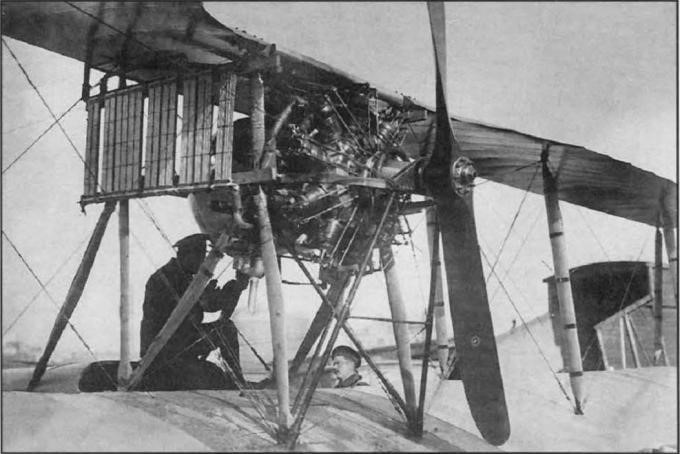
The prototype was powered by a 140hp Salmson engine, but the main propulsion version featured a 150hp Salmson Canton-Unné liquid-cooled radial engine which featured radiators mounted on each side. As alternative power plants, Salmson 130 and 160 hp, Renault 220 hp and possibly Hispano-Suiza 140 hp were installed in a few examples. The engine was installed on a wooden frame fixed to the links between the wings and the fuselage.
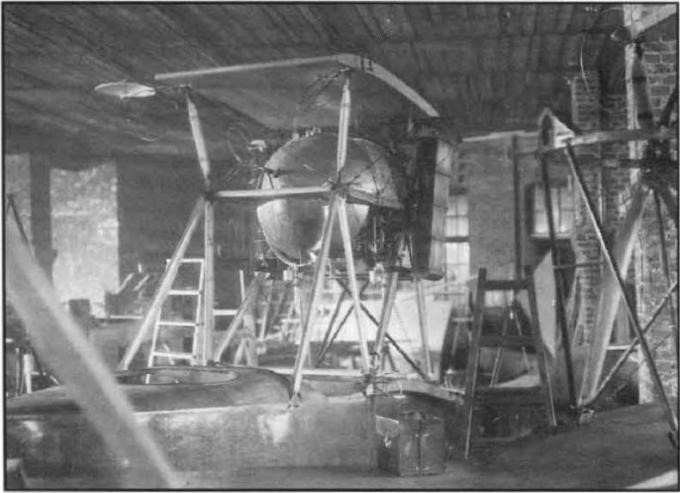
The prototype was characterized by the presence of a spherical fairing covering the fuel supply tank, the oil tank and the front part of the engine. In later specimens, the 15-liter feeding tanks were installed in the space between the inter-wing supports. The main fuel tank, with a capacity of 225 liters, was located in the fuselage, behind the cockpit. The fuel supply was carried out by air pressure in the main tank, obtained through the use of a compressor. To control this process, a special manometer was installed that could be observed from the pilot’s position, turning the head backwards.
The radiator was generally located on either side of the engine and two types were used: trunk and flat, sectioned.
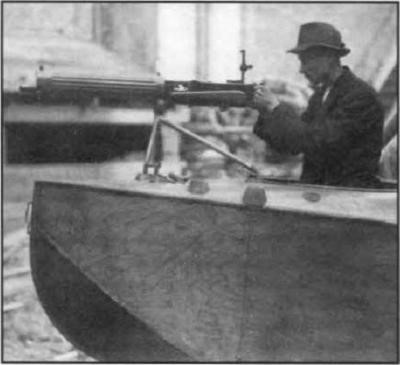
Armament was generally composed of a Maxim or Lewis machine gun located on a tripod. In a certain number of examples, a 20 mm Oerlikon cannon was installed at the bow, destined to beat small naval units, which made the M-9 the first flying boat in the world to use the cannon as a weapon. The Hotchkiss cannon was also used on some examples. Under the lower wing were four mounts capable of carrying a combination of bombs of up to 100 kg.
In 1917, a 37 mm “Pyuto” gun built by the Obukhovsky factory was installed in the bow of the M-9. A production of 50 with this armament was planned, but those plans did not come to fruition.
The first prototype of the M-9 was ready in November 1915. It was winter and in Petrograd and impossible to carry out the tests, so the plane was sent to Baku, to be tested in the Caspian Sea. The maiden flight was carried out on January 9, 1916 at Baku.
The tests, carried out between December 25, 1915 and January 9, 1916, showed good seaworthy conditions and response to controls in the water.
The hull was capable of operating with waves of up to 0.50 m and both take-off and landing were smooth. In the air the M-9 was stable and easy to pilot. In relation to other flying boats of the time, it was characterized by having a good load capacity.
Based on the excellent opinions issued by the test pilots on February 4, 1916, the Schetinin Factory received the request to prepare 50 M-9 copies with deliveries for June 5 of that year. Later another request for 65 machines would be made. with deliveries in August and shortly thereafter another request for 165 M-9s to be delivered in November.
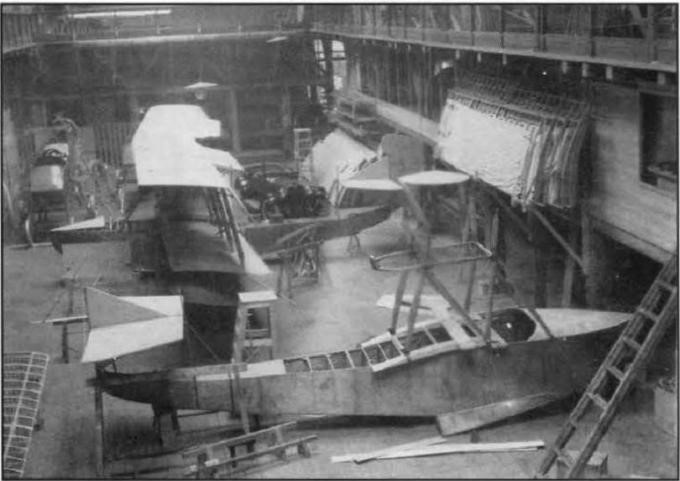
The increase in orders for the M-9 led Schetinin to consider increasing its production capacity. For the development of the tests, the PRTV developed an experimental test station on Krestovski Island in Petrograd with equipment to lower the boats into the water. Another similar station was created in Sevastopol ‘s Kruglaya Bay, where it was hoped to build a branch for aircraft construction and upgrades.
In 1916 Schetinin decided to start developing the Yaroslavl branch, but after the October Revolution these works were abandoned.
Between April 1916 and mid-1917 at the PRTV factory, at least 212 M-9 examples were produced. By the middle of 1917, the aviation of the Black Sea Fleet had received more than 100 units and that of the Baltic Sea some 86 copies. For the creation of this model the Russian Naval Staff awarded Grigorovich the Holy Vladimir Order of the 4th level.
In May 1918 the Schetinin Factory received the name “Gamayún” (by virtue of its telegraphic address). In this year the factory received the task of building 15 M-9 units and on September 19 a new order was received for 40 units. A certain number of copies would be completed in the years of the Civil War. The last M-9s were delivered to the fleet in 1923.
Up to 1923, about 500 copies of the M-9 were produced.
During the Russian Civil War, M-9s participated in the air defence of Baku, dropping approximately 6,000 kg of bombs and 160 kg of arrows. The aircraft also carried out photo reconnaissance, artillery spotting and air combat sorties.
The M-9 flying boat was used in the Baltic against German forces as a coastal reconnaissance aircraft and bomber and in the Black Sea, where it faced Turkish, Bulgarian and Romanian forces.
The main problem of the M-9 was the great resistance of its engine and radiators, so its speed reached about 110 km/h to about 100 km/h. This prevented it from being an effective competitor to the German Albatros fighters with floats, capable of reaching speeds between 150 and 160 km/h.
The M-9 was also used for the first experiments on sea shelve study, participating in the finding of new oil fields near Baku.
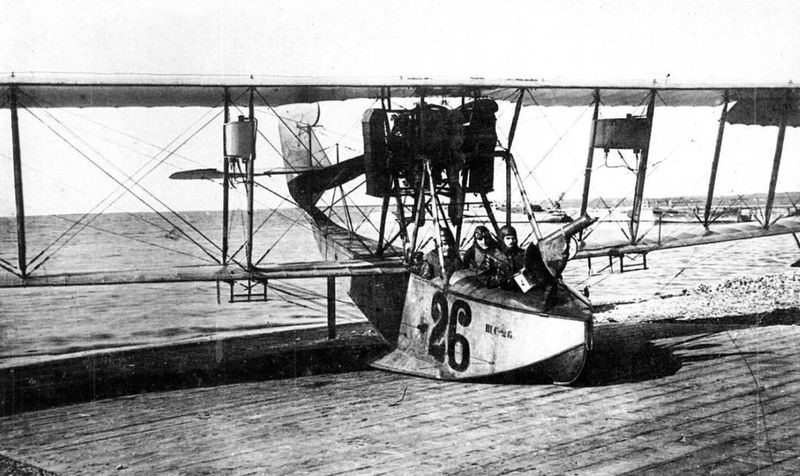
Nine M-9s were captured by Finland during the Russian Civil War. One was flown by a Russian officer to Antrea on April 10, 1918. It sank the following day during type evaluation. Eight more were taken over at the airfields at Åland and Turku. The aircraft were used until 1922 by the Finnish Air Force.
Operators were, the Russian Navy, White Army, Finnish Air Force, and Red Army. Several samples of M-9 were purchased by the United States, and the United Kingdom purchased its drawings and technical documentation.
By May 1, 1923, the first of the M-9bis series, with number 1717, was ready and by the beginning of June a commission chaired by the representative of the Scientific Committee of the VVF, the engineer Yermolaiev, developed the first tests of evaluation. The flights were carried out by the naval pilot V. G. Chuxnovski.
In 1921 GAZ No.3 one of the M-9 was modified with the installation of a 220 hp Renault engine. The prototype was successfully tested and would soon be renamed M-9bis. On July 19, 1922 at GAZ No.3 “Krasni Liotchik, a commission of the aeronautical department of the Main Directorate of the Military Industry (GlavBoyenProm) met, which studied the factory’s capabilities and analyzed the possibility of building eight new aircraft with M-9 hull and Renault powerplant. In August of that year, during the establishment of the industry’s production program for 1922 – 1923, the construction of 56 M-9bis copies was approved.
Taking into account the differences between the modernized model by Grigorovich and the M-9bis, the commission decided to approve the new name M-24, classify it as a naval reconnaissance hydrofoil and gave a positive assessment of the aircraft’s maritime and aeronautical characteristics. It was decided to authorize its serial production as the M-24.
In 1918 all Petrograd aviation factories were unified into the Petrograd Unified Aviation Factory. On June 16, 1921, the “Gamayún” factory (former SS Schetinin PRTV) was practically destroyed by fire. All the equipment and materials that could be salvaged were transferred and distributed between the RBVZ and the old Lievediev factory. After the restructuring of the economy, this unified factory would be renamed the State Aviation Factory (GAZ) No.3 “Krasni Liotchik” (Red Pilot).
In this factory, even before the arrival of Grigorovich , it was decided to continue the production of the flying boat M-9. In 1921 in one of these assembled examples a 220 hp Renault engine was installed. The prototype was successfully tested and would soon receive a new designation M-9bis.
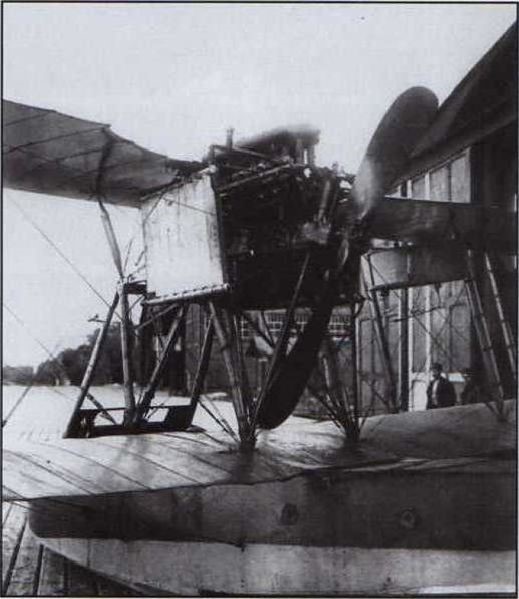
Designed by RM Kholotov, the modified prototype was successfully flown for two years and the pilots claimed that in relation to the M-9 the new model presented better flight characteristics and behaved better in the water. The recorded speed reached 130 km/h, well above the 90-100 km/h recorded by the M-9 floatplanes in operation.
Motivated by this positive evaluation, the “Krasni Liotchik” factory received a request from the naval aviation directorate to modify another three examples, but soon in its operation it was shown that the structural resistance of the model did not respond to the new engine power and worsened the operation on water. It was concluded that it was not enough to increase the engine power, it was necessary to make modifications to the flying boat in order to achieve an effective result.
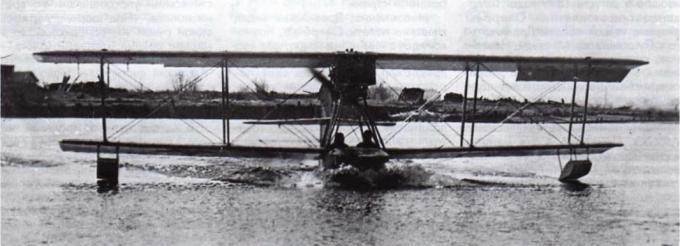
M-9s intervened in the Baltic, some from the Orlitza hydro transport and others from the bases on the island of Saaremaa and Tallinn. The first copies would arrive at these units in May 1916.
Led by Jan Nagursky, nine M-9s from the Kilkond (now Kihelkonna) naval airbase bombed the German base at Angern in June 1916. Intercepted by German fighters, Nagursky broke contact by looping, a maneuver never performed to date in a flying boat. On September 17, 1916 Nagorsky repeated the stunt on his own base and with maximum payload on board. Two loops were made with a passenger on board. The record was confirmed by the council of the Imperial Flying Club on November 12, 1916, being considered world-wide.
In the Baltic the absence of a machine gun covering the rear hemisphere caused heavy losses when engaging new enemy fighters, so from 1917 in the Baltic it was necessary to accompany the M-9s with Nieuport-17 and Nieuport-21 ground fighters. Some pilots independently tried to solve this problem by installing backward-firing machine guns on the lower wing (above or below) and creating a whole range of combat methods in order to achieve some result with them.
In this period, Russian pilots managed to claim at least a dozen kills of enemy aircraft against similar losses of their own. On July 12, 1916, an air combat took place between an M-9 piloted by Lieutenant PA Turzhanski and five German flying boats, one of the latter being shot down.
In July-August 1917, some 30 M-9s (with SchS registration) and 13 M-15s (with SchI) were located on these bases, with the following distribution:
Brigitovka Station (Revel)
4 М-9 (ШС-52, 65, 61, s/n), 4 М-15 (SchI-10, 12, 14, 15)
Kilkond (Kihelkonna) Station
8 М-9 (SchS-59, 37, 60, 49, 28, 16, 39, 38), 4 М-15 (SchI-7, 1,8, 13)
Gapsal Station (Japsalu)
4 М-9 (SchS-22, 25,51,62)
Gogenholm Station (Reizi)
3 М-9 (SchS-35, 46, 47)
Tseriel (Syare) Station
1 М-9 (ШС-50), 4М-15(SchI-2, 4, 5, 6, 9, 11)
Abo Station (Turku)
6 М-9 (SchS-44, 53, 57, 66, 67, s/n)
Metiluoto Station
2 М-9 (SchS-56, 58)
Arensburg Station (Kingisepp)
1 М-15 (SchI-3)
Raymo Station
3 М-9 (SchS-45,69, s/n)
Degere station
4 М-9 (SchS-23,33, 34, 43)
By the end of 1917, in the Baltic naval aviation , it was considered that the M-9 could only be used where there was no enemy strength in the air, since the absence of rear defense and low vulnerability made it an easy prey for enemy fighters.
Starting with the 1918 offensive, the number of M-9 flying boats available decreased considerably. After the evacuation of Finland there were about 10 M-9 copies.
A number of examples were taken into service with the Red Air Fleet in the Petrograd region.
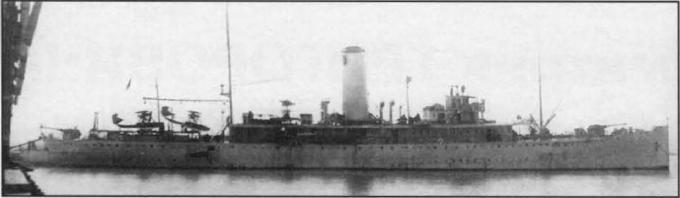
M-9s from the Black Sea entered service with the air divisions based in Odessa and Sevastopol. At the beginning of 1915 the seaplane carriers Alexandr I and Nikolai I entered service in the Black Sea, constituting a division of hydroplane cruisers together with various support vessels. Each hydro transport was equipped with eight flying boats, initially Curtiss F and Grigorovich M-5. Mid 1916, these hydrocanoes were replaced by M-9, which were lowered into the water and hoisted on board by means of large cranes supplied on the ship itself. Later, some merchant ships of Romanian origin were converted into transport ships for M-9s.
The Grigorovich M-9s, both from their transport ships and from installations on the mainland, carried out a large number of raids against shipping and naval bases in Bulgaria, Romania and Turkey, conducting air raids over the Bosporus, Varna, Constanta and other military objectives. During the summer of 1916 several M-9s were fitted with Oerlikon guns for anti-ship missions.
In the Caspian Sea during 1918 and early 1919, two M-9 were used, of which at least 1 was used in military operations against Turkish forces. By the end of 1922, one of these flying boats was used in the Baku area for the purpose of carrying out studies on the sea. Flying at altitudes of 500 – 900 m, the pilots managed to find new oil deposits.
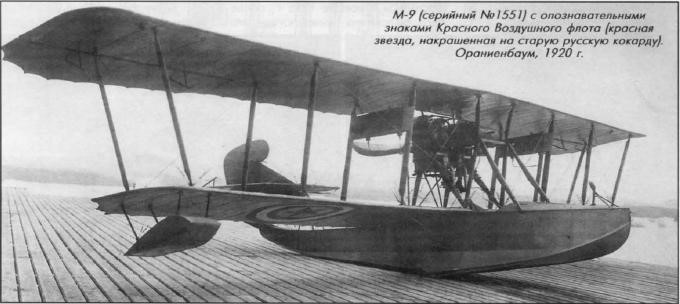
The M-9s took an active part in the Russian Civil War. White forces used 5 M-9s in the Black Sea area in the summer-autumn of 1919. Three other examples were made airworthy in the Don Air Division.
Until mid-1919, some 40 examples of the M-9 were prepared at the “Gamayún” factory (former PRTV of SS Schetinin), which entered service with the Baltic Sea Air Brigade.
A distinctive feature of the Civil War in Russia was its development along the course of the great rivers (Northern Dvina, Dnieper, Volga, Kama). The fundamental milestones of their performance were marked by some devices flown by Bolshevik pilots: they operated from special barges anchored in the Volga and Don rivers. These barges were towed to the areas of operations when their presence was required and, once there, the M-9s were floated on the surface of the river using purpose-built ramps.
Particularly famous was the “Komuna” barge, capable of carrying 6 flying boats in a special hangar and belonging to the Volga Air Division. In April 1919 this division’s flotilla consisted of 6 M-9s, 2 M-20s, and one Nieuport-23 wheeled fighter. The total number of M-9s used by the forces of the Red Air Fleet in 1920 totalled about twenty examples. By 1921, this figure was maintained thanks to constant repair and maintenance actions, but from then on it gradually decreased.
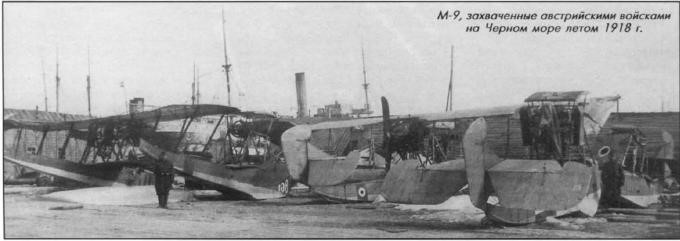
In the middle of 1917 in the Black Sea 48 M-9 were registered. Beginning in the fall, the M-9s changed owners on several occasions, which was reflected in their availability. In the spring of 1918, during the Austro-German occupation of the Black Sea, these forces occupied about 40 examples, but practically did not use them, so that by 1919 there were very few left in flight conditions.
After the evacuation of the Russian troops from Finland, there remained about 10 M-9 that were used by the Air Force of this country. One of them was flown by Russian officers to Antrea on April 10, 1918 and would be sunk the next day during evaluation flights of the model. At least 8 copies were deployed to the airfields of Åland and Turku. The M-9 remained in service in Finland until 1922.
The excellent characteristics of the M-9 attracted the attention of other countries. Several examples were sold to the United States. The plans and technical documentation for a possible series production were delivered to England, which never came to fruition.
By the beginning of the 1920s, the few examples in flight condition began to be withdrawn from active service. A certain number of copies remained in service until the middle of that decade, basically in training functions and fishing patrol flights.
It is known that in December 1927 an M-9 with civil registration R-RDOM was in operation at the OSOVIAJIM in Ulyanovsk and another M-9 with the word Activist painted on the sides was kept unarmed in the warehouses.
By 1923 the factory would achieve another development using the same power plant, which was called the Grigorovich M-24.
The management of the Navy, convinced that it had an excellent flying boat, never submitted requests for improvements, so no development versions were made during its use with the Fleet aviation. The main changes were linked to the use of different types of radiators, engines, bracing cables and minor detail modifications, but in general all the M-9s produced differed little from the original prototype.
Among the main modifications of the M-9 are:
Kukuranov’s M-9: In 1919, at the request of the pilot AP Kukuranov, a modification of an M-9 with a 130 hp Salmson engine and much thicker profile wings was made. According to VL Korvin-Kerber, who flew this aircraft in 1921, it outperformed the 150 hp Salmson-powered production models on many metrics.
M-9bis: A rather different version was developed by engineer RM Jolostov in Petrograd in the winter of 1919 (1921). This version featured a 220 hp Renault powerplant and reached 130 km/h. It was not produced in series because in 1923 the M-24 appeared.
M-19: According to Shavrov a development of the M-9 with a wingspan of 13 m, a length of 8.50 m and a wing area of 48 m²; powered by a 160 hp Salmson engine
M-23bis: Experimental model developed on the M-9 with a 280 hp Fiat engine.
M-24: A development of the Renault-powered M-9 design appeared in 1923 and produced in certain numbers.
M-9
Engine: 1 × Salmson Canton-Unné, 111 kW (150 hp)
Wingspan: 16.00 m (52 ft 6 in)
Wing area: 54.8 sq.m (589.6 sq.ft)
Length: 9.00 m (29 ft 6 in)
Height: 3.3m
Empty weight: 1060 kg
Maximum takeoff weight 1 540 kg
Fuel and oil weight: 220 kg
Maximum load capacity: 480 kg
Wing loading: 28.10 kg/m²
Power load: 10.3kg/hp
Maximum speed: 110 km/h (59 knots, 68 mph)
Cruising speed: 98 km/h
Landing speed: 85 km/h
Service ceiling: 3,000 m (9,840 ft)
Time to 1,000m: 12min
Time to 2,000m: 30min
Range: 450km
Endurance: 3.5 hours
Crew: 2 – 3
Armament:
1x 7.7 mm MG or 1x 7.5 mm MG or 1x 20 mm cannon or 1x 37 mm cannon
Bomb load: 100kg
 All Aero