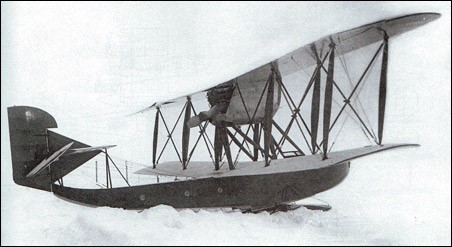
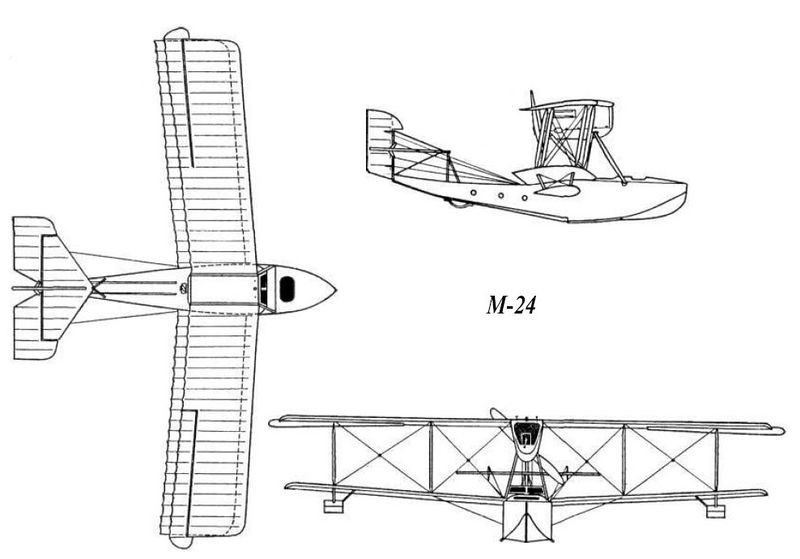
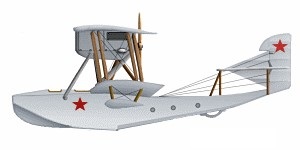
The last representative of the M family of naval flying boats. In practice, it turned out to be a modification of the excellent M-9 with a more powerful power plant and some structural changes. Dmitri Grigorovich was active during the 20’s in the gas plant No.3 “Red Flyers” in St. Petersburg, where he began the development work on the M-24 (Russian: Григорович М-24) Soviet biplane flying boat in April 1922.
Despite the initial failures with the M-23, the modernization of the M-9 model continued its course. Grigorovich, knowing of the tests of the Renault – engined M-9bis model developed in 1921, decided to propose his improved version of the M-9, which comprised a major redesign. The VVF needed a quick result and for this reason he decided to proceed with as few changes as possible, keep the old hull, avoid structural modifications and concentrate his attention only on the powerplant and wingbox. Grigorovich, from the beginning he was opposed to this procedure, as he understood that in this way it would be impossible to achieve good seaworthy conditions, but the Main Directorate of the VVF in its efforts to achieve results was willing to accept certain limitations and finally the builder decided to satisfy his client.
The design was based on its successful M-9. Some of the differences in the M-24 was dual wings ailerons, and the total area of the hull was changed.
On July 19, 1922 at the State Aviation Factory No.3 “Krasni Liotchik in Petrograd, a commission of the aeronautical department of the Main Directorate of Military Industry (GlavBoyenProm) met and studied the capabilities of the factory and analysed the possibility of building eight new flying boats with the M-9 hull and Renault power plant. In August of that year, during the creation of the industry production program for 1922-1923, the construction of 56 M-9bis was approved.
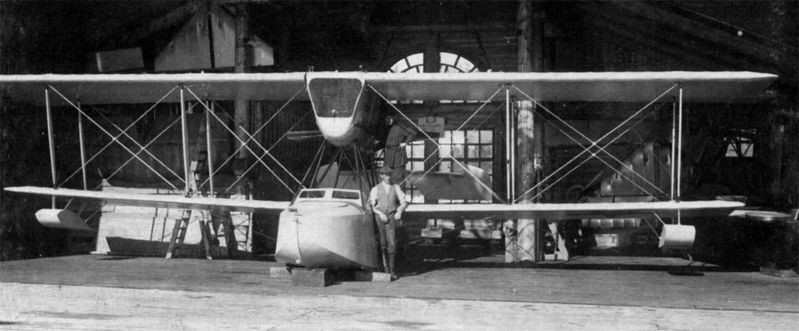
By May 1, 1923, the first base model of the M-9bis series, with number 1717, was ready and by the beginning of June a commission chaired by the representative of the Scientific Committee of the VVF, the engineer Yermolaiev, developed the first tests of evaluation. The flights were made by naval pilot VG Chuxnovski.
Taking into account the differences between the model modernized by Grigorovich and the M-9bis, the commission decided to approve the new name M-24, classify it as a naval reconnaissance flying boat and gave a positive assessment of the aircraft’s seafaring and aeronautical characteristics. It was decided to authorize its serial production.
Several months later the problems would begin. The complex situation of heavy industry and the lack of supplies led to the decision to close the “Krasni Liotchik” factory as of October 1, 1923 and transfer the request for the production of the M-24 to Factory No.10 in Taganrog, decreasing the quantity requested to only 40 copies. In the midst of this complex situation, the Society of Friends of the Air Fleet (ODVF according to the acronym for Obshesctvo Druziei Vozduzhnovo Fleet) decided to support the aeronautical constructors of Petrograd, financing the creation of the “Krasni Baltiets” squadron (This term could be translated from inaccurately as Red Sailor of the Baltic, since the word Baltiets covers any inhabitant of this area, but in this case it is made with a direct allusion to the Marina – na) with the condition that the production was carried out in the GAZ No.3 “Krasni Liotchik”.
The decision to select the flying boat M-24 as a model for the new squadron was based on the positive report of the commission of the Scientific Committee of the VVF (NKVVF). Agreements with the management of GAZ No.3 to build the first 12 copies of the M-24 were signed on September 12, and by October 7 the GlavBoyenProm submitted to the factory a request for another 15 copies against the funds of the 40 approved.
By its construction the M-24 was similar to the M-9. Both were built with national types of wood. The structure was built with pieces of pine and ash. On top it was covered with birch plywood. The hull was divided into 10 watertight departments. All joints were secured by small screws and rivets. The submerged parts of the hull were covered with sheets of copper or brass. A flexible ash bow was attached to the rear of the keel piece, to which the rear ski could be attached in winter.
Although the hull of the M-9 had proven capable of withstanding landings on ice, the greater weight of the M-24 made such manoeuvres inadvisable. For this reason during the winter in the Baltic the M-24s were operated on skis with an installation scheme similar to that successfully used on the M-15 model.
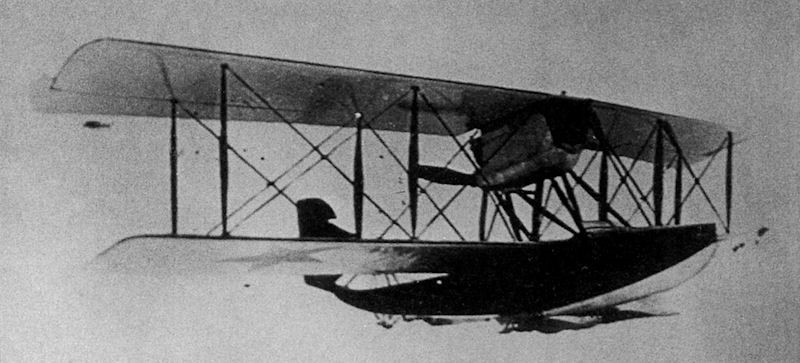
The wings were made of wood, with some reduction in span relative to the M-9, and were attached by two pairs of pine supports. The lower plane had little positive dihedral and the stabilization floats were fixed externally. The tail unit was of typical Grigorovich design.
The M-24s were powered by 220-260 hp Renault water-cooled 12-cylinder engines entirely covered by an aerodynamic duralumin hood. These engines were installed in a wooden structure located in the space between the wing planes and had a cooling radiator at the front.
In the bow area of the boat an oval hatch was opened to locate the machine gun. In its central part and sitting side by side were the pilot and the mechanic.
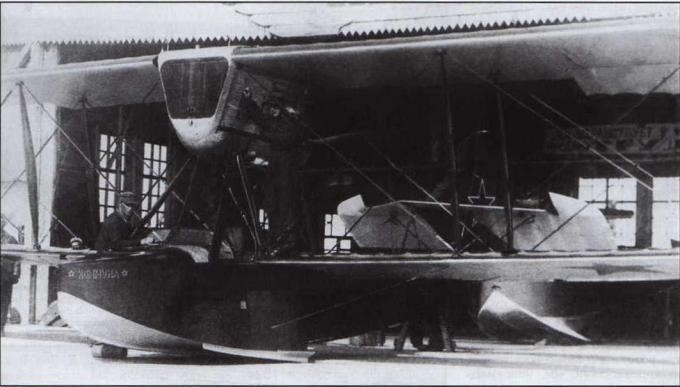
The first series, of 12 copies, featured a single 400 liter fuel tank and was characterized by using the 200 hp Renault engine. When the construction began, the factory lacked the plans and technical specifications approved by the NKVVF. Neither did the Navy leadership. For this reason there were notable differences in the characteristics and completion of different copies of the M-24, fundamentally motivated by claims of their pilots or productive considerations. At that time, the poor seaworthiness of the model, announced from the beginning by Grigorovich, was revealed.
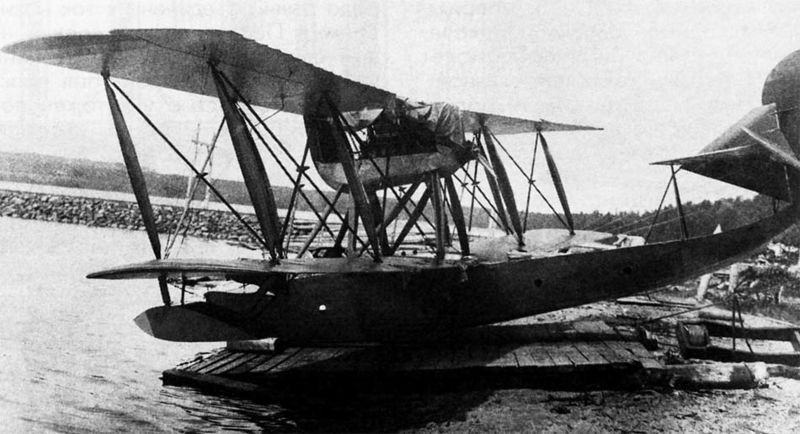
Soon a special commission would be appointed to investigate the problems that the model was presenting. The commission that reviewed the claims towards the first produced specimens concluded that: “the specimens differ in their flight characteristics, but due to their poor navigability they are not suitable for serious work… consider the aircraft requested by the ODVF available only for training flights.” It was decided to withdraw the model M-24 from service.
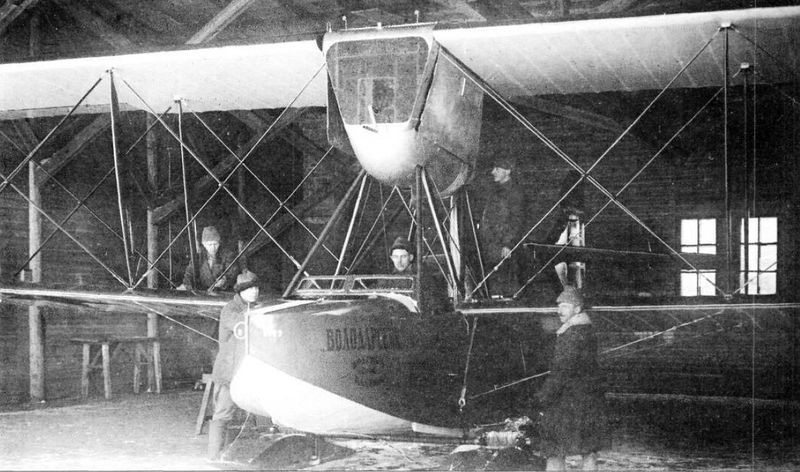
However, the situation for the VVF was extremely complex due to the lack of naval models. Apart from the M-24 the only aircraft of the VVF in 1924 were 30 Savoia S-16 flying boats and 20 Junkers Ju-20 in process of delivery. In this state it was decided to work on attempts to improve the existing M-24. By that time Grigorovich had already returned to Moscow and was beginning his work on GAZ No.1 (formerly Duks), so the modifications were made without his presence.
The second series, starting from issue 1730, featured a 280-litre main tank. The rest of the fuel was located in two tanks of 60 liters located in the wings or in the space between the wing supports.
At least 20 M-24 examples, related to the second series, used Renault engines with power increased to 260 hp by replacing the original pistons with aluminum ones. This series would present other minor differences, which is why in some literature they have been differentiated as M-24bis.
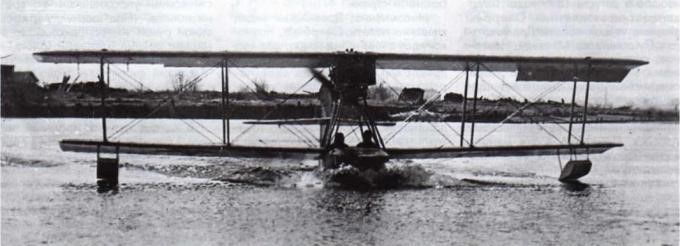
In the period between 1923 and 1924 at the Petrograd “Krasni Liotchik” 43 copies of the M-24 were manufactured (with serial numbers between 1718 and 1760). These would be the last flying boats of the M series.
In relation to the MR-4 the specialists of the Baltic Fleet at the end of July 1925 wrote:
The plane is three-seater, but when placing a man in the bow it tends to pitch and sink the nose. In the air it is more stable with the three crew members, with two you have to keep the lever as it tends to pull upwards. Most of the time you have to work with the right leg. It reacts poorly to spoilers. The plane handles turbulence poorly.
The plane does not have all the instruments. The hull is weak, the plywood is not of good quality. The plane easily loses control. During the replacement of parts, for example surfaces, they seldom coincide. The engine of the MR-4 (Renault 260 hp), but they did not arrive new, but assembled. Clearly, the material used in the distribution system does not have the necessary rigidity, which brings about constant problems. The water pump key also breaks… There have been few cases of engine stoppages in two years – two or three times, but when the damage does occur it is serious: broken connecting rods, deformed pistons…
…The MR-4 has the following problems: a) not very stable, b) the pilot carries out the bombing blindly, he cannot see the target.
…The MR-4 lacks a camera mount and its installation is impossible due to the fact that the camera lens during takeoffs and landings gets splashed with water and then, when being lowered or hoisted, it is necessary to hold the camera in the hands.
…The MR-4 lacks air navigation equipment. The compass is located between the legs of the crew or on the blackboard next to the moving metal parts, which means that it cannot be seen at times.
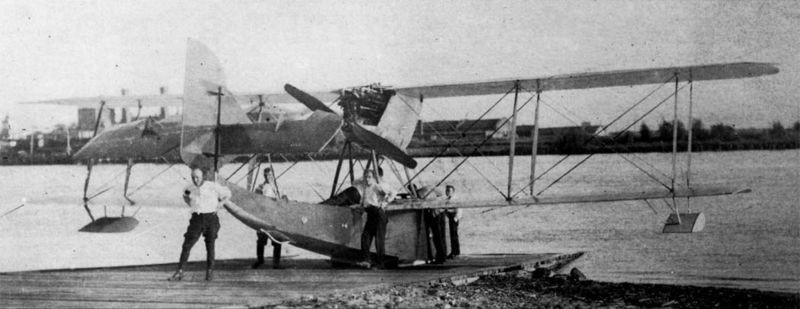
Of the 43 copies produced, only 28 would be accepted into service by the VVF. Most examples were used in the Baltic theatre, seeing service with the 1st and 2nd OMPAO (Otdielni Morskoi Razviedivatielni Aviaotryad or Independent Naval Air Exploitation Brigades).
The 2nd OMPAO would receive the 12 copies financed by the ODVF and two more. This unit had previously operated the M-9 and M-20 models. Deliveries were made in two groups of 4 aircraft and a final group of 6 between January and June 1924 and the unit would soon be renamed “Krasni Baltiets”. All its devices had their own names on the bow, many times related to the origin of the contribution of the funds. The names and numbers of most of these specimens are known:
M-24 — Factory number 1718 «Petrogradskaya Pravda» (Petrogradian Truth)
M-24 — Factory number 1719 «Volodarski»
M-24 — Factory number 1720 «Krasni Petrogurfin»
M-24 — Factory number 1721 «Krasni Putiloviets»
M-24 — Factory number 1722 «Volkhovstroi»
M-24 — Factory number 1723 «Leningradski Profsoyuci» (Leningrad Trade Unions)
M-24 — Factory number 1724 «Vladímir Ilich»
M-24 — Factory number 1726 «Pskovityanin»
M-24 — Factory number 1727 «Kommuna»
M-24 — Factory number 1728 «Cherepanin»
M-24 — Factory number 1729 «Krasnaya Karelia»
M-24 – Factory number ???? “Krym SSSR”
M-24 – Factory number ???? Bryansky Rabotnik
M-24 – Factory number ???? «Toplivnik»
Two M-24s were sent to serve in the Black Sea, entering service with the 3rd Air Reconnaissance Brigade, based in Sevastopol.
Originally the M-24 was called MR-1, but since the naval version of the Polikarpov R-1 received the same name, the flying boat began to be called MR-4 (acronym Morskoi Razviedchik or Naval Recognizer). By the beginning of 1925, 27 M-24 flying boats remained in service. Some were operated by the Finnish Air Force.
In 1925 the 1st OMPAO based in Peterhof began to receive the Junkers Ju-20 and the few received M-24s began to be withdrawn from service. The copies of the 2nd OMPAO began to be withdrawn, when this unit began to receive the Junkers Ju-20 also during the second half of 1925.
The 3rd Air Reconnaissance Brigade in the Black Sea was equipped with the Savoia S-16, so the M-24s were practically from the beginning destined for training functions.
After 1925, 17 copies of the M-24 were kept as trainers. A number served in the naval brigade of the Leningrad Military School of Pilots-Observers. The last copy in this center was discharged in December 1928.
Several flying specimens were offered free of charge to the “Doboliet” company, which rejected them. An M-24 would be transferred to the OSOVIAJIM around the month of May 1929, without its subsequent destination being known.
Although the M-24 basically served as trainers during their exploitation, they were frequently used in preparation for military tasks. For this reason many M-24s retained armament similar to that of the M-9: a machine gun in the bow.
M-24
Powerplant: One 220 hp Renault V-12
Upper plane wingspan: 14.40 m
Lower plane wingspan: 13.00 m
Wing area: 55.0 m²
Length: 8.8m
Height: 3.40m
Empty weight: 1240kg 1200kg
Maximum takeoff weight: 1700 kg 1650 kg
Wing loading: 30.0 kg/ m²
Power load: 7.5kg/hp
Speed at sea level: 130km/h
Ceiling: 3500m
Endurance: 4 hours
Range: 400km
Armament: 1 x 7.62 mm machine gun
Bombload: 100 kg
Accommodation: 2 – 3
М-24bis
Powerplant: One 260 hp Renault V-12
Upper plane wingspan: 14.40 m
Lower plane wingspan: 13.00 m
Wing area: 55.0 m²
Length: 8.8m
Height: 3.40m
Empty weight: 1280kg
Maximum takeoff weight: 1740 kg
Payload capacity. 500kg
Wing loading: 31.0 kg/ m²
Power Load: 6.6kg/hp
Speed at sea level: 160km/h
Cruising speed: 121km/h
ROC: 68m/min
Ceiling: 4500m
Endurance: 4 hours
Range: 400km
Armament: 1 x 7.62 mm machine gun
Bombload: 100 kg
Accommodation: 2 – 3
 All Aero