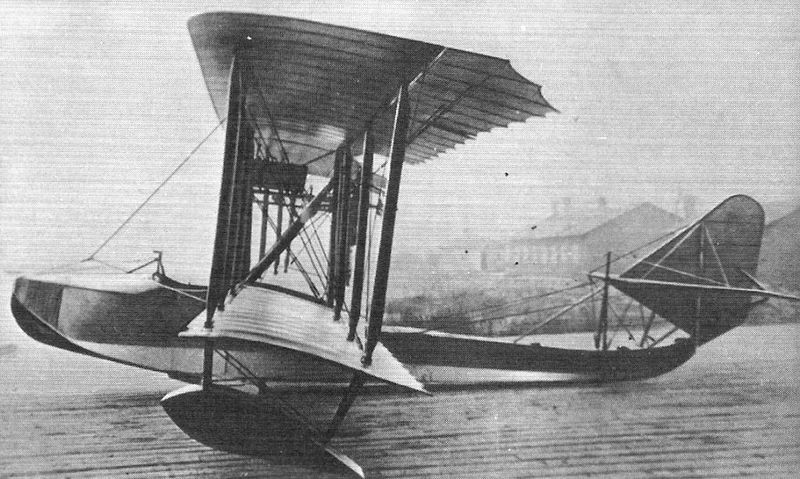
After leaving SS Schetinin and creating his new experimental factory, DP Grigorovich managed to obtain a contract for the construction of 40 training flying boats with Le Rhône engines of 110 and 125 hp. In general, they were Grigorovich/Schetinin M-5 hydros with minor changes in their construction, which is why the contract originally called the airplanes M-5, but when production began they would begin to be delivered as M-20s (Russian: Григорович М-20), to differentiate them from the copies built at the Schetinin factory.
The M-20 was generally similar to the M-5 flying boat, itself a development of earlier models with better hull hydrodynamics and modifications to the tail section for greater efficiency.
From the constructive point of view, the M-20 presented a typical design. The structure was made of ash covered with 3 mm plywood on the edges and 5 – 6 mm on the bottom. 10 mm plywood was used in the recess area. The internal structure was made up of frames with diagonal reinforcement supports in certain areas. Joints in the hull skin were reinforced by plywood plates fixed with copper rivets from the inside. In the lower outer area of the hull, the joints were covered with 0.3 mm copper sheets and soldered together with tin. On the outside the wood coating was covered with varnish and on the inside with pitch.
The construction of the wings, the stabilizer and the keel of the vertical empennage was made of pine wood. The elevators and rudders were built from a light structure of thin-walled steel tubes (30×28 and 20×18 mm) with some wooden ribs and fabric covering. The M-20 simplified the number of guy wires between the supports and the upper flange.
The wing featured a double spar structure, built from I-profile pine pieces with holes to save weight. The wing ribs were made from 20 x 5 x 5 mm pieces of plywood, also lightened by perforations. Its wing profile was extremely thin (4% chord bristle). The interplane supports were made of wood and the cross tensors were made of 5-8 mm cables.
Behind the cabin, the hull became little more than a trapezoidal section stringer with the narrowest face upwards, on which the characteristic drift and rudder assembly was located. The horizontal plane of the tail was raised to distance it from the effect of the water by means of a pyramidal structure of steel tubes and tension cables.
As a power plant, the M-20 used Le Rhône engines of 110 and 125 hp, which were installed in a steel tube structure fixed to the central supports of the wing box. The main fuel tank was located in the hull, behind the cockpit.
Pilot and student were accommodated side by side in an open cabin, located immediately in front of the wings.
In the middle of 1917 the tests of the first copy equipped with a 125 hp engine were carried out and the results obtained resulted in the confirmation of the original production contract. On March 31, 1918, the Grigorovich factory was nationalized and destined for the production of agricultural aggregates, so the engineer went to Sevastopol and only in 1920 would he return to Moscow to renew his work as an aeronautical constructor.
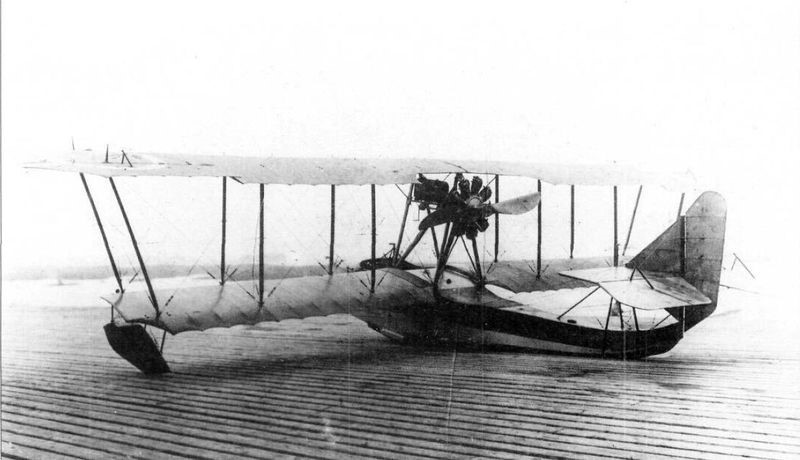
The production of the model went 1917 to 1920, ending with close to 80 copies at the 1917 price of 16,000 rubles.
In October 1919 a special commission chaired by NN Polikarpov studied the possibility of transferring the production of the M-20 flying boats to the Tverskoi Wagon Factory and later to the Duks factory in Moscow. The lack of experience in shipbuilding did not allow to develop this idea
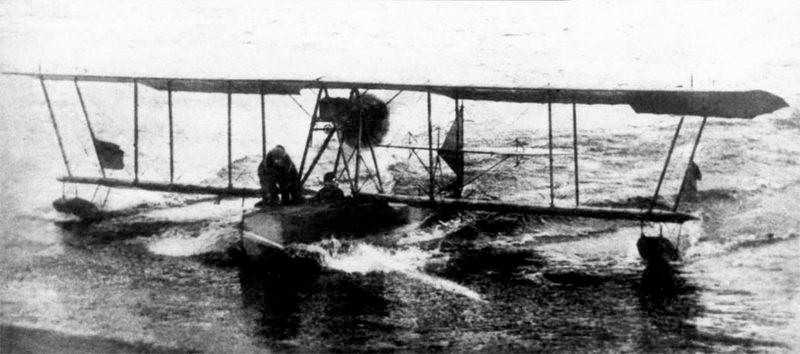
Most of the M-20 units participated in the Civil War on the side of the reds. These flying boats flew in the Baltic, Caspian Sea, Volga, Dnieper and North Dvina rivers. As armament some copies carried a machine gun located on a tripod in front of the cabin on the right and bombs of up to 32 kg. Some survived until the mid-1920s.

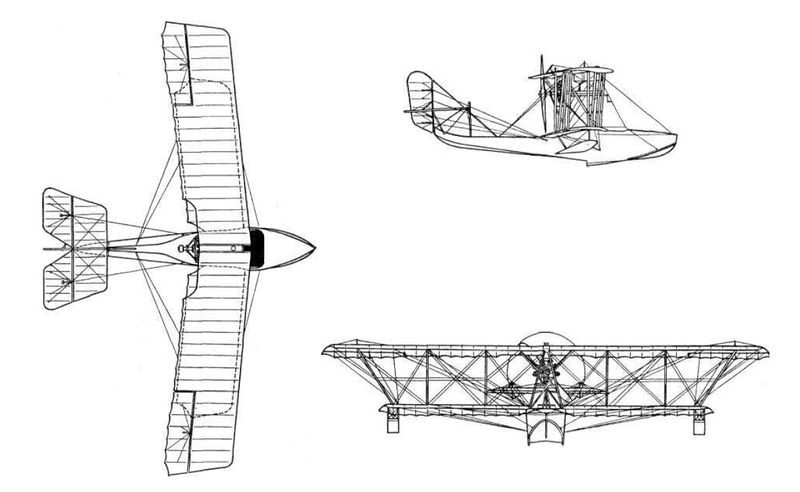
М-20
Powerplant: One 120 hp Le Rhône
Upper plane wingspan: 13.62 m
Wing area: 37.96 m²
Length: 8.22m
Empty weight: 660kg
Flying weight: 960kg
Fuel and oil weight: 124 kg
Maximum load capacity: 300kg
Wing loading: 25.3 kg/m²
Power Load: 7.1kg/hp
Speed at sea level: 115km/h
Ceiling: 3500m
Time to 1000m: 9min
Time to 2000m: 22min
Endurance: 4 hr
Accommodation: 2
 All Aero