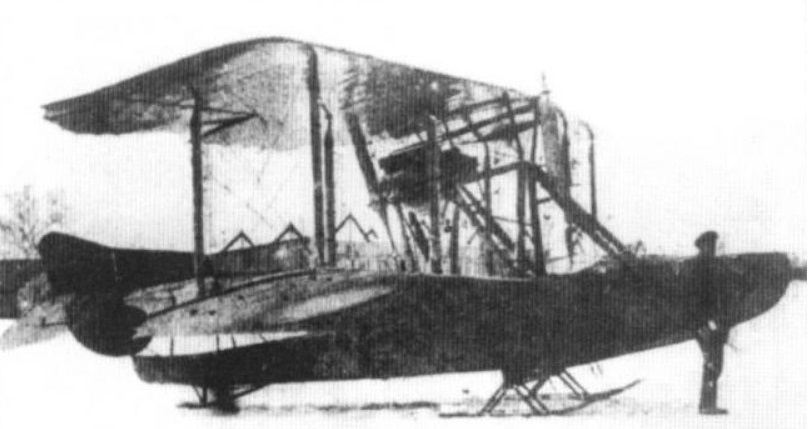
The M-15 type (Russian: Григорович М-15) was a development of the excellent M-9 and was characterized by the introduction of a new power plant with greater power with a certain reduction in the general dimensions, especially in the wing area. This model was built at the S. S. Schetinin PRTV facilities and is therefore alternatively known as the Schetinin M-15 or Sch M-15.
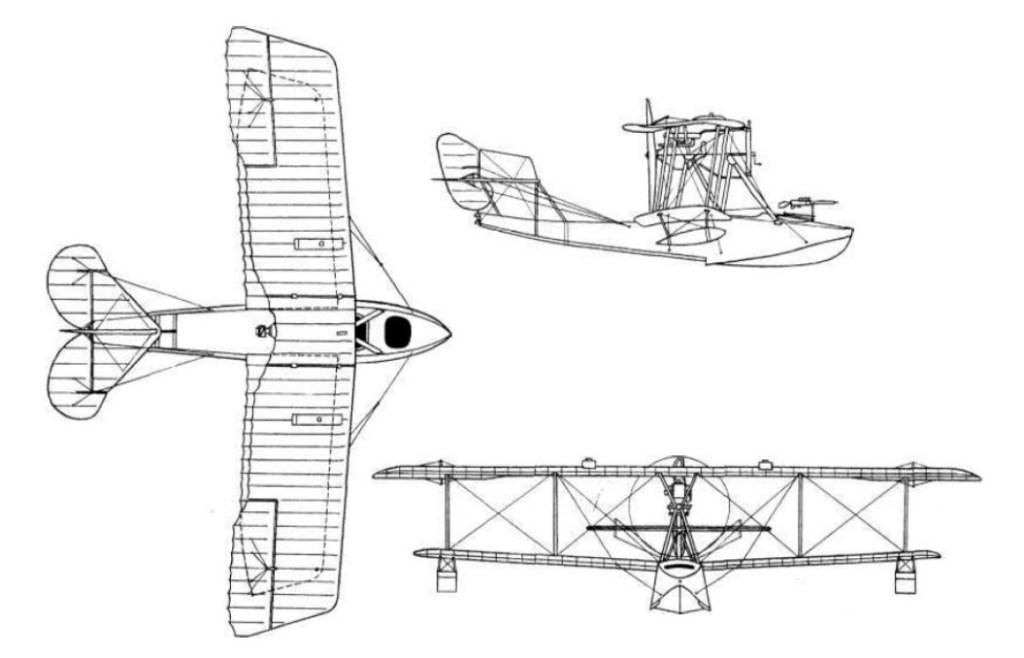
The M-15 was designed as a two-seater biplane flying boat with an unequal wingspan, made of wood and powered by a 150 hp Hispano-Suiza linear motor moving an “Integral” propeller with a diameter of 2.55 m.
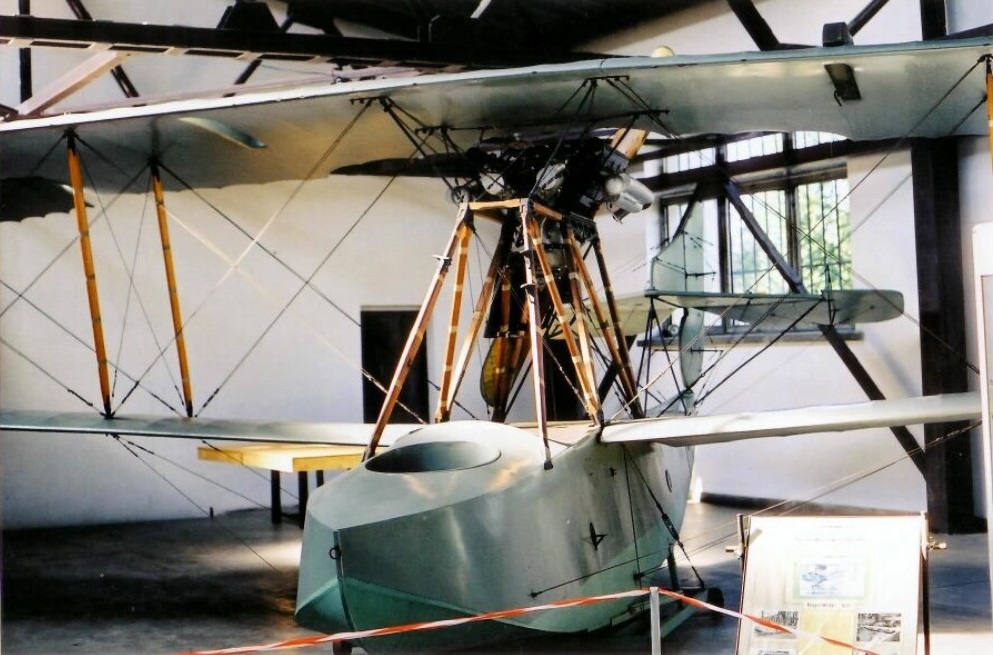
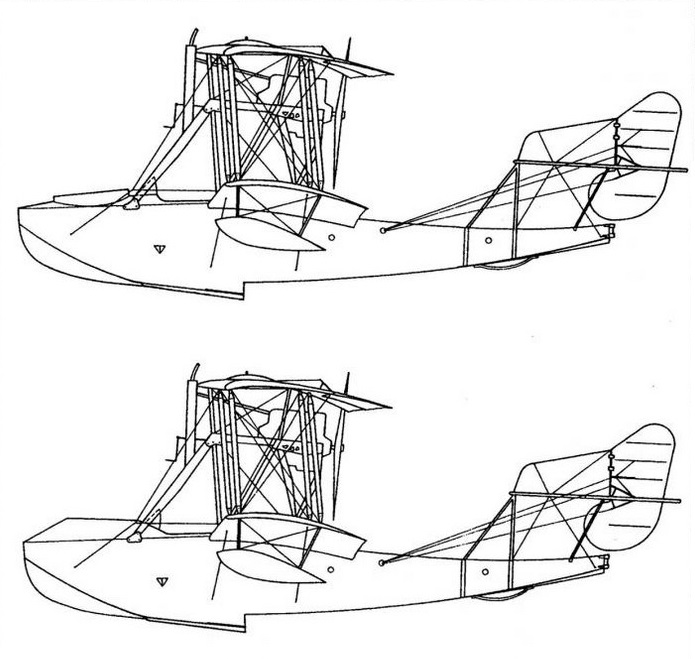
In general, it repeated the construction characteristics of the M-9, but the wing box had only two sections and a reduced wing surface in both planes. The hull was of a completely new design and the remarkable engine was mounted on a complex system consisting of 10 bracing spars.
The M-15 crew consisted of a pilot and a gunner/mechanic. Both crew members were located in a common cabin, sitting side by side. The crewman on the right operated a Maxim or Lewis machine gun located in a position forward that was accessed by crawling from the cockpit.
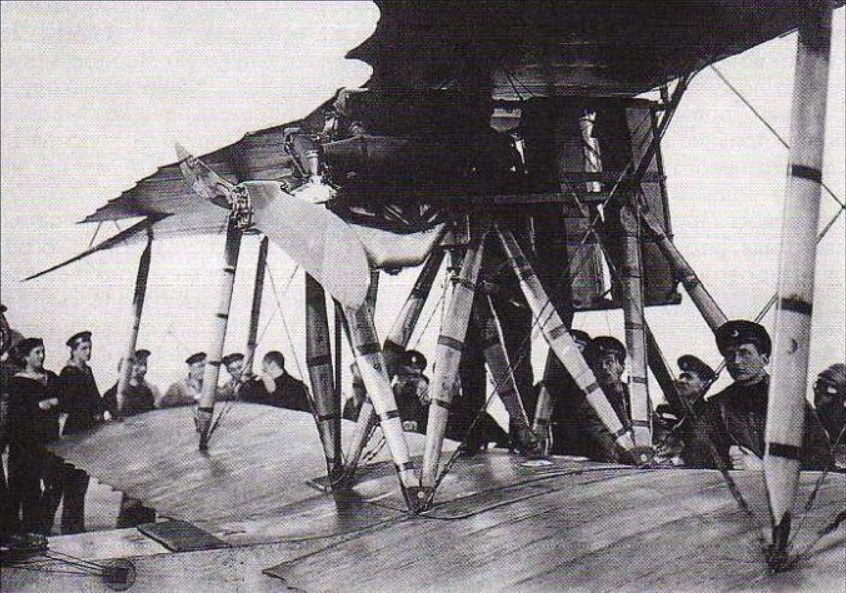
The prototype with factory number 1079 was found ready for November 6, 1916 and that same day it was presented to the naval authorities. After a few short test flights in which the model reached a height of 500 m in just 4.5 minutes (with a load of 350 kg) it was accepted for service with the Fleet. Subsequently, it was decided to send the prototype to the Baku Naval Flight School, where test days were to be carried out under operating conditions in December.
In January 1917 requests for modification of the flying boat M-15 were received from Baku, but most were aimed at a more comfortable arrangement of instruments and improvements in control, as well as claims about the quality of finish.
One of the first requests to modify the model was received by PRTV on January 21, 1917, when the observation officer G. Ya. Erdeli urgently requested, on the instructions of his superiors, skis according to the drawings presented by the pilot Alexandr Prokofiev-Severski.
Soon a flying boat was modified in this configuration and on February 9, with its designer at the controls, it made a test flight. The pilot reported that the was trimmed, took off smoothly, reached a height of 1,000 m in 7 minutes, and landed on the ice without difficulty.
The consequent speed tests showed that the new undercarriage only slightly reduced performance and, however, significantly increased the model’s operating capabilities.
From the aeronautical point of view, the M-15 was positively valued. This model featured more speed and climb than the M-9. Its excellent response to controls was highlighted. During the process a firing point was installed in the bow of the model to install a Maxim or Lewis machine gun in two possible variants of nose configuration.
In operation, the M-15 was defined as an intermediate version between hunting and reconnaissance flying boats and in combat conditions it was superior to the M-9, so it was decided to approve its serial production.
The excellent results obtained during the tests of the M-15 motivated the request to build 80 copies in a first contract signed on November 24, 1916.
Contract date:
November 24, 1916
Number of copies:
80 + 20
Serial numbers:
1101-1153
18,000 rubles for each copy with a Hispano-Suiza engine of 150 hp and 17,500 rubles for spare copies without a motor. Delivery scheduled for April 15, 1917. Partially completed. Copies 1154-1163 were not delivered due to the absence of engines. The contract was modified on April 17 to 60 copies and 15 spare parts.
Contract date:
January 30, 1917
Number of copies:
1
Serial numbers:
1079
Contract for the purchase of the prototype.
Production of the M-15 began in the second half of 1916 and continued until the end of 1917. Unfortunately, the supply of Hispano engines was quite limited, so the M-15 failed to displace the M-9 in its flying boat role.
This problem with the supply of engines represented a severe blow to Russian aeronautical development, since most of the designs from the end of 1916 and the beginning of 1917 were based on Hispano-Suiza power plants with powers between 140 and 200 hp, who had been contracted in France and could not arrive on time.
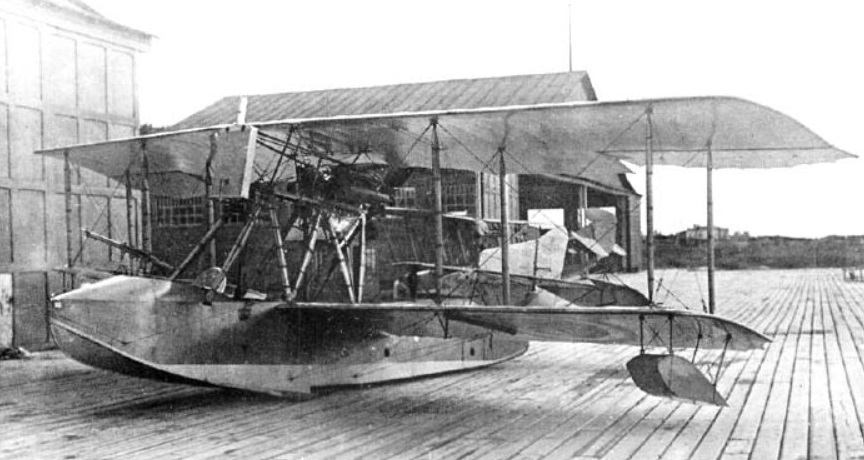
The number of copies produced reached 54 units, including the prototype, of which almost more than half was used in the Baltic.
More than 30 units were delivered to the Baltic Fleet, about 20 units were redirected to the Black Sea and two units were delivered to the Baku flight school (prototype 1079 and 1144). The military designation of the model was SchI (Schetinin with Hispanic). Generally the model was used in reconnaissance missions.
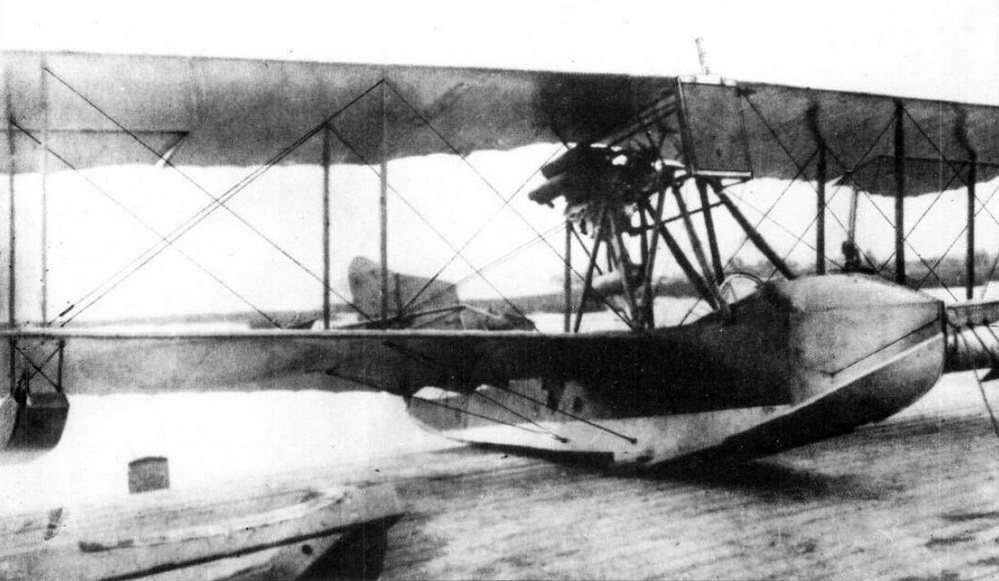
The Red Air Fleet used several of these examples. From the summer of 1917 the units produced were used primarily as trainers.
Two copies of the M-15 went to Finland during the events of 1918, being framed in the local air force with the registration numbers C68/18 and C69/18. These specimens had been abandoned after the evacuation at the Åland and Turku bases, on the Baltic islands. In one of them, the Russian pilot J. Herbert would fly from Åland to the Finnish mainland and would be appointed an officer in the Finnish air force. This example remained in service in Finland until 1919.
The Germans captured some specimens that were displayed as war trophies. There is no evidence that they were ever used in service.
A perfectly preserved example is kept at the Polish Aviation Museum (Polish: Muzeum Lotnictwa Polskiego w Krakowie) located in Kraków, Poland. This flying boat, originally registered SchI-1, was damaged as a result of a bad landing on September 29, 1917, when the Russians left the Arensburg base on Ezel Island.
The Germans captured the flying boat and took it to Berlin as a war trophy. It was kept on static display in a Berlin Aviation Museum until 1945, when it was transferred to Poland.
М-15
Engine: Hispano-Suiza, 150 hp
Upper wingspan: 11.50 m
Wing area: 45.48 m²
Length: 8.43 m
Height: m 3.10
Empty weight: 840 kg
Flight weight: 1320 kg
Fuel and oil weight: 184 kg
Maximum load: 480 kg
Payload capacity: 350 kg
Wing loading: 29.5 kg/m²
Power load: 9.45 kg/hp
Speed at sea level: 125-130 km/h
Cruising speed: 106 km/h
ROC: 91 m/min
Ceiling: 3500 m
Endurance: 5.5 hours
Time to 1000m: 8.5 min
Time to 2000m: 20min
Armament: One 7.62mm machine gun
Bombload: 65 – 100 kg
Accommodation: 2
 All Aero