At the end of the 1920s work related to the development of a new type of barrel known as a dynamoreactive barrel (DRP) and characterized by the absence of recoil.
Grigorovich IZ / TsKB-7 Article
Great attention was devoted to the development of the 76.2 mm aviation guns. The main reason for this decision was the need to increase the firepower of the fighters, whose machine guns proved ineffective against the new all-metal bombers.
The first gun of this type, called APK-1 after the acronym for Avtomaticheskaya Pushka Kurchevskovo or Kurchevski ‘s Automatic Cannon, began tests on July 26, 1929. It became clear that the use of APK guns required the design of new types of aircraft with great structural reinforcement.
The task of designing this new type of aircraft was assigned in parallel to the TsAGI led by AN Tupolev and the TsKB under the direction of the OGPU, headed (unofficially) by DP Grigorovich as technical director.
Grigorovich had been under arrest since September 1928 and was under the supervision of the OGPU. After the collective of prisoners under his leadership succeeded in developing the excellent I-5 fighter in the spring of 1930, Grigorovich, though still under arrest, was appointed chief consultant to the TsKB. Prison conditions for him were improved, even allowing him to travel with his family on vacation to Yalta (with the necessary company of OGPU staff). Returning from the south, Grigorovich was asked to develop a fighter aircraft with three-inch barrels.Kurchevsky.
The aeronautical development system applied in the TsKB-39 did not conceive the existence of a main constructor. The designs were developed by brigades directed by a specialist and from the initial conception, different departments were in charge of carrying out the work related to their specialty. For this reason, the models developed in the TsKB during this period are generally not referenced to a specific author (generally in the literature they are named TsKB and the particular name of the model). However, in the case of the IZ fighter, the same is not the case. Despite being built within the structure of the TsKB, the task was so secret and a priority that Grigorovich received the approval to form a small group under his direction, which was to be in charge of all the development of the model.
The new task force of the Grigorovich began work in one of the hangars of Factory No.39. Among its members were: AN Sidielnikov, VL Korvin-Kerber, AN Nadashkievich, Ye. I. Mayiranov, VD Yarovidski, G. Ye. Chupiloko and S. N. Shishkin. In general, this group had stood out during the development of the I-5 fighter , so many of the construction elements of the new fighter would be designed under this influence.
In relation to the origin of the name for the new fighter there are several versions. The first version establishes that due to the secrecy in relation to the project, it was decided to name it using the Latin letter Z (something unconventional since letters of the Cyrillic alphabet were generally used for these cases). In this way the name of the fighter combines the Cyrillic letter И (corresponding to the I and acronym for Istrebitiel or hunting) with the Latin letter Z.
Other sources state that since the fighter was developed in hangar No.7 of Factory No.39 its initial name was I-7, but due to the appearance of another model I-7 mass-produced in Factory No.1 from Moscow (licensed version of the Heinkel HD-37), Grigorovich suggested adding a line at the bottom of the number so as not to have to redo all the documentation and thus the 7 became Z (Russian: Григорович И-Z – ЦКБ-7).
Which of these versions is the real one is difficult to establish. In period documents the fighter is referenced as TsKB7, TsKB-7, Z(N-7). Only a couple of years later, when the model had already been approved, the term И-Z began to be used in the documentation, but due to the fact that most typewriters in the USSR lacked the possibility of writing Latin letters generally everything was written in Russian as И-ЗЕТ (I-ZET).
By the spring of 1931 Grigorovich’s work had attracted widespread attention. Members of the GPU leadership and later from the Kremlin would soon begin visiting the TsKB. The TsKB would be visited by Molotov, Ordzhonikidze, Andreyev, Voroshilov. As a result of this interest, most of the prisoners would soon be released.
In May 1931 the newspaper “Pravda” would publish “granting amnesty to the builders listed below, previously accused and sentenced by the OGPU college to different sentences of a social nature and at the same time rewarding them. To the chief builder of experimental models Grigorovich, Dmitri Pavlovich, retracting his previous positions and proving after a year’s work of his sincerity – the recognition of the TsIK USSR and a cash prize of 10,000 rubles.”
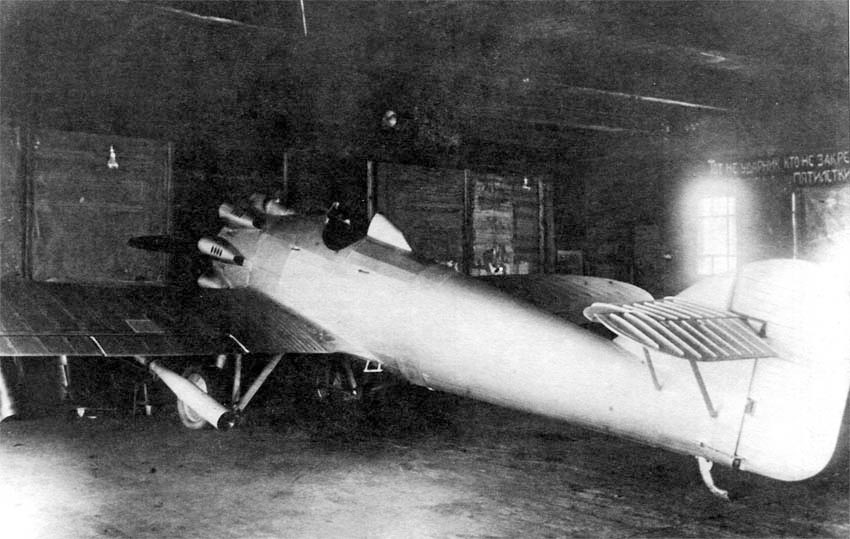
The IZ fighter was designed as a single-seat, low-wing braced monoplane. The fuselage featured metal construction. The entire front and center fuselage was made of a skeleton of welded chrome-molybdenum steel tubes. In general, this entire forward section presented little difference from that of the I-5 fighter. The tail section was all new, semi-monocoque construction and attached to the front at four points.
The structure of the tail section was made up of 11 elliptical frames, of which the last four were integrated into the keel. The fuselage featured a duralumin coating.
The wing had a double spar structure and its fixing was reinforced o by a pair of steel supports with a drop-shaped section. The wing construction in the prototype was developed using stainless steel (Enerzh-7) joined by welding, but the production examples used wooden wing structure. The stringers had a box-like structure to which 22 plywood ribs were attached. The wing covering was made of fabric, except for the area where the cannons were fixed, where it was reinforced with aluminium.
The wing profile was Gettingen 436, but its thickness decreased in the area where it joined the fuselage. The centroplane had a rectangular shape, but the wing consoles, in order to reduce the inductive resistance, received an elliptical shape.
The tail unit was duralumin and heavily reinforced. The entire empennage skin, excluding the leading edge of the keel, was corrugated. The stabilizer was raised on the empennage in order to avoid the harmful effects of exhaust gases from the guns and was braced to the empennage by two parallel metal studs. Initially, the rudder had a fabric covering, which was soon replaced by a duralumin one.
The landing gear featured steel N-legs with rubber cushioning and a central axle linking the 750 x 125mm main wheels. Tensioning straps started from the undercarriage to the wing. In the tail a steerable skate with rubber cushioning.
The power plant of the IZ consisted of the M-22 engine (version of the Gnôme-Rhône 9Aq, a licensed copy of the British Bristol Jupiter VI engine built in the USSR at Zaparozhie Factory No.29) and its installation it was virtually identical to that of the I-5 fighter, built by Polikarpov and Grigorovich some time before. The cylinder heads on the prototype featured individual fairings, which were replaced on production models by a Townend ring.
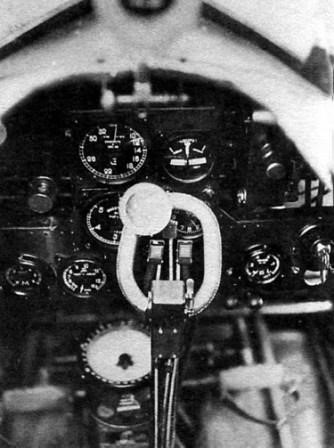
The pilot was located in an open cockpit, located behind the engine and lacking a windshield.
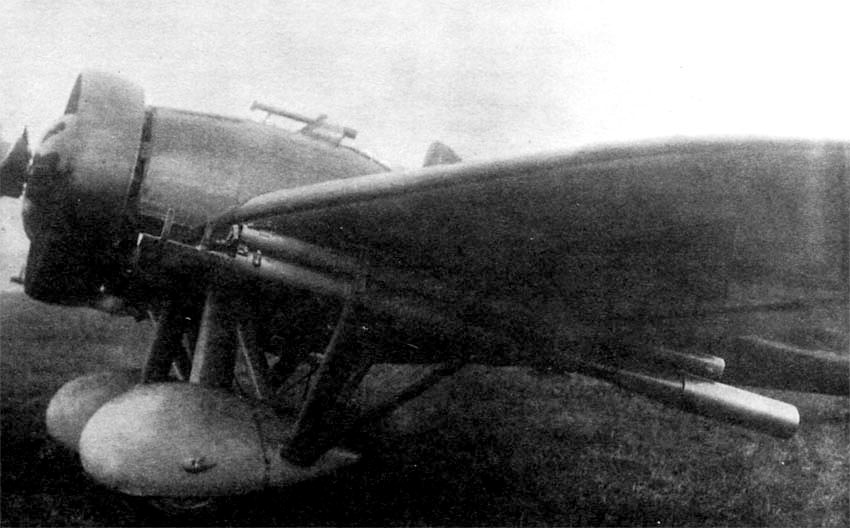
The armament consisted of a 7.62 mm PV-1 machine gun located in the fuselage, to the right and in front of the pilot, which was used as a sighting rifle for the cannons. This machine gun was fitted with a PUL-9 synchronization system to allow firing through the moving propeller. Under the wings were the two APK-4 or APK-4bis cannons.of 76.2mm. Its installation on the wing allowed firing without interference from the propeller. In the first IZ the guns were located in the inner area of insertion of the wing supports. Later the guns would be moved further out on the wing. Each barrel was equipped with a cylindrical magazine with 6 shells and a seventh already mounted on the gun and featured an automatic reloading system from the use of exhaust gases. 0.6 m cylinders designed as exhausts were located at the rear of the guns.
The IZ prototype was ready for the summer of 1931. The date of its first flight is not known with certainty, but it is known that it was made in this period by test pilot Benedict L. Buxgolts.
On July 6, 1931 Factory no.39 was visited by Stalin, who had previously been informed about the IZ fighter. Stalin not only checked the plane, but climbed into the cockpit and moved the flight controls. The main builder was not there at that time, so the presentation of the model was made by the head of the TsKB for the GPU Ye. S. Paufler.
During this visit Stalin was presented with other models developed at the TsKB such as the I-5 fighter in various variants, the TB-5 heavy bomber, the TSh-1 attack aircraft and TSh-2, modifications of the R-5. Stalin was favorably impressed. As a result, by the Aviation Union Order No.265 (VAO according to the acronym of B ciesoyuznoye A viatsionnoye O biedinienie) of August 27, 1931 the TsKB and the TsAGI would be united into a single organization (known generally as TsKB-TsAGI), under the direction of Paufler.
The IZ had been built in a hurry and this was reflected in its initial results. Grigorovich’s collective was forced to work on improving the model for a year. Despite successful tests, Kurchevski’s guns generated constant headaches. Building and testing the single-shot APK-1 cannons proved to be an extremely simple task compared with the development of autocannons capable of self-reloading and multiple shots.
This situation began to worry some personalities. During a meeting at Factory No.39 held on March 2, 1932, the head of the VVS RKKA PI Baranov stated:
- “The Z(N-7) aircraft has been built for almost a year, Factory No.39 presented it to the government in June-July 1931 and promised to improve it. where is the result?
Paufler replied that the plane had been ready for a long time, that 74 shots had been fired from the guns on the ground and 10-12 in the air, during which the exhaust of one of the APK guns had been damaged, but in general everything was fine. well and the factory was ready for series production. Kurchevski, who was present, complained that he was not allowed access to the plane to work.
It was established that the Z(N-7) would be used as an interceptor aircraft, designed to destroy enemy bombing forces in frontal encounters. Impact 3 kg shells with an initial velocity of 347 m/s were expected to make a formidable weapon. It was decided to submit the Z(N-7) for state testing on March 12.
After the first prototype, a second improved specimen would appear, which in some literature has been called I-Zbis. This model would fly for the first time in 1932.
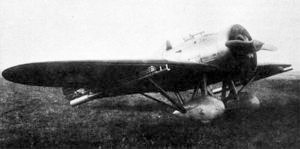
No evidence has been found to show that the acceptance tests were carried out by the military, but on April 27, 1932, the director of Factory no.39 S. Margolin signed an agreement with the VVS Directorate to build 20 “Z” fighters with special weapons worth 77594 rubles per unit. Taking into account unforeseen expenses until September 1, 1933 (fixed delivery date) Factory No.39 would receive 2,398,909 rubles, which brought the actual price of each aircraft to 119,945 rubles.
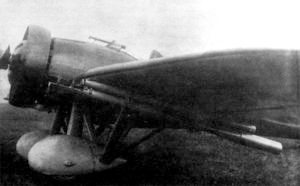
This series were intended to carry out field tests and develop the tactics of use of the cannons and differed from the prototype by the use of a wooden wing and an M-22 engine faired with a Townend ring.
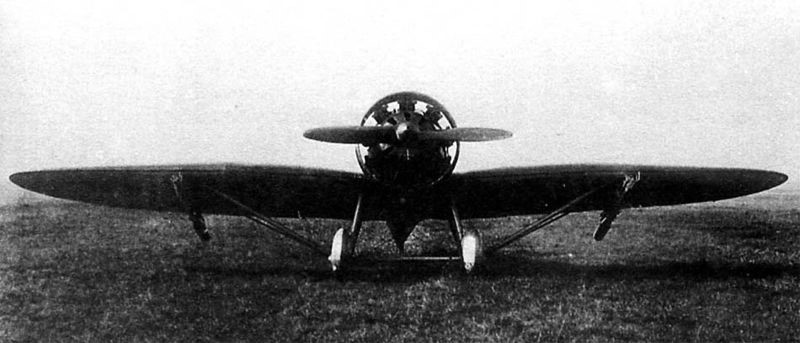
Between 1934 and 1935, another 50 aircraft were built at the Kharkov Factory No.135, but their flight characteristics and performance were not very good; moreover, the APK guns were also unconvincing. The maximum speed in these aircraft was about 40 km/h lower than that of the prototypes. Most of these ended up being used in different test programs.
One of the first serial specimens, the IZ with number 39009, was tested in February – March 1933 at the VVS polygon in Mónino. The tests were carried out by test pilot Yu Piontkovski.
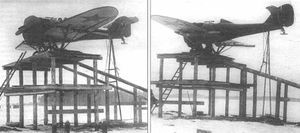
The aircraft carried a working cannon under the left wing and a mock-up of similar weight and dimensions under the right. For the development of ground tests in Shelkovo. This land had recently been handed over to the NII VVS and there were no buildings of any kind on it. There, a structure 5-6 meters high was prepared with an inclined ramp from which the shots were fired. During these tests, intended to check the resistance of the aircraft during the action of the gun, no problems were found.
From September 14 to October 1, 1933 in Shelkovo the tests of the IZ 39010 were carried out, armed with the APK-4 serial guns equipped with magazines for 6 projectiles (plus one directly located in the barrel).
The flights were carried out by M. Stselnikov and in total they lasted 16 hours and 20 minutes.
The results highlighted that 39010 was built quite similarly to the prototype and due to its dimensions and characteristics, no differences were observed.
The cockpit was comfortable and spacious. During takeoff the IZ lifted off the ground with ease and horizontal flight was performed with the stick fully free. Stability was good at all speeds and control was smooth and easy.
The data obtained for time of ascent to 5,000 m (14 minutes) and flight ceiling (7,000 m) were considered acceptable, but the maximum speed of 259 km/h and the range of 310 km were evaluated as poor. The main cause of these difficulties was defined as the inefficient landing gear and the great aerodynamic resistance of the APK guns.
The artillery armament passed the tests, but its shell capacity was considered too small. Kurchevski proposed to install a magazine with 10-14 shells in the wing, but this would not come to fruition.
As a conclusion, it was defined that the IZ fighter could be received into service with the RKKA VVS with the fulfillment of the following conditions:
Raise top speed to 300 km/h
Increase fuel capacity
Raise the amount of shells to 20 units
Install electrical equipment and radio
Desire to increase the structural rigidity of the plane, because after 300 – 500 shots it was necessary to carry out a complex maintenance intervention on the aircraft. The VVS wanted to raise this number to 1,000 shots.
The modified aircraft was to be ready by March 1, 1934.
The installation of the cannons added a significant number to the aircraft’s weight. The two APK-4 guns weighed about 150 kg, and the 14 ammunition – 55 kg. This meant 12% of the model’s takeoff weight. The APK-4 dynamoreactive cannons were installed in the wing of the aircraft with angles of 2 – 3º. All this part of the wing was coated with duralumin. This location contributed significantly to the poor performance due to the high aerodynamic resistance of the installation.
In April 1935, a special aviation group was created, consisting of a squadron of IZ fighters, one of R-5 reconnaissance aircraft for cone towing, and a TB-1 bomber. This unit was transferred to Yevpatoria in order to test the behavior of the gun in the air, its influence on the construction of the IZ fighter and the definition of its service time.
Test flights began on May 15, 1935. The tactics provided for firing in a dive, ascent or horizontal flight, both in individual salvos and in series.
It was found that after 100 to 150 shots the aircraft had to be inspected in depth as it generally suffered extensive damage to its structure and coating, making it necessary to replace the damaged elements and components. Fundamentally, the rivets, joints and coating suffered. It was also established that each cannon could withstand about 240 shots.
Cases are recorded of number 13534, which was capable of withstanding just over 340 shots without the need for repair. From the results of the tests it was considered that the period of active service of the IZ model should be defined by the scope of the figure of 400 shots.
In the development of multiple tests, most of the IZ specimens produced became unusable. At the beginning of 1936 the units received only a few copies. By that time the work on the DRP guns had practically been abandoned and the use of these fighters was out of date. For this reason the IZ did not get to operate in the designed roles.
The IZ was one of the aircraft used by VS Vaxmistrov in the development of his combined or ”Zvenó” aircraft. From the beginning of 1931 Vaxmistrov began work on the suspension of an IZ fighter under a Tupolev TB-3 bomber. In 1934 Vaxmistrov decided to develop a new version of the Zvenó by combining a TB-3 with two IZ fighters. this combination would be known as Zvenó-3 or 3-3.

In this combination the fighters were fixed on the ground by special supports to the wing of the bomber. Before release, these supports separated from the wing by 0.5 meters in order to avoid impacts of the empennage against the wing at the time of detachment.
The first flight of this combination was made in July 1934. The TB-3 bomber crew was led by PM Stefanovski and the IZ fighters included AV Korotkov and Grodz. During the release Korotkov’s fighter rose, breaking the bomber’s wing skin and getting stuck in it. An emergency landing was necessary. Luckily, at the time of landing, the plane broke free as a result of the impact with the ground. The fighter pilot was killed but the rest of the crew managed to save themselves. As a result the Zvenó-3 combination was abandoned.
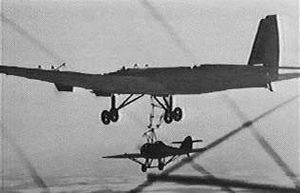
The next variant of use of the IZ fighter in combined aircraft was known as Zvenó-5 (3-5) and involved suspension of an IZ fighter under the TB-3 bomber once it was in the air. The mother plane released a kind of trapeze that was fixed to the DER-15 rear supports. The release of this structure was carried out by the on-board mechanic from its location and its subsequent retraction was carried out with the help of a crank.
The IZ fighter was also modified. In the upper part of the fuselage a fixing structure with a security system was installed. The wing consoles were also reinforced, since the section of the wing ribs 12 – 14 ended up resting on the bomber wheels once the trapeze was retracted. The other support point was at the top, behind the cockpit.
Testing of the Zvenó-5 began on March 15, 1935. In this case, the IZ was piloted by VA Stepanchonok, while PM Stefanovski was once again at the controls of the TB-3. Initially, training flights were carried out consisting of placing the fighter behind the bomber, equalizing their speeds at about 140 km/h and then making approaches and separations to a percale tape fixed to the bomber. Until March 21, 25 trainings of this type were carried out.
The world’s first capture of one aircraft in flight by another took place on March 23, 1935. After fixation the IZ was elevated. The Zvenó dropped to a height of 500 meters and flew over the aerodrome where a VVS commission sent to supervise the test was located. After recovering the 1200 meters of height, the separation took place, again without problem. Until March 29, 5 flights like this were carried out with capture and release of the IZ fighter in the air.
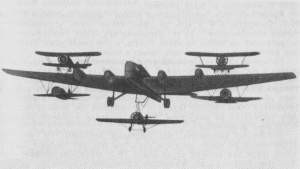
By the fall of 1935 Vaxmistrov prepared for tests a new combined system known as Zvenó TB-3 4M-17 + 2 I-5 + 2 I-16 + IZ. Vaxmistrov himself named this creation Zvenó Aviamatka PVO (AM). On the ground under the wing of the TB-3 two I-16 fighters were fixed and on the wing the two I-5 fighters. The last member, the IZ fighter, was fixed once the Zvenó was in the air.
During the tests the TB-3 was flown by PM Stefanovski, the I-5s by AI Nikashin and SL Suprún, the I-16s by TT Altynov and KK Budakov and the IZ VA Stepanchonok.
The experiments demonstrated the feasibility of using the chain consisting of one bomber and five fighters. Never before or since in the world has anything like it been tried. The tests were carried out jointly with the Moscow Factory No.22, in charge of carrying out the modifications to the fighters and the mother plane.
The conclusions of the tests determined that the Zvenó with TB-3 4M-17 + 2 I-5 + 2 I-16 + ZET can be effectively used in RKKA units. However, the final conclusions were different. It was considered that the presence of the I-5 fighters on the wings and the IZ under the fuselage limited the possibilities of the TB-3 bomber, so it was preferred to develop a variant with only two I-16 fighters in attack version under the name Zvenó SPB and would be used successfully during World War II.
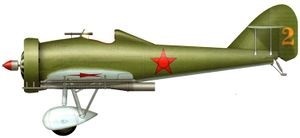
IZ
Powerplant: One 480-hp M-22 radial
Wingspan: 11.50m
Wing area: 19.5 m²
Length: 7.65m
Empty weight: 1180 kg
Normal takeoff weight: 1648 kg
Wing loading: 84.5 kg/ m²
Power Load: 3.4kg/hp
Fuel + oil capacity: 180 kg
Maximum speed at sea level: 258 km/h
Top speed at 5,000m: 239km/h
Cruising speed: 212km/h
Landing speed: 100km/h
Practical range: 600 km
Endurance: 2.5h
Maximum rate of climb: 358/min
Climb time to 5000 m: 14 min
Practical ceiling: 7000 m
Landing run: 180m
Take-off run: 110m
Armament: Two 76.2mm Kurchevski APK-4 cannon with 14 rounds / one 7.62mm V-1 machine gun
Accommodation: 1
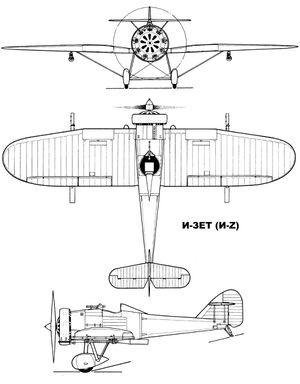
 All Aero