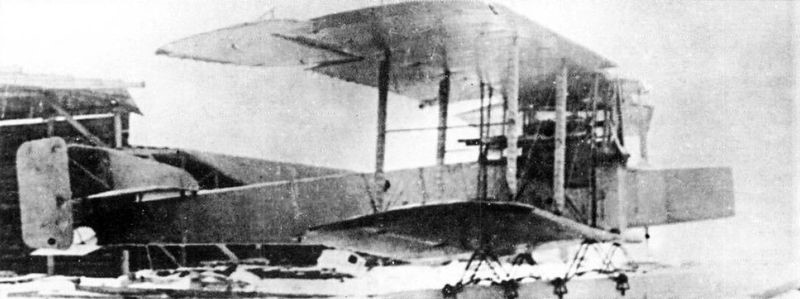
The bases of this project go back to an idea presented by Fleet Senior Lieutenant II Golenischev-Kutuzov, who proposed to build a special hovercraft capable of carrying out torpedo attacks on enemy ships. Little by little the idea of the hovercraft was derived from a specialized seaplane. This idea of Golenischev-Kutuzov was presented to PRTV for its implementation.
The plane began to be designed and built in 1916 at the Shchetinin Society. Co – engineered by Mikhail Mikhailovich Shishmariov, who headed the construction department at the Shchetinin factory. Shishmariov developed the entire technical project for the new aircraft, while Grigorovich was in charge only of the general conception of the model and the general direction during the preparation of the plans and technical documentation.
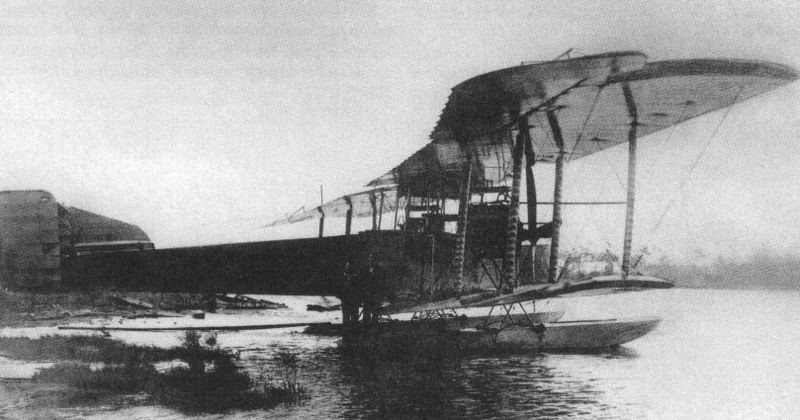
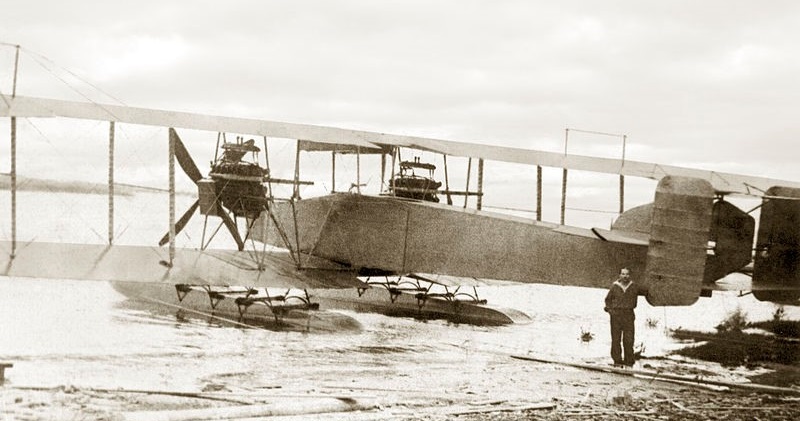
The GASN was designed as a huge twin-engine sesquiplane with a pair of floats and capable of carrying a 450-hp torpedo designed at the “Novi Lessner” factory in Petrograd. The power plant consisted of two 220 hp Renault engines located between both planes on steel tube supports and moving large four-blade propellers.
The initials GASN (Григорович/Шишмарев ГАСН) correspond to G idro Aeroplan S petsialnovo N aznachenia (Special Missions Hydroplane), although the model was also known as SON ( Samoliot O sobovo N aznachenia ) and in either of the two names it was considered to create an aircraft capable of carry and launch a naval torpedo, making this model the world’s first naval torpedo boat. We must add that this subject was considered highly secret, so in fleet documents references to the project are made as Type K.
The floats had a traditional construction similar to that used for the hull of submarines at the time and were fixed to the lower wing by means of uprights in an inverted V made of steel tubes with rubber attachment points.
The fuselage had a rectangular cross section secured by cables and covered with fabric.
The tail was of the biplane type with three rudders and a small keel on the central empennage.
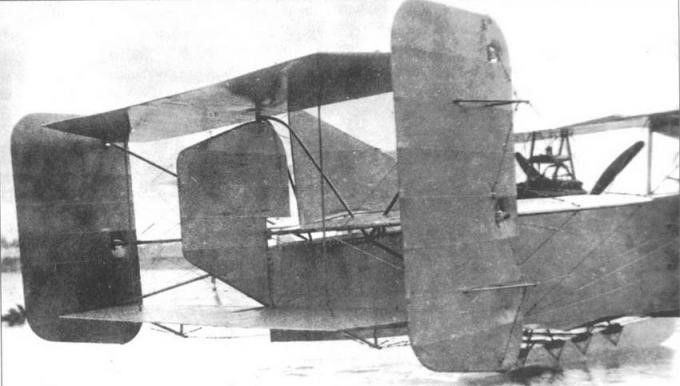
The large-span wing featured traditional wood-frame construction with fabric covering. The structure had three auxiliary spars to be able to fix the large ailerons. The shape in the plane of the wing was rectangular with a constant chord, but instead of being straight it presented a slight sagging.
The leading edge of the upper wing had indentations in the area of the propellers. The interplane supports were built with steel tubes on which they installed fabric-covered aerodynamic fairings and cable tensioners.
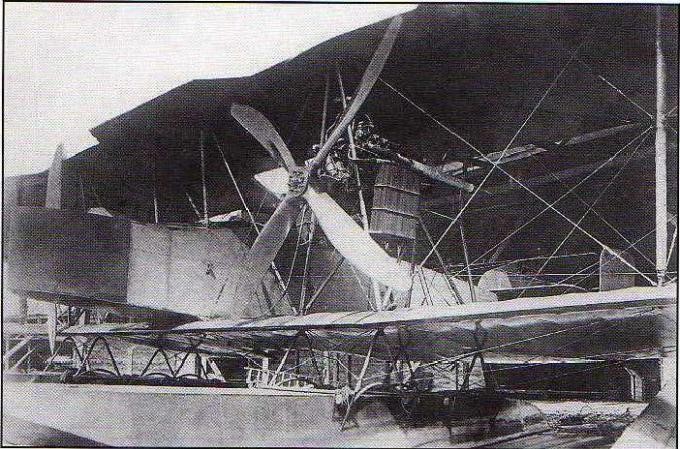
The GASN crew consisted of 3-4 people. In the bow area there was a position reinforced with sheets of plywood for an observer-gunner in charge of defending the forward hemisphere. Behind this position was the cockpit for two pilots and behind the wing box a third position for a gunner.
Even without completing the assembly of the first example, a request for the construction of 10 examples had been sent to Shchetinin.
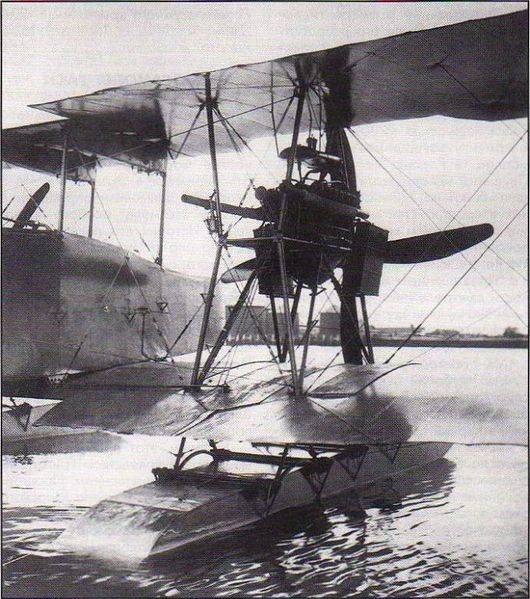
The first flight of the prototype took place on August 24, 1917 in Petrograd under the leadership of Senior Lieutenant A. Ye. Gruzinov. The first tests showed that the GASN had good behaviour in the water and was easily controllable, but it was necessary to modify the trim and improve the response of the rudders. It was proposed to advance the engines, locate certain weights and increase the wing’s rake angle to advance the center of gravity of the airplane. It was also proposed to increase the surface of the rudders.
On September 24, during one of the flights, one of the floats was damaged, showing the need to reinforce its structure. After the repairs the plane began to fly again. These flights produced another series of problems, which is why the possibility of the Navy not continuing development and adapting the “Ilya Muromets” bomber or the Jioni twin-tailed plane for this role was considered.
The events of the revolution in Petrograd and the chaotic situation of the first years of the revolution prevented further development. Despite these factors, the GASN and an important set of construction elements of the started series of 10 copies were preserved intact, initially at the Shchetinin factory, which had changed its name to “Gamayún” and later at the “Krasni Liotchik” Factory.
The intention to continue the works would arrive in 1920. In that year Grigorovich traveled to Moscow and received an engineering post in Glavnoavia. His first task consisted of trying to continue the development of the projects stopped in the period 1917-1918. Grigorovich proposed to restore the work on the GASN torpedo bomber, knowing the state of conservation of the prototype and a good number of parts and components to assemble various aircraft of this type.
In November 1920 the GASN was made airworthy and the pilot LI Giks began carrying out the tests. Dmitri Pavolvich was on the shore supervising the process. On the 4th of that month, after long checks on the state of the engines, the mechanic Ozolin told Giks that the plane was ready for flight. The pilot stood in the cockpit and gave instructions to release the seaplane into the water.
During takeoff runs, tabs of fire began to come out of the exhaust pipes of one of the engines. Fearing a fire Giks decided to interrupt the test.
The engines were once more overhauled and the plane was finally cleared to take off, despite the fact that the weather conditions had deteriorated with a southerly wind that made take off difficult and the appearance of floating ice in the bay.
Steering the plane in the direction of Volni Island, Giks turned the plane upwind and took off. The plane was beginning to climb without difficulty when suddenly the engine on the right stopped working. The pilot turned for a landing near Krestovski Island. After gliding, the pilot managed to land and tried to steer the seaplane with a single engine. It was found that the seaplane’s rudder was ineffective and the aircraft only rotated around one axis. Giks directed the mechanic to go to the wing to try to compensate by sinking the float, but that didn’t help either. Waiting for help Giks switched off the engines. The plane began to drift freely.
The crew members removed the cushions from the seats, sprayed them with gasoline and lit them, throwing them near the plane as a signal for help, but help did not appear anyway.
For a whole day the plane drifted. At dawn the crew confirmed that they were about three kilometers from the shore and that the entire plane was surrounded by sheets of ice that made rescue difficult. Finally it was possible to bring the plane to the shore. The analysis of the accident showed that during the preparation of the flight, instead of oil, it was poured into the diluent tank.
With this the development came to an end.
GASN
Power plant: 2 x Renault, 220 hp
Upper plane wingspan: 28.0 m
Wing area: 150.0 m²
Length: 14.50m
Payload: 1450kg
Speed at sea level: 110-120 km/h
Accommodation: 3 – 4
Armament: two machine guns
Bombload: 450 kg torpedo or 480 kg of bombs

 All Aero