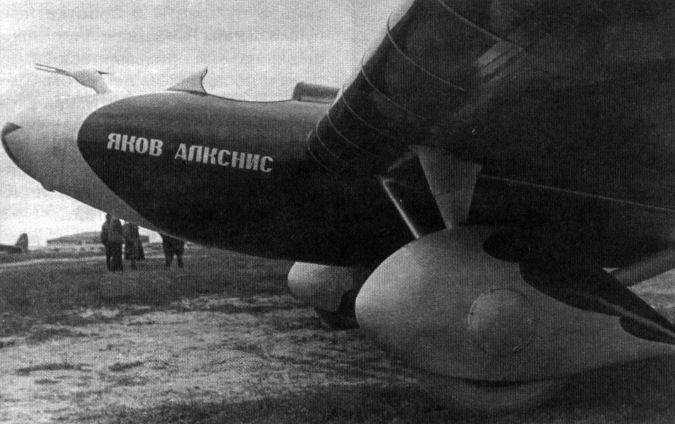
When the production of the Gribovski G-11 was restarted in 1943 at the Ryazan Factory, Gribovski began the development of an improved version based on the experience accumulated during combat operations.
The project of this new moto-glider would receive the name G-31 (Russian: Грибовский Г-31) from the OKB and by April 1944 it was ready for discussion.
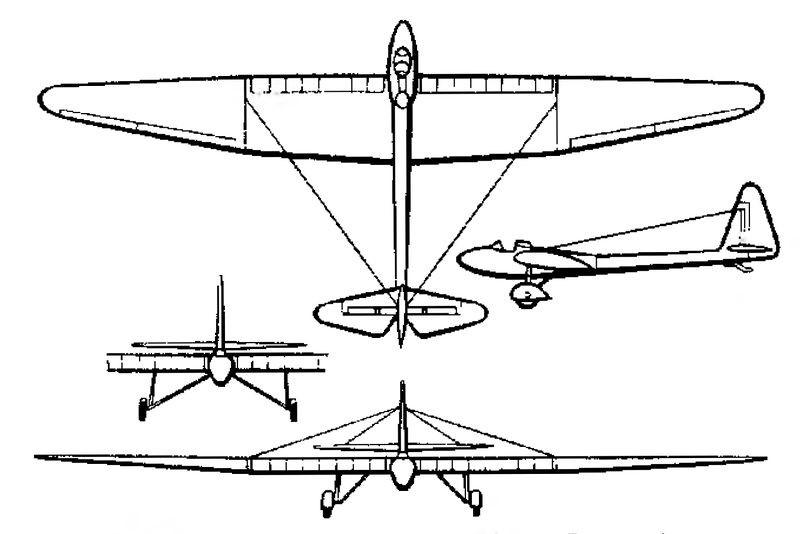
The G-31 also featured a high wing monoplane structure, but in this model with bracing to the fuselage by uprights. The wing design with R-II profile was maintained. The centroplane had a rectangular shape and the wing consoles were fixed to it with inflection on the leading edge and the straight trailing edge. Wing mechanization included ailerons and flaps, located in the wing soffit and intended to improve landing characteristics.
Another difference that was obvious to the naked eye was the new semi-monocoque fuselage with an oval cross section.
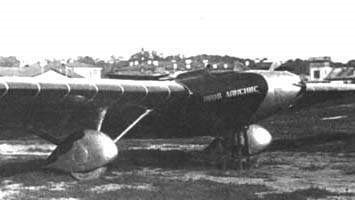
In the nose there was a two-seater cabin with double control and side-by-side seating. The entire nose could be opened to one side in order to allow the loading of large packages or equipment in the cargo hold.
At the request of the Landing Troops (VDV), the possibility of using one or two M-11 engines was maintained.
Despite the fact that the G-31 project was considerably more refined than that of the G-29 and was approved by the NKAP committee of experts during its presentation, it was decided not to proceed with its production. A little earlier, SA Moscaliov had presented a similar project that led to the SAM-28 glider and its development had already been approved.
 All Aero