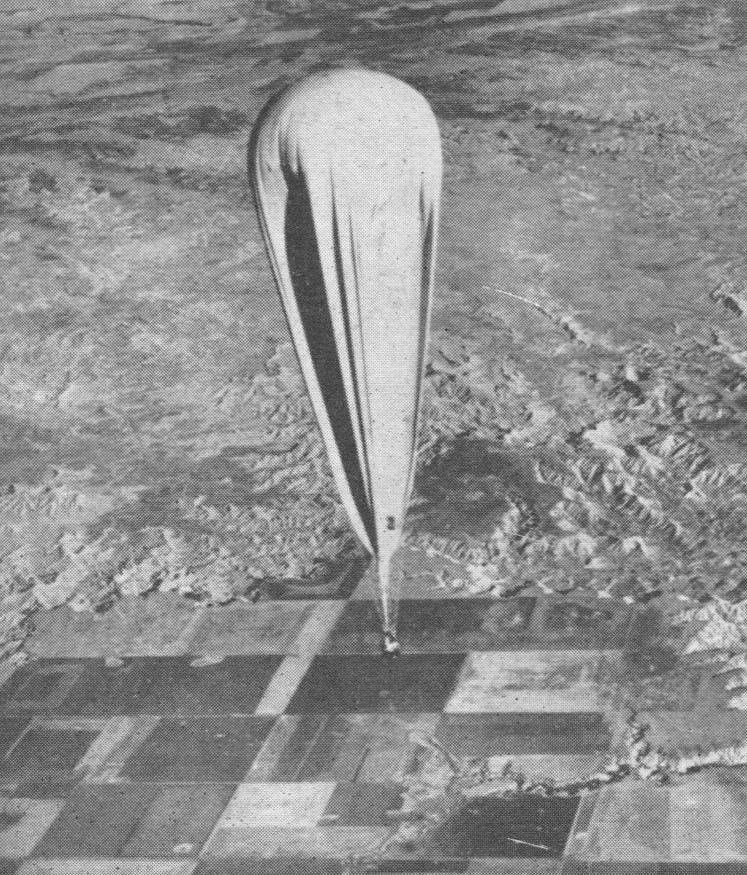
The crash of Explorer I resulted in a national embarrassment, leading Captain Albert W. Stevens, the scientific observer on board the Explorer balloon, to lobby for another attempt with an improved balloon to be named Explorer II. But news of the fatal crash of a Russian stratospheric attempt in 1934 left President Gilbert H. Grosvenor of the NGS sobered by the risk. A review of the crash by the National Bureau of Standards (NBS) was held between July and September, revealing that the balloon had not opened symmetrically during the ascent, causing stresses that led to the fabric tears. A month-long delay prior to launch had allowed the rubberized cotton to stick together, which created the uneven expansion. The hydrogen explosion followed when the gas in the bag mixed with the oxygen in the atmosphere.
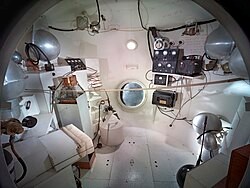
Despite the concerns, in 1935 the NGS and Army Air Corps decided to make another attempt. To eliminate the hazard of the hydrogen lifting gas, it was decided instead to use helium—to which the United States had a monopoly. The lower lifting efficiency of helium gas meant that a larger balloon would be needed, so Goodyear-Zeppelin increased the volume to 100,000 cu.m (3,700,000 cu ft). Dow Chemical Company assembled a larger, lighter gondola made of “Dowmetal”—a magnesium-aluminium alloy—that would carry a two-man crew with a reduced amount of scientific instrumentation. The cabin was 2.7 m (9 ft) in diameter with a mass of 290 kg (640 lb) and could transport a 680 kg (1,500 lb) payload. It was manufactured from a single, large plate that was cut up into form that could be reshaped and welded into a sphere. In order to make crew escape easier, the portholes were made wider than on the Explorer I. The atmosphere in the interior of the capsule was supplied from liquid air instead of liquid oxygen in order to reduce the fire hazard. The modified balloon was ready by the spring of 1935 and the first launch occurred July 10, 1935. Unfortunately, this too proved a failure with the balloon rupturing at liftoff.
Following a review by the NBS, the balloon was prepared for another attempt after Goodyear strengthened the material. Examination of climatological data for the Stratobowl collected over the previous fifteen years was examined, and it was determined that the month of October typically had periods of good weather that would last sufficiently long for a flight attempt. A team of meteorologists was assembled at the Stratobowl in early September and they proceeded to put together a weather station. The meteorological requirements for the launch was for clear skies—with no precipitation—lasting for the duration of the flight, as well as surface wind speeds that were not to exceed 23 km/h (14 mph).
With a cold front approaching, on the night of November 10, 1935, the balloon was prepared for launch. The temperature dropped to −14 °C (6 °F) overnight, so the 10,762.4 m2 (115,845 sq ft) of fabric was kept warm and pliable through the use of stoves. The task of inflating the balloon with helium from the 1,685 steel cylinders took eight hours, during which the team needed to repair a 5.2 m (17 ft) long tear that formed in the fabric. Once inflated, the balloon stood 96 m (316 ft) tall. The gondola was kept anchored to the earth by a team of more than 100 soldiers holding cables. Preparations were complete by 7:01 am the following morning and the conditions were deemed suitable for a launch.
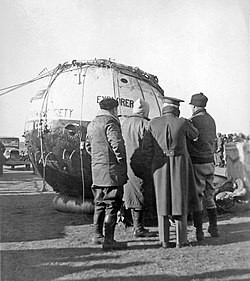
The crew of the Explorer II consisted of Captain Albert W. Stevens, in command of the mission, and Captain Orvil A. Anderson. A crowd of around 20,000 viewers gathered to watch the event. (The local residents had raised and contributed $13,000 for the mission.) Lift-off occurred at precisely 8:00 am with the release of 34 kg (75 lb) of ballast made of fine lead shot. A few moments after liftoff, wind shear propelled the balloon into a side canyon, but thereafter it ascended normally.
The Explorer II reached a peak altitude of 22,066 m (72,395 ft) at 12:30 pm and remained there for 80 minutes. This set a new world altitude record, and one that would last for nearly two decades. The crew became the first humans to document the curvature of the Earth. Unfortunately, the fan that was to be used to rotate the gondola proved ineffective at that altitude, so they were unable to avoid the Sun’s glare. This made viewing from one side of the capsule nearly useless. Despite this, Captain Stevens reported seeing details of the Earth’s surface for hundreds of miles. They were too high up to be able to view any movement on the ground, but their photography showed the potential of high-altitude reconnaissance balloons.
Explorer II included communications equipment, and constant radio contact was maintained throughout the flight with the signal being broadcast across the U.S. and in Europe. The onboard instruments collected data on cosmic rays, the ozone distribution and electrical conductivity of the atmosphere at different altitudes, the atmospheric composition of the stratosphere, and the luminosity of the Sun, Moon and Earth. In addition, microorganisms were collected from the stratosphere. Mold samples were carried along to determine the effects of cosmic ray exposure. Stevens took along a camera to take pictures, including the first ever motion pictures shot from the stratosphere. The collected data showed that the ozone in the upper atmosphere was effective at blocking most of the ultraviolet radiation from the Sun. It was also found that the percentage of oxygen at the peak altitude was about the same as that at sea level.
Finally, the descent was begun and it proceeded normally. At an altitude of 300 m (1,000 ft), the crew began releasing scientific instruments that would descend by their own parachutes. This was done to protect the data in case the gondola had a rough landing. The precautions proved unnecessary as the balloon landed gently in an open field near the town of White Lake, South Dakota at 4:13 pm.
 All Aero