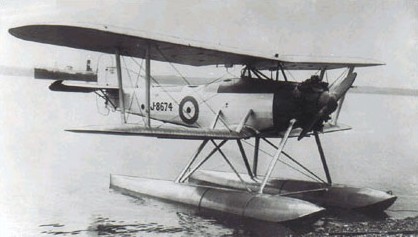
The Gloster Goring was a private venture to replace the Hawker Horsley, then (1927) in service as a light bomber with the RAF. The Air Ministry intimated that the engine they would like to see installed was the Bristol Orion fitted with an exhaust-driven supercharger. One airframe was so equipped, but due to the failure of the Orion and its supercharger, this variant was not proceeded with.
Another Goring, powered with a Bristol Jupiter 8-geared engine, met with much more success.
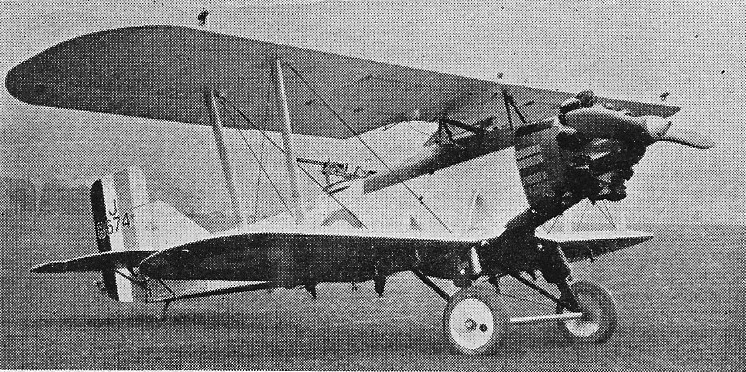
As a bomber, the Goring carried 700 lb of bombs and in addition the observer had a Vickers machine gun on a rotating mount in the rear cockpit. Provision was made for a second gun firing through the bottom of the fuselage. In this condition the Goring had an endurance of 6 hr 30 min at 15,000 ft.
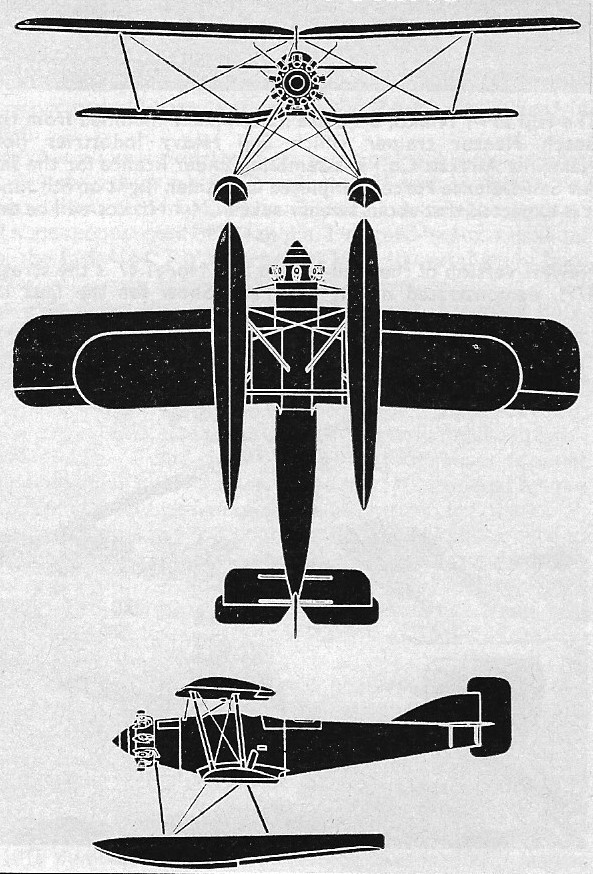
At a later stage the Goring was converted to a twin-float seaplane, still powered by a Jupiter 8. This decreased the maximum speed by only 4 mph and made similarly small alterations to performance figures of the landplane. The floats were of Gloster design and were made entirely of anodised duralumin.
Although the second aircraft was taken over by the Ministry for research work in connection with engines, the type was not ordered into production.
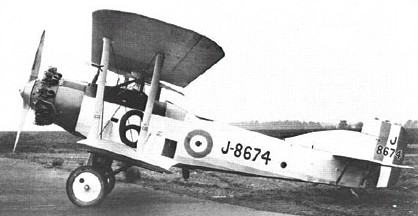
Goring (landplane)
Engine: 1 x 425hp Bristol Jupiter VI
Max take-off weight: 2440 kg / 5379 lb
Empty weight: 1323 kg / 2917 lb
Wingspan: 12.80 m / 41 ft 12 in
Length: 9.14 m / 29 ft 12 in
Height: 3.51 m / 11 ft 6 in
Wing area: 41.81 sq.m / 450.04 sq ft
Max. speed: 219 km/h / 136 mph
Ceiling: 5029 m / 16500 ft
Armament: 2 x 7.7mm machine-guns
Crew: 2
 All Aero