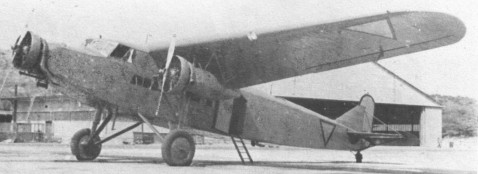
The Fokker F.XVIII retained the same basic design with metal fuselage structure and a high-set cantilever wooden wing but had a number of detail design improvements compared with earlier Fokker tri-motors.
Five F.XVIIIs were built in 1932 and all were put into service on the route from Amsterdam to Batavia in the Dutch East Indies. On this route to the East four passengers were accommodated in the main cabin in seats which converted for sleeping; the cabin also provided accommodation for the wireless operator and the navigator.
Several notable flights were made by F.XVIIIs. Between 15 and 22 December 1934 PH-AIS Snip (Snipe), re-engined with Pratt & Whitney Wasp T1D1 radials, covered 10300km from Amsterdam to Curasao in a flight time of 55 hours 58 minutes carrying 100kg of mail.
The F-XVIII Pelikaan PH-AIP left Amsterdam on 18 December 1933 and reached Jakarta four days later.
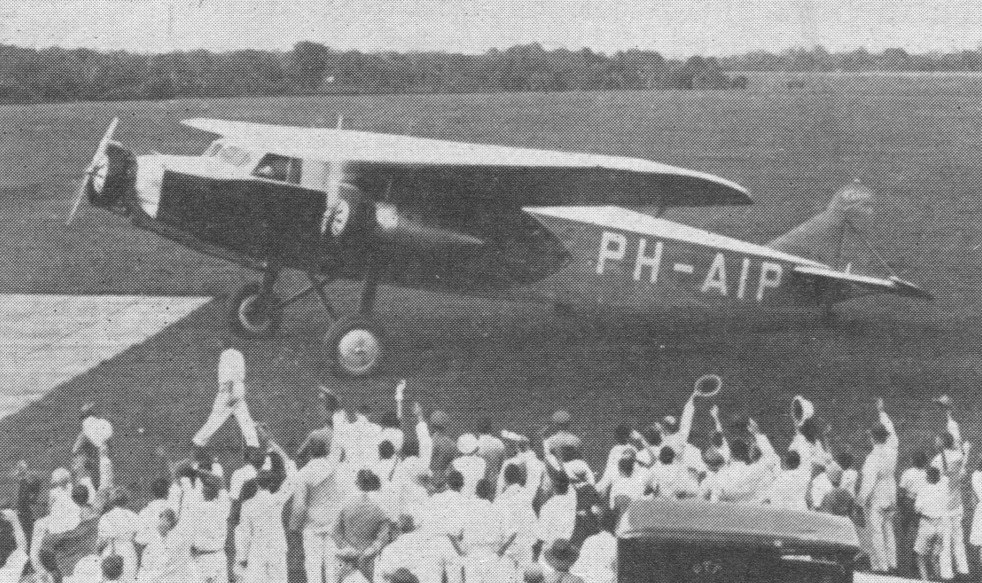
The F.XVIIIs were withdrawn from the long-distance routes in 1935. PH-AIS was joined in the West Indies by PH-AIO Oriol and both remained in service until 1946. The Oriol was converted for military use during the war period and carried a defensive machine-gun.
Two F.XVIIIs were sold to the Czech national line CSA and operated the route from Prague to Berlin and Vienna, normally carrying 13 passengers. Another of the type was sold to a Palestine freight operator and the famous Pelikaan was bought in October 1936 by Air Tropic, a French company acting for the Spanish government, and it is believed that the Pelikaan ended its days on military liaison and transport duties during the Spanish Civil War.
Engine: 3 x Pratt & Whitney Wasp C radial, 313kW
Max take-off weight: 7850 kg / 17306 lb
Empty weight: 4623 kg / 10192 lb
Wingspan: 24.50 m / 80 ft 5 in
Length: 18.50 m / 60 ft 8 in
Wing area: 84.00 sq.m / 904.17 sq ft
Max. speed: 240 km/h / 149 mph
Cruise speed: 210 km/h / 130 mph
Ceiling: 4800 m / 15750 ft
Range: 1820 km / 1131 miles
 All Aero