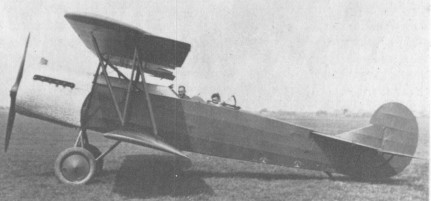
The C V series of 1924, was to have different engines, ranging from 250 to 730 hp, and five different sets of wings (C.V A, B and C having successively larger area) during its production life. The C.V-A was the prototype of the series.
With steel tube and fabric fuselage and wooden wings, it was derived from the C.IV and the prototype flew in May 1924 and about 90 had been built by 1926 including C.V W floatplanes.
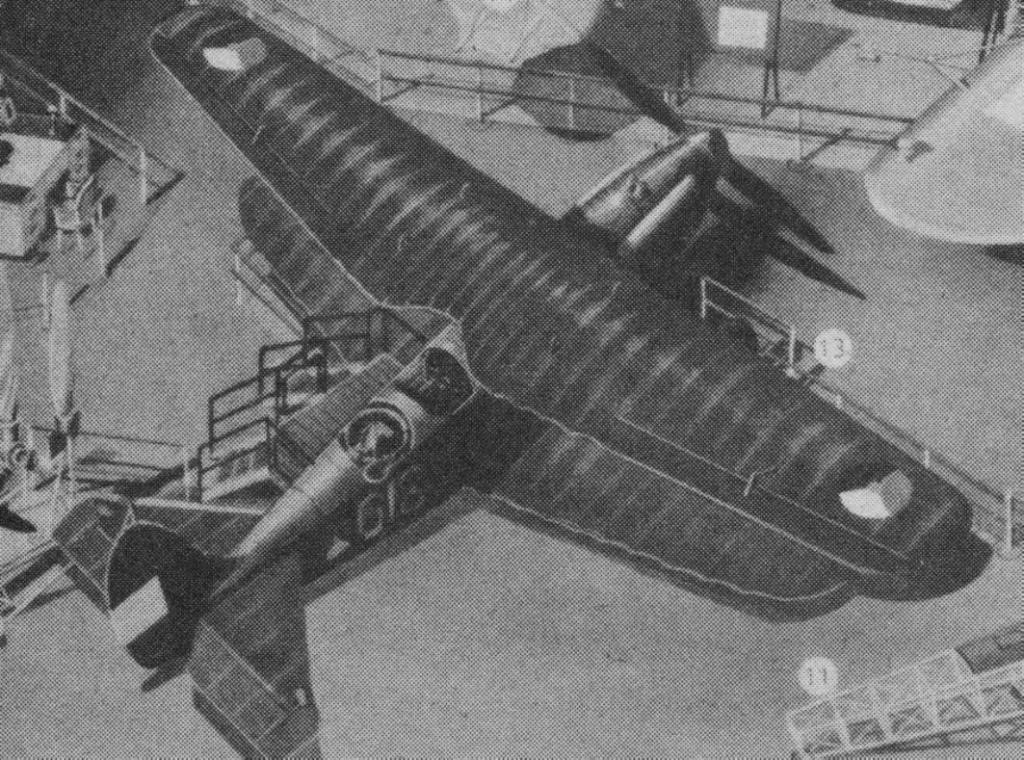
The Naval Air Service ordered six C.VC. They could be fitted with wheels or floats as required.
In 1926 production switched to the C.V D with tapered sesquiplane wings with V struts, and the C.V E with larger wings with N-struts. In general the D was used as a two-¬seat fighter with a wing span of 12.5m and the E as a reconnaissance bomber with a wing span of 15.3m
The C.VD of the Aviation Department had a 450 hp Hispano engine.
A batch of C.VD were delivered to the Dutch Army Air Service in 1925-37, first powered with a 450 hp Hispano-Suiza and later re-engined with the 540 hp Rolls-Royce Kestrel II-B.
The C VE of 1926 had a 450 hp Bristol Jupiter radial engine as supplied to Sweden’s Flygvapen.
Though the C.VW seaplane type proved unsatisfactory in Holland, Sweden converted C.Vs into seaplanes and were very satisfied with them.
A C.V exported to Japan for evaluation.
Another version of the C.V aircraft was designated C. VI and had a 350 hp Hispano engine.
More than 1000 of these basic mod¬els were made in the Netherlands, Italy, Denmark, Norway, Hungary and Switzerland, the last sub types being His¬pano engined models built at EKW and Dor¬nier in Switzerland until 1936, and 730 hp Pegasus engined Dutch, Danish and Swedish versions. Most of these were still in service in early 1940.
CVs with various engines were delivered to the Dutch Aviation Depart¬ment, Naval Air Service and Royal Dutch East Indies Army, and to Bolivia, China, Denmark, Finland, Hungary, Italy, Japan, Norway, Sweden and Switzerland. The air¬craft was manufactured under license in five countries.
The Hungarian Royal Air Force acquired 76 Fokker C.V, mostly built under licence by Manfred Weiss (WM).
WM improved the Fokker C.V which resulted in the WM-16 Budapest, with 18 built in two variants.
Officine Ferroviarie Meridionaii in 1925, obtained rights to build Fokker aircraft under license, including the C.V., which was fitted with an Italian-built Jupiter engine and known as the Ro.1.
Span: usually 12.5 or 15.3 m (41 ft or 50 ft 2in)
Length: typically 9.14 9.75 (30 ft to 32 ft)
Gross weight: 1900 2268 kg (4190 5000 lb)
Maximum speed: typically 240 km/h (150 mph)
C.V A
C.V-B
C.V-C
C.V-D
Engine: 450 hp Hispano
Wing span: 12.5m
C.V-E
Engine: 450 hp Bristol Jupiter
Wing span: 15.3m
C.V W
Undercarriage: floats
Span: usually 12.5 or 15.3 m (41 ft or 50 ft 2in)
Length: typically 9.14 9.75 (30 ft to 32 ft)
Gross weight: 1900 2268 kg (4190 5000 lb)
Maximum speed: typically 240 km/h (150 mph)
 All Aero