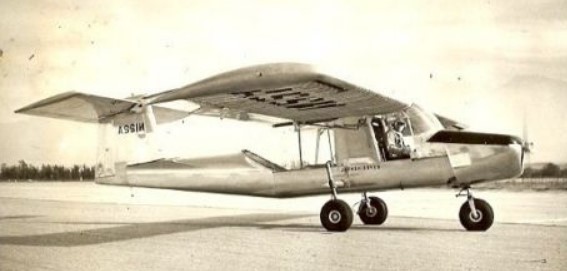
The FL-23 prototype was designed and built as a private venture, it was a high-wing cantilever monoplane with an all-moving tailplane mounted at the top of the fin. It had a fixed tricycle landing gear and powered a 225-hp (168 kW) Continental E225 piston engine. It had room for a pilot and observer in tandem; the observer had an unusual acrylic plastic enclosure to give an all-round visibility.
The US Army issued the specification for a two-seat liaison and observation monoplane and the prototype was entered into the competition. During trials the aircraft was badly damaged in a flying accident when it lost its tail, and was withdrawn from the competition. The competition was won by the Cessna 305A which became the L-19 Bird Dog.
Powerplant: 1 × Continental E225, 235 hp (175 kW)
Propeller: Hartzell 7 ft (2.1 m) diameter
Wingspan: 33 ft 4 in (10.16 m)
Length: 28 ft 4 in (8.64 m)
Height: 8 ft 1 in (2.46 m)
Wing area: 277 sq ft (25.7 m2)
Airfoil: NACA 4412
Empty weight: 1,500 lb (680 kg)
Gross weight: 2,450 lb (1,111 kg)
Fuel capacity: 60 US gal (50 imp gal; 230 L)
Maximum speed: 133 mph (214 km/h, 116 kn)
Cruise speed: 118 mph (190 km/h, 103 kn)
Stall speed: 38 mph (61 km/h, 33 kn) (flaps extended)
Range: 485 mi (781 km, 421 nmi)
Service ceiling: 19,500 ft (5,900 m)
Rate of climb: 1,180 ft/min (6.0 m/s)
Crew: 2
 All Aero