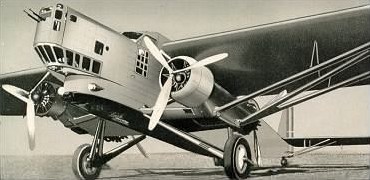
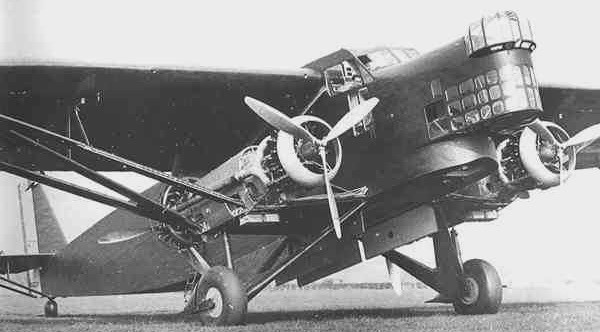
In May 1929, the Service Technique Aeronautique issued a requirement for a BN5 aircraft (Bombarde-ment de Nuit, 5 seat) to replace the ageing LeO 20 series then in service with the Avia¬tion Militaire. The result was the prototype Farman 220 01, which flew for the first time on May 26, 1932. It was powered by four Hispano Suiza 12 Lbr, V type engines, mounted in tandem pairs in nacelles beneath the wings, each driving one tractor and one pusher three blade propeller. This prototype later flew for many years as F ANLG Centaure with Air France on air mail services to South America.
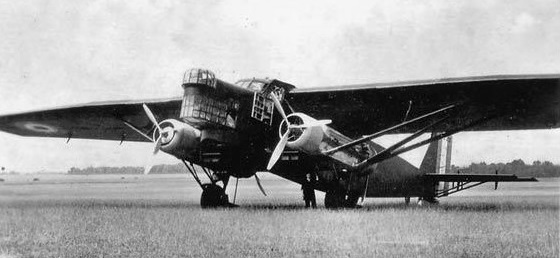
In the sum¬mer of 1933, a second bomber prototype, the F221 01, was flown with 800 hp / 596kW Gnome-Rhone 14Kbrs radial engines, armed with three manually operated gun turrets in nose, dorsal and ventral positions, and a more extensively glazed nose permitting a better field of view for the pilots. The number of crew members in the F221 was increased to seven. Ten examples of the F221 Bn5-series bombers (some later converted into F.222) were built at Billancourt from 1934. On June 16 of that year, the prototype set up a new international payload to height record by lifting 5000 kg (11025 lb) to an altitude of 7000 m (22 970 ft). The first five production F221s were delivered to the 15e Escadre de Bombardement of the Armee de l’Air (as the Aviation Militaire had by then been retitled) in April 1936.
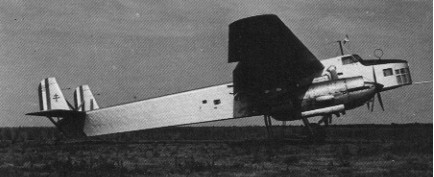
The F.221 were followed by 11 F.222 with retractable undercarriage, designated F222/1; seven were delivered in April 1937 to GB I/15, and the other four to the 4e Eseadre at Tong, French Indo China. The final bomber version was the F.222/2, 24 of which were built during 1937-38 with a lengthened and redesigned front fuselage sections and dihedral on the outer wing sections, and the step beneath the bomb-¬aimer’s position removed. The last 16 machines had 685.6kW engines. The first eight (with Gnome Rhone 14 Kirs engines) were manufactured by Farman factories and the other 16 by the SNCA du Centre.
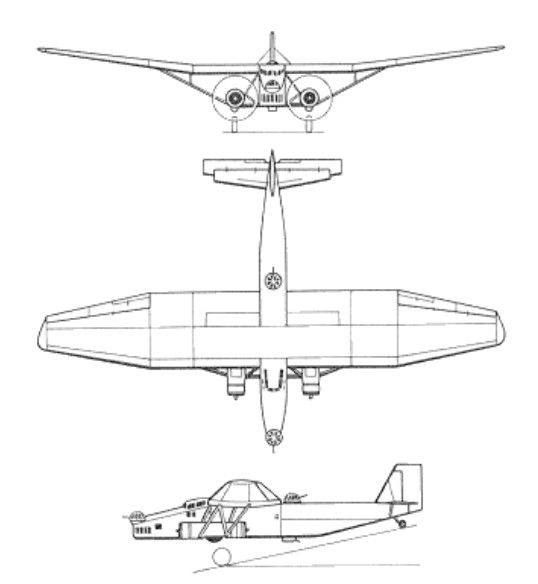
These latter aircraft had 860 hp Gnome Rhone 14N 11/15 powerplants, and the first official trials began in November 1937. The aircraft were of all metal construction, with a rectangular¬ section fuselage. A manually operated turret, fitted with a single 7.5 mm (0.29 in) MAC 1934 machine gun, was positioned in the extreme nose, and single guns of the same calibre were installed in the manually operated dorsal turret and in a ventral housing. The bomb bay, in the undersides of the wings, comprised four compartments for up to 4200 kg (9260 lb) of bombs of varying sizes.
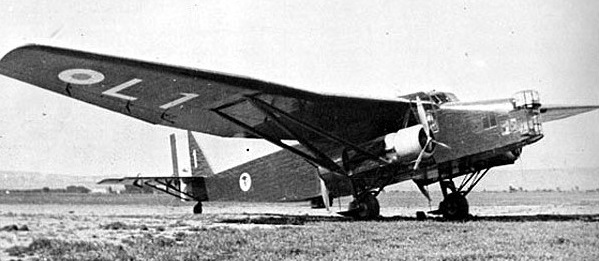
Escadre GB 11/15 operated F.221 from November 1936, then F.222 from April 1937. These were the largest bombers to serve in France between the world wars. After the outbreak of World War II the bombers flew leaflet raids over Germany, but night bombing raids during May and June 1940 led to three losses.
About two dozen Farman 221s and 222s remained in service in September 1939. Dur¬ing the early stages of the Second World War, they flew on antisubmarine and ship¬ping patrols along the West African coast. Night sorties were made to Germany and Czechoslovakia in late 1939, but mainly on reconnaissance or leaflet dropping missions. Two were allocated to the Aeronavale for maritime reconnaissance in November 1939, and were subsequently transferred with their unit to Casablanca in January 1940. Fitted with two 1000 litre (220 Imperial gallons) auxiliary fuel tanks occupying half of the bomb bay, they were used for Atlantic patrol duties. On May 14, 1940, Groupement 15 utilized F 222s on night bombing raids over the Rhine, Wurtternburg and Bavaria; this unit moved to North Africa a month later.
The French navy came up with the idea to attack Berlin during the French campaign. At 3.00pm on 7 June 1940, one of France’s three Farman F.223.4 long-range naval reconnaissance aircraft, F-ARIN, the ‘Jules Verne’, was cleared for take-off at Bordeaux-Merignac airfield. The four-engined high-wing monoplane, painted dull black, had already logged several missions. At 3.30pm the Jules Verne rolled u for take-off carrying a bombload of 2000 kg. this was the first bomb assault of the war made on the German capital. The crew commander was Captain de Corvette Dailliere, a former professor of aerial navigation at the Ecole de Guerre. With him flew Paul Comet, an ex-chief navigator of the Air France airline. “t once we set a northern heading for the English Channel. I flew the plane visually; the weather was clear and I was completely familiar with the first route via Pas de Calais and Holland. We did not meet with a single aircraft; we came under heavy anti-aircraft fire only over Sylt. By sunset we were flying over Denmark, some time later the Baltic Sea lay beneath us. When Stettin appeared on our right, we took a southern heading, flew at high altitude over the Meckleburg lake district, and reached the northern outskirts of Berlin at exactly the appointed time. I got ready to release the bombs and realised that someone had failed to install our bombsight, so I pressed my nose to the glass of the cockpit. Visibility was good, but I could not identify any of the numerous lakes around Berlin and the city lay in complete darkness. Suddenly, as if on command, countless searchlights lit up the night and all calibre of flak opened fire. We circled over he city centre for a while, throttled the engines, let them run again full blast, then repeated the process. We wanted to create the impression that a whole formation was over Berlin. Then we turned off toward a northern suburb and dropped our payload there on one of the numerous factories. The attack certainly did not cause any great destruction, but after all we were more concerned with the psychological effect.”
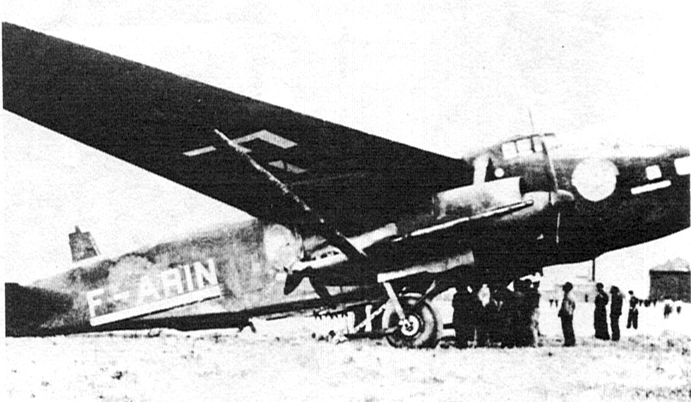
The Jules Verne then set course for Leipzig, crossed all of Germany unmolested by either fighters or flak, and landed at Paris-Orly at around 5.00am, after a 13.5 hr flight of almost 3000 miles.
Next day the French Admiralty announced “On the night of June 7-8, a formation of French long-range bombers bombed an industrial quarter in north Berlin as retaliation for the German air attack on Paris. All our aircraft came back”.
The Vichy authorities disbanded most Groupes de Bornbardement after the French armistice in 1940, but F221s and 222s formed part of a transport and communications unit which was based in Morocco in late 1942. Although Allied attacks destroyed many aircraft, operations continued in the Mediterra¬nean and North Africa and the type was still in use as late as January 1944, but by September of that year the few survivors had been withdrawn from service and scrapped.
The improved F.223 had a more streamlined fuselage, slimmer wings, simplified strutting and twin fins and rudders. Originally fitted with radial engines, eight were re-engined during 1939-40 with 820kW Hispano-Suiza water-cooled 12Y50/51. After June 1940 a number of F.222 and F.223 bombers were used as military transports.
Civil passenger/mailplane versions of the F.220 family included Le Centaure, the converted F.220.01, four F.2200 and a single F.2220 – all with in-line engines and intended for the South Atlantic service. Six radial-engined F.224, with new deep fuselages for 40 passengers, were rejected by Air France and subsequently went to the Armee de l’Air. The F.2231 and F.2232 were civil equivalents of the F.223 bomber; the F.2231 made a spectacular flight to South America in November 1937 piloted by Paul Codos.
Three F.2234 built during 1938-39 had the thin tapering wings of the F.223 and F.2231/2, but featured a new streamlined fuselage with a pointed nose section. All were requisitioned by the French Navy in September 1939. One (“Jules Verne”) made the first Allied air raid on Berlin in June 1940. After the French collapse in June 1940 these three machines were returned to Air France. “Le Verrier” was shot down in the Mediterranean on 27 November 1940.
F.221
Engine: 4 x G+R 14 Kbrs, 715kW
Max take-Off Weight: 15200-18700 kg / 33510 – 41227 lb
Empty Weight: 10488 kg / 23122 lb
Wingspan: 36.2 m / 118 ft 9 in
Length: 21.5 m / 70 ft 6 in
Height: 5.2 m / 17 ft 1 in
Wing Area: 188.0 sq.m / 2023.61 sq ft
Max. Speed: 320 km/h / 199 mph
Cruise Speed: 280 km/h / 174 mph
Ceiling: 8000 m / 26250 ft
Range W/Max.Fuel: 1995 km / 1240 miles
Armament: 3 x 7.5mm machine-guns, 4200kg of bombs
Crew: 5-6
F 222/2
Span: 36 m (118 ft 1.25 in)
Length: 21.45 m (70 ft 4.5 in)
Gross weight. 18 700 kg (41230 lb)
Maximum speed. 325 km/h (202 mph)
 All Aero