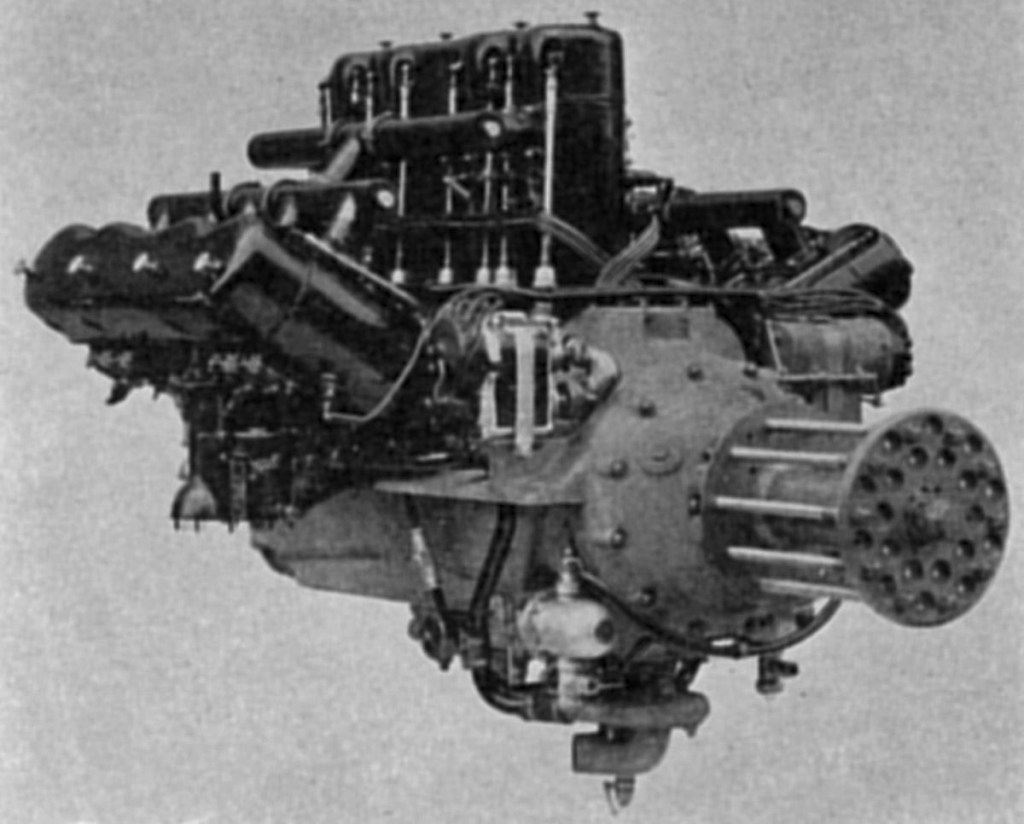
The 12WE, a more refined water-cooled W-12 with the same bore, stroke and displacement was introduced in 1924. With a 5.3:1 compression ratio, it was rated 500 hp at 2,150 rpm and could produce 550 hp at 2,200 rpm.
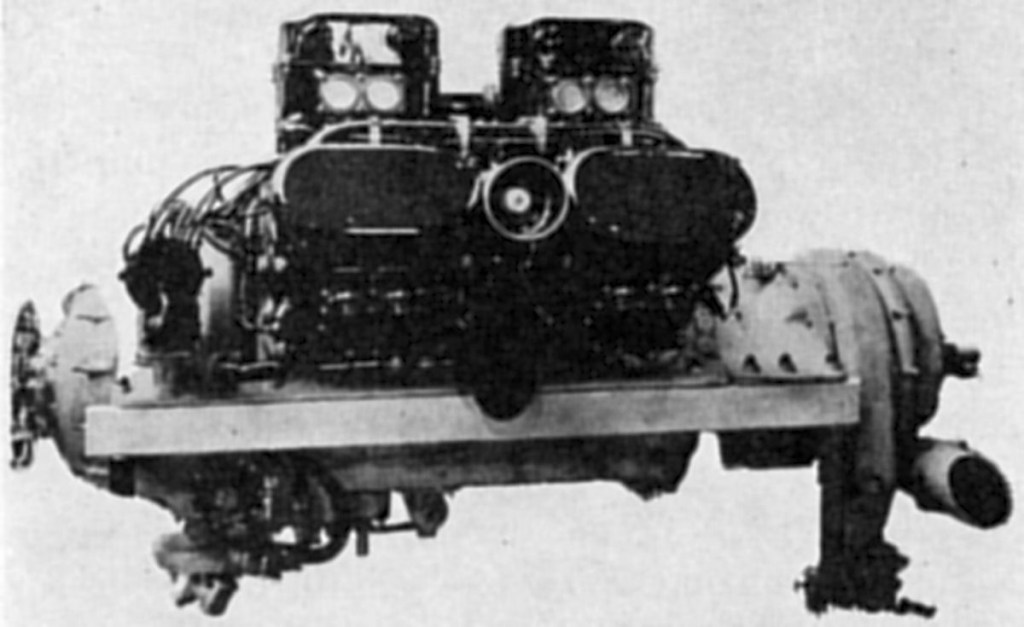
The direct-drive engine weighed 1,034 lb; with Farman propeller reduction gears, the engine weighed 1,122 lb. Steel cylinders with a common welded-on sheet-metal water jacket were arranged in pairs. The overhead valves were operated by push rods from camshafts located at each Vee’s center and driven through a gear train from the crankshaft propeller end. Pistons and crankcase were aluminum-alloy castings. The crankshaft was supported on white-metal-lined plain bearings. A disc with driving dogs at the crankshaft front accommodated either a bolted-on propeller shaft or reduction gear drive. The crankshaft gear driving the cam gear train also meshed with a pinion at the crankcase bottom that drove oil, water, and fuel pumps. A front-mounted cross shaft driven from a camshaft drove two magnetos or two distributors. The dry-sump lubrication system used gear-type pumps to draw oil from both crankcase ends and force it through cooler, from which it was flowed to all bearings through a filter that could be bypassed and withdrawn for cleaning while the engine was running. Cooling water was circulated by a centrifugal pump fitted with a throttling device to regulate the water flow rate and thereby maintain correct water temperature. The carburetors were situated outside the outer cylinder rows and the induction pipes had water jackets. Some 12WE engines were fitted with centrifugal superchargers. Propeller reduction gears were available with 2:1 and 1.35:1 ratios.
 All Aero