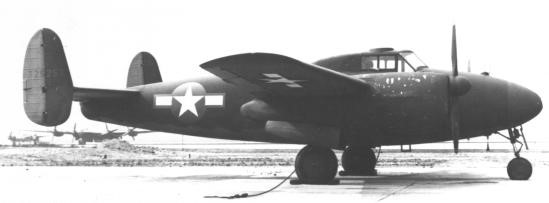
The Fairchild BQ-3, Model 79, was an early expendable unmanned aerial vehicle – referred to at the time as an “assault drone”. Development of the BQ-3 began in October, 1942, under a program for the development of “aerial torpedoes” that had been instigated in March of that year. Fairchild was awarded a contract for the construction of two XBQ-3 prototypes, based largely on the AT-21 Gunner advanced gunnery trainer already in United States Army Air Forces service.
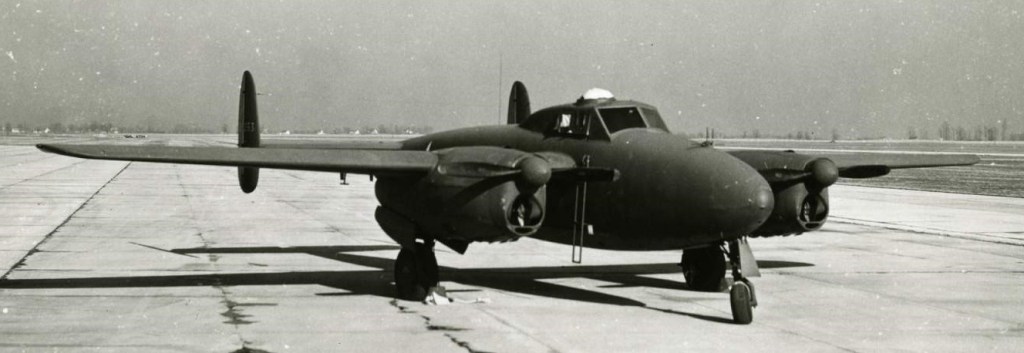
The XBQ-3 was a twin-engined, low-wing aircraft, fitted with retractable tricycle landing gear and a twin-finned empennage; although the aircraft was intended to be operated by radio control with television assist, a two-seat cockpit was included in the design for testing and ferry flights. Power was provided by two Ranger V-770 inline piston engines of 520 horsepower (390 kW) each; up to 4,000 pounds (1,800 kg) of explosives could be carried by the aircraft in unmanned configuration. The aircraft would be destroyed in the act of striking the target.
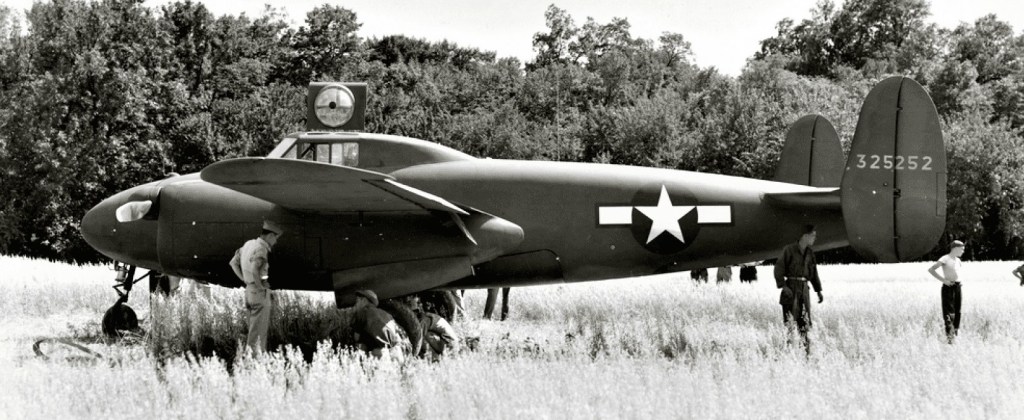
The first flight of the XBQ-3 took place in July 1944; later that month, one of the prototypes was severely damaged in a forced landing. Despite the accident, flight testing continued; however, the assault drone was determined to have no significant advantage over conventional bombers, and advances in the field of guided missiles were rapidly rendering the concept obsolete. As a result, the program was cancelled towards the end of 1944.
XBQ-3
Engines: 2 × Ranger V-770-15, 520 hp (390 kW) each
Wingspan: 37 ft (11 m)
Length: 52 ft 8 in (16.05 m)
Height: 31 ft 1 in (9.47 m)
Gross weight: 15,300 lb (6,940 kg)
Maximum speed: 220 mph (350 km/h, 190 kn)
Range: 1,500 mi (2,400 km, 1,300 nmi)
4,000 pounds (1,800 kg) warhead
Crew: 1 (optional)
 All Aero