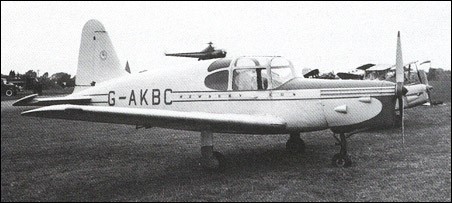
A four-seat single engine light aircraft built by Elliots of Newbury Ltd, of all wood construction. The undercarriage was fixed tricycle.
On 8 August 1947 the Type 4 first flew, registered G-AKBC powered by a 100 hp (75 kW) Blackburn Cirrus Minor, at Welford, Berkshire.
The prototype was later altered to have a DH Gipsy Major engine as the Eon 2.
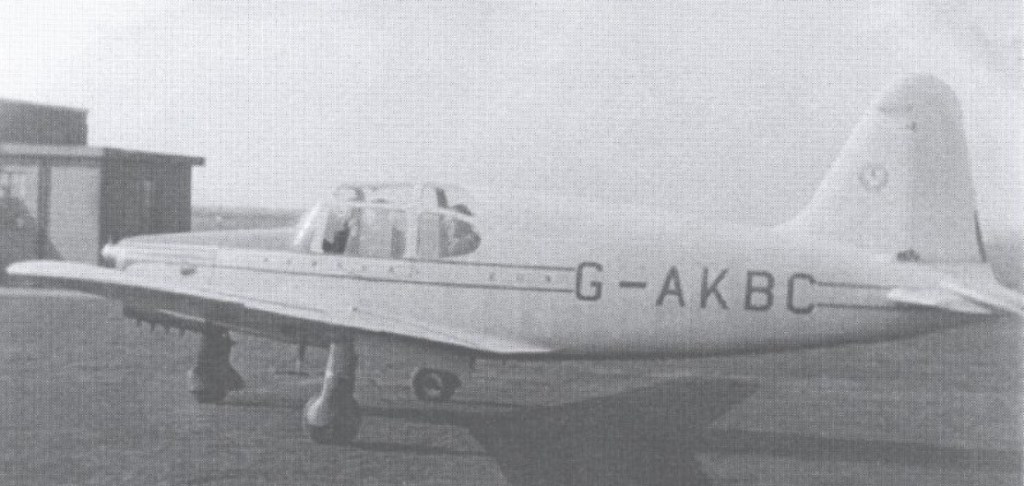
The sole completed Eon aircraft was used as a glider-tug to demonstrate the company’s gliders. The aircraft met its end at Lympne airfield, Kent, on 14 April 1950, when, with a glider attached the pilot started the aircraft by swinging the propeller with the aircraft’s wheels not secured by chocks. The engine started, and the craft moved forward; the pilotless aircraft and the glider were damaged as the aircraft passed through a boundary hedge. The glider pilot had also abandoned his cockpit when he realised what was happening.”
EoN 1
Engine: Blackburn Cirrus Minor II
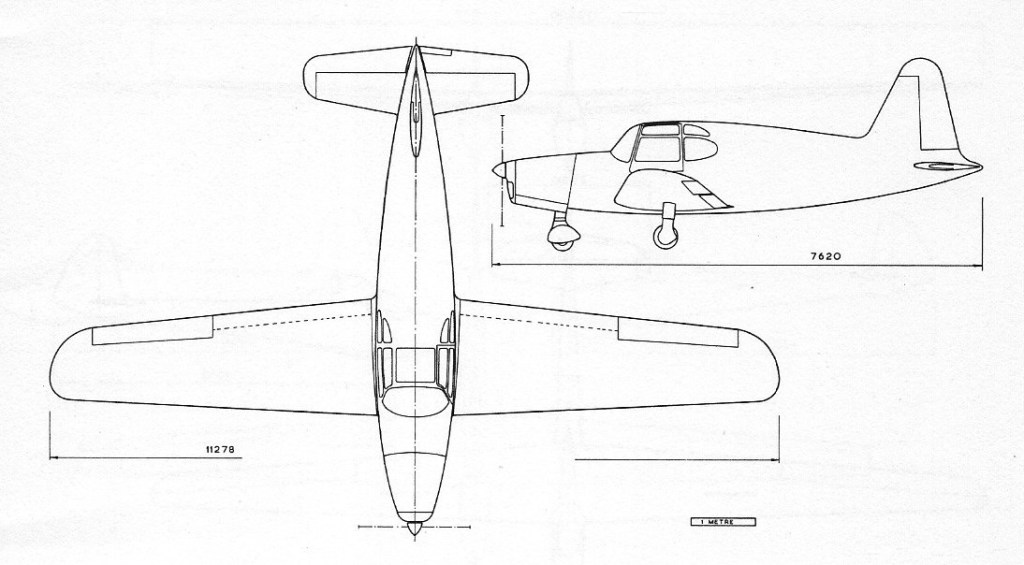
Wingspan: 11.28m / 37 ft 0 in
Wing area: 15.5 sq.m / 173 sq.ft
Aspect ratio: 8
Length: 7.62 m / 25 ft 0 in
Empty weight: 596 kg / 1314 lb
AUW: 882 kg / 1950 lb
Max speed: 180 kph / 112 mph
Cruise: 160 kph / 100 mph
Seats: 4
Eon 2
Powerplant: 1 × de Havilland Gipsy Major 10, 145 hp (108 kW)
Propeller: 2-bladed fixed-pitch, 6 ft 0 in (1.83 m) diameter
Wingspan: 37 ft 0 in (11.28 m)
Wing area: 173 sq ft (16.1 m2)
Aspect ratio: 8:1
Airfoil: NACA 2R.12
Length: 25 ft 6 in (7.77 m)
Height: 9 ft 9 in (2.97 m)
Empty weight: 1,714 lb (777 kg)
Max takeoff weight: 2,350 lb (1,066 kg)
Fuel capacity: 18 imp gal (22 US gal; 82 L)
Maximum speed: 136 mph (219 km/h, 118 kn)
Cruise speed: 116 mph (187 km/h, 101 kn)
Stall speed: 50 mph (80 km/h, 43 kn) (flaps down)
Range: 350 mi (560 km, 300 nmi)
Service ceiling: 13,400 ft (4,100 m)
Rate of climb: 675 ft/min (3.43 m/s)
Take-off run to 50 ft (15 m): 1,635 ft (498 m)
Landing run from 50 ft (15 m): 1,500 ft (460 m)
Crew: 1
Capacity: 3 passengers
 All Aero