Donald Douglas, the son of a bank cashier in Brooklyn, came to Los Angeles in 1915 with a degree from the Massachusetts Institute of Technology. By 1922 he had established a factory with a capital of $350 in an abandoned motion-picture studio in Santa Monica, where he built torpedo plane for the US Navy. Two years later he had signed for his first export order, to Norway.
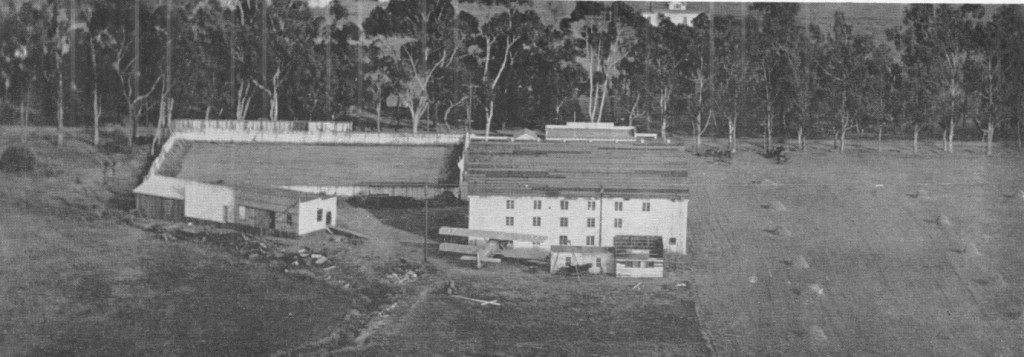
The Davis-Douglas Cloudster of 1920, Donald W. Douglas’s first design, was followed in 1921 by the DT torpedo- bomber for the U.S. Navy, the largest single-engined aircraft in the U.S.A. at the time. Four modified DTs, known as Douglas World Cruisers, made the first round-the-world flight in 1924, with Army crews. The Douglas Aircraft Company was formed in 1928, and in July 1929 a former Douglas engineer, Jack Northrop, set up the Northrop Aircraft Company and produced an all-metal low-wing dive-bomber, the XBT-1/A-17.
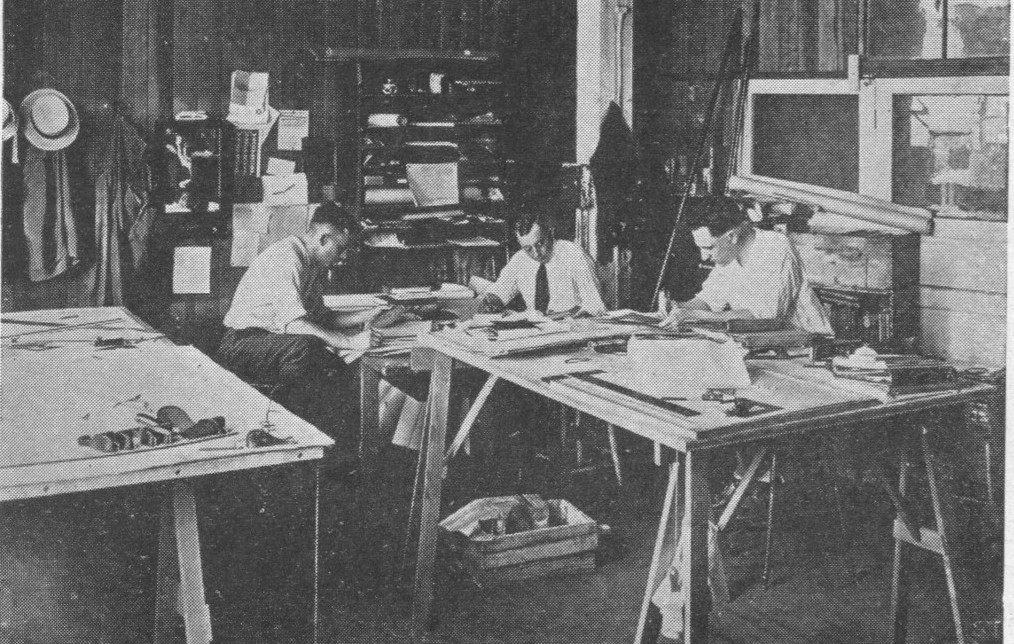
With the help of designer Jack Northrop, Lockheed built the F1, but it was turned down by the Navy. In 1923 Northrop left to take a job with Donald Douglas, and later founded his own corporation.
Northrop and Douglas merged in 1937 (Douglas with a majority stockholding), and in 1938 it became Douglas-El Segundo. The dive-bomber design progressed, via the Douglas TBD Devastator of 1934, to become the U.S. Navy’s first monoplane, and was followed by the Dauntless SBD. Ultimate Douglas development of the single-engined piston-engined attack-bomber was the 1945 Skyraider, which served in many roles until 1968, both in Korea and Vietnam. Last single-engined military designs by Douglas were the small delta-wing F4D Skyray jet fighter (first flown January 1951) and highly successful A4D Skyhawk jet attack-bomber (first flown June 1954 and 2,960 built up to 1979; current programs around the world keep substantial numbers of Skyhawks operationally capable with foreign forces).
The first twin-engined Douglas design appeared in 1925; the T2D for the U.S. Navy. The B7 of 1930 was the first of a series for the U.S. Army, and was followed by the B-18 in 1935. The most famous twin, however, was the DB-7/A-20 Boston (and nightfighter Havoc), which first saw action in June 1940. A total of 7,385 was built, of which 3,125 went to Russia. The A-26/B-26 Invader of 1945, developed from the A-20, served in Korea and Vietnam, and the Boston/Havoc concept was taken into the jet age by the Skywarrior and Skynight. A version of the former became the B-66 Destroyer, Douglas’s (and the USAF’s) last conventional light-attack bomber.
In 1933, under pressure from United Airlines’ Boeing 247, Transcontinental & Western Air turned to Douglas to provide a competing aircraft. The first DC-1 (Douglas Commercial) appeared in prototype only, but 131 DC-2s followed in 1932-1936. The first commercial orders were in 1933 for 40 DC-2 for the new Trans World Airways. A wide-bodied sleeper version, the DST, led to the DC-3 in 1936, which was to be the most famous airliner of all time. In 1940 the USAAC ordered it as the C-47 transport. Douglas built 9,255 of the 10,125 produced, and in 1961 1,000 were still in military use, and 600 civil DC-3s remained in operation in the U.S.A. in 1974. Douglas, consulting five airlines, developed a four-engined version, the DC-4, in 1941. The Army commandeered all civil DC-4s on U.S. entry into the war, and 1,162 military C-54s were built. After the war many reverted to DC-4 status, to be succeeded by the DC-6 and DC-7.
At Santa Monica, the Douglas company had made 29,000 aircraft during World War 2, but produced 127 in 1946.
Douglas temporarily lost its lead in transport when Boeing produced the Model 707, but then produced the very effective DC-8 and DC-9 jet.
Military transport design continued with the big C-124 Globemaster in 1950, and C-133 Cargomaster of 1957, a heavy strategic freighter capable of carrying all the thencurrent IRBMs or ICBMs. In 1947 Douglas went supersonic with the jet D-558-1 Skystreak and D-558-2 rocket Skyrocket, built for NASA. The latter held the world speed record in 1953 at 1,981km/h and achieved Mach 2.01 at 19,810m in 1953. The later X-3 research aircraft was intended for flight at up to Mach 3. There was a brief involvement with executive jets with the PD-808 Vespa-jet, production being transferred from El Segundo to Rinaldo Piaggio before, in 1967, the company merged with McDonnell Aircraft to become McDonnell Douglas.
Douglas files bankruptcy and was forced to sell at a knocked down price to McDonnell of St. Louis, which had been making handsome profits out of its F-4 Phantom, supplied to the air force in Vietnam.
 All Aero