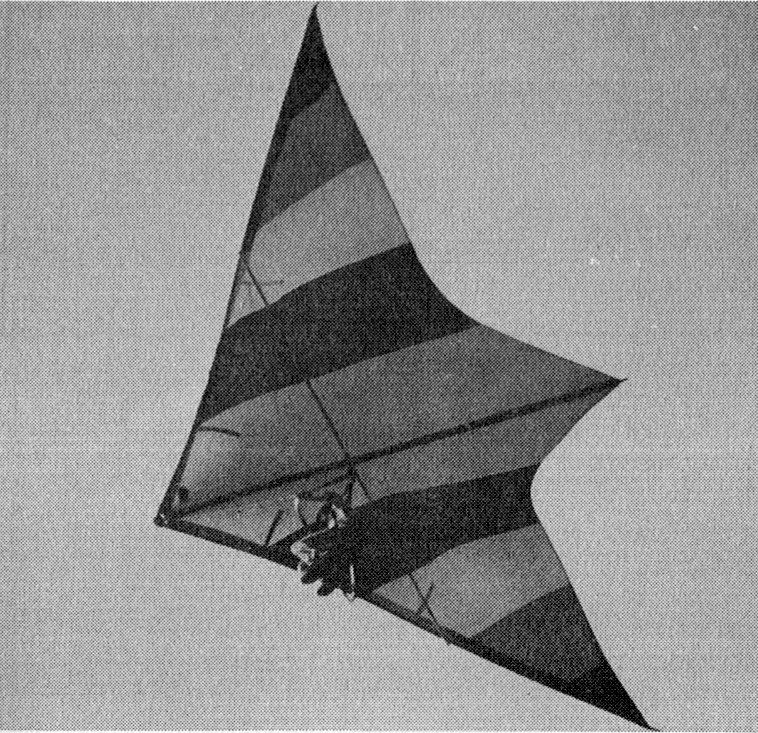
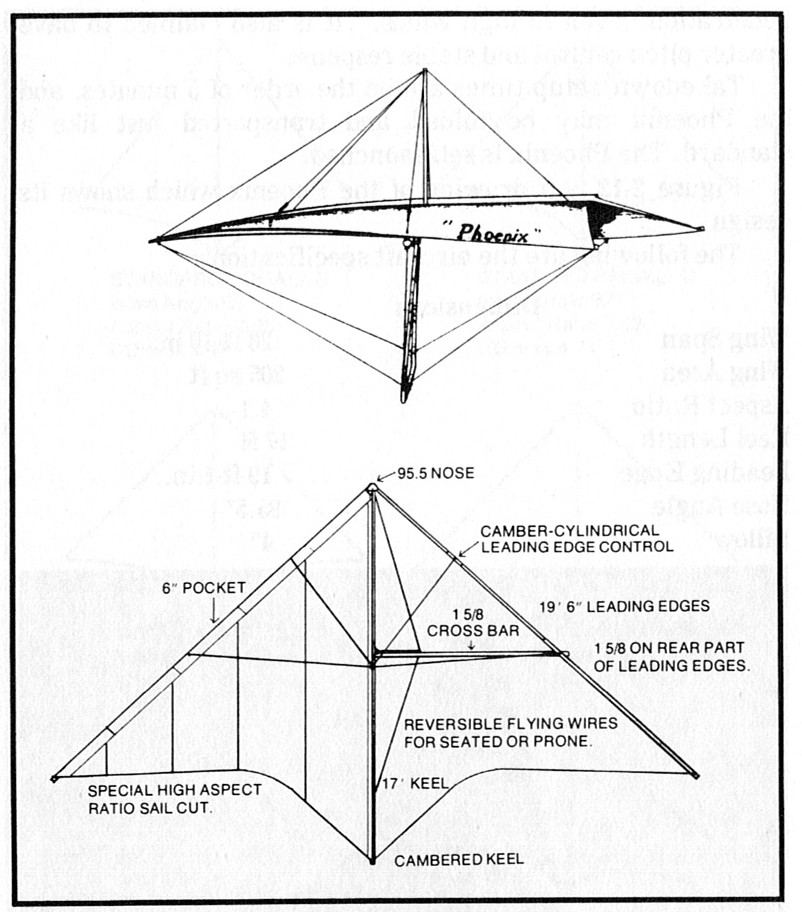
Designed by Dick Boone, the Phoenix is a medium aspect ratio Rogallo hybrid with a ‘fan tail’ sail cut, and cable tensed semi-cylindrical leading edges. It is controlled solely by means of weight shifting.
The Phoenix will perform better than a standard, but not as well as a high aspect ratio kite. It is characterised by a ‘fan tail’ cut trailing edge that is reported to increase the aspect ratio, provide for greater stability and eliminate sail flutter. It incorporates a typical trapeze bar and can be flown either seated or prone, depending on the arrangement of the lower longitudinal cables.
Take down / set up times are on the order of 5 minutes, and the Phoenix may be folded and transported.
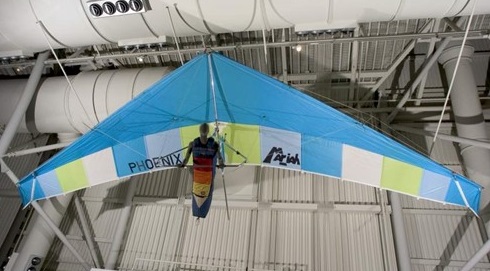
Early in 1977, Bennett asked Boone to design a new high performance Phoenix variant intended for experienced pilots. They named it the Mariah, and it introduced several radical features. The most significant change was yet another increase in aspect ratio. Wingspan increased and wing chord fell as the leading edge convergence angle grew to 120 degrees. Boone also incorporated wires supported by short posts along the wing leading edges. By applying tension to the wires, the pilot could deflect the wing to improve flying and stall characteristics. The wing was more responsive to pilot control inputs, but it was not as stable as previous gliders in the Phoenix line. Bennett and Boone believed that competent, experienced pilots could handle the high-performance wing with no trouble.
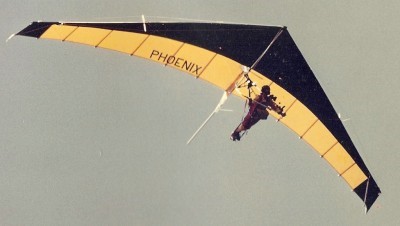
It would even be controversial after some doubtful tumblings and very questionable pitch stability. Unsafe in the wrong hands or circumstances. The first double surface with integrated cross-section. It was at the price of a multitude of cables: triple deflectors, transversal cable-stayed, etc. The success was very short after repeated tumblings for lack of batten in intrados. It was better not to have bought it.
Phoenix
Wing span: 28 ft 10 in
Wing area: 205 sq.ft
Aspect ratio: 4.1
Keel length: 17 ft
Leading edge: 19 ft 6 in
Nose angle: 95.5 degrees
Billow: 4 degrees
Empty weight: 42 lb
Max flying weight: 282 lb
Useful load: 240 lb
Best L/D: 6-1
Min sing: 300 fpm
Stall: 16 mph
Cruise: 24 mph
Mariah M-9
Wingspan: 11.4 m (37 ft 5 in)
Length: 2.5 m (8 ft 4 in)
Empty weight: 25 kg (55 lb)
Gross weight: 122 kg (270 lb)
Wing area: 14.1 m²
Wing span: 10.14 m
Aspect ratio: 7.4
Hang glider weight: 23 kg
Minimum pilot weight: 50 kg
Maximum pilot weight: 70 kg
Minimum speed: 24 km/h
Maximum speed: 55 km/h
Packed length: 5.8 m
Number of battens: 14
Nose angle: 120°
Wing area: 15.8 m²
Wing span: 10.82 m
Aspect ratio: 7.4
Hang glider weight: 23 kg
Minimum pilot weight: 70 kg
Maximum pilot weight: 80 kg
Minimum speed: 24 km/h
Maximum speed: 55 km/h
Packed length: 6.1 m
Number of battens: 14
Nose angle: 120°
Wing area: 17.65 m²
Wing span: 11.4 m
Aspect ratio: 7.4
Hang glider weight: 23 kg
Minimum pilot weight: 80 kg
Minimum speed: 24 km/h
Maximum speed: 55 km/h
Packed length: 6.4 m
Number of battens: 14
Nose angle: 120°
 All Aero