
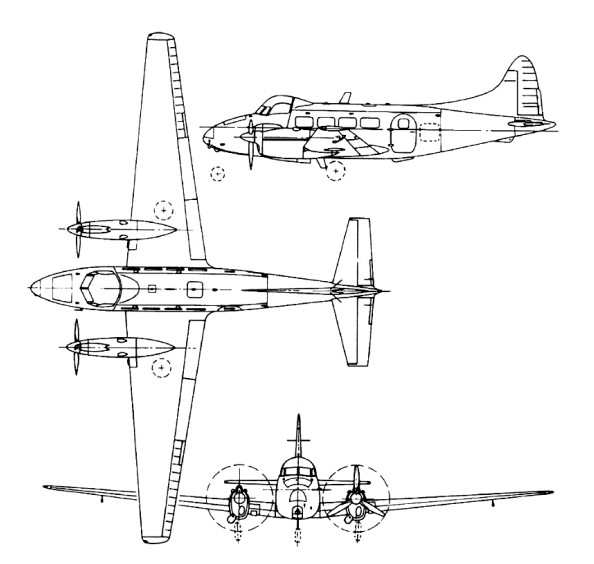
In 1944 R E Bishop and his team envisaged the DH104 as a successor to the Dtagon, Express and Rapide, and incorporated new construction techniques such as Redux bonding in the airframe and a tricycle undercarriage. A new low-wing monoplane which, with the exception of fabric-covered elevators and rudder, was of all-metal construction, and powered by two de Havilland Gipsy Queen engines, with constant-speed, fully-feathering, and reversible-pitch propellers. Standard accommodation as a transport was for 8 to 11 passengers.
The prototype flew on 25 September1945, initially with an angular dorsal fin before it was replaced by a new dorsal fin and, much later of a redesigned elevator, and of a domed roof to give a little more headroom on the flight deck. Production aircraft were generally similar to the original prototype.
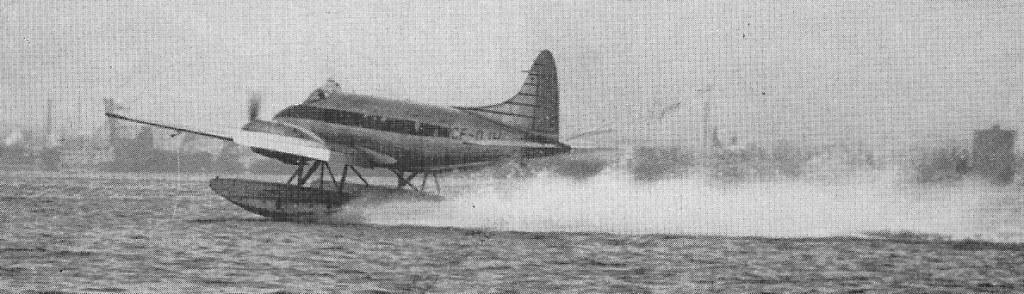
The 15th production DH.104 Dove, CF-DJH, was the only Dove to be flown with twin float undercarriage.
The Dove production variants resulted from differing Gipsy Queen powerplants, these including the 246kW Gipsy Queens 71 and 70-3 powering the prototype and the Dove 1/2 respectively; 254kW Gipsy Queen 70-4 in the Dove 1B/2B; 283kW Gipsy Queen 70-2 in the Dove 5/6, and 298kW Gipsy Queen 70-3 in the Dove 7/8.
The Dove 1B powered by 305 hp DH Gipsy Queen 70 was the most prolific model, followed by 128 Dove 4/5, built as the Devon/Sea Devon. The Mk.4 was a military variant of the Dove, with two crew and 8 passengers.
Up to 30 were in Service with the RNZAF during 1946-80.
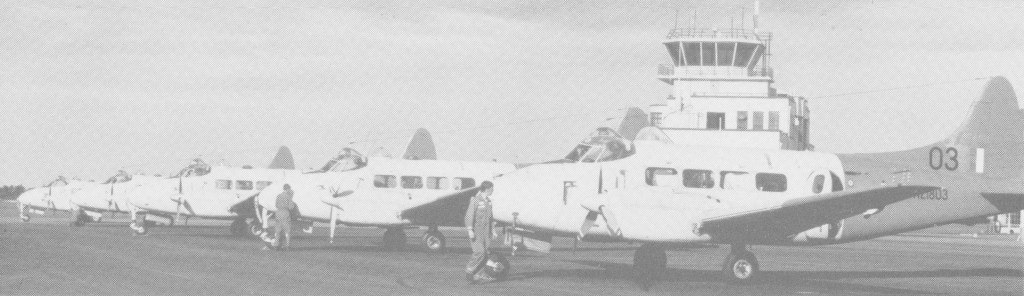
In the course of its long life, the type underwent significant improvements with the final production version, the Dove 7/8 having an enlarged cockpit, Heron-style canopy and 400HP Gipsy Queen Mk 3 engines.
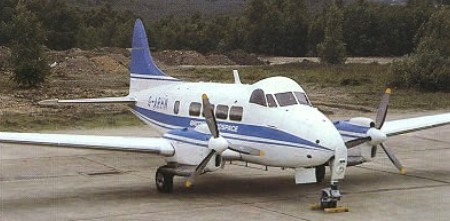
Doves in the United States were marketed as the Custom 800.
DH 104 production ran to 542 aircraft before production ended in 1968, mak¬ing it Britain’s best selling commercial air¬liner.
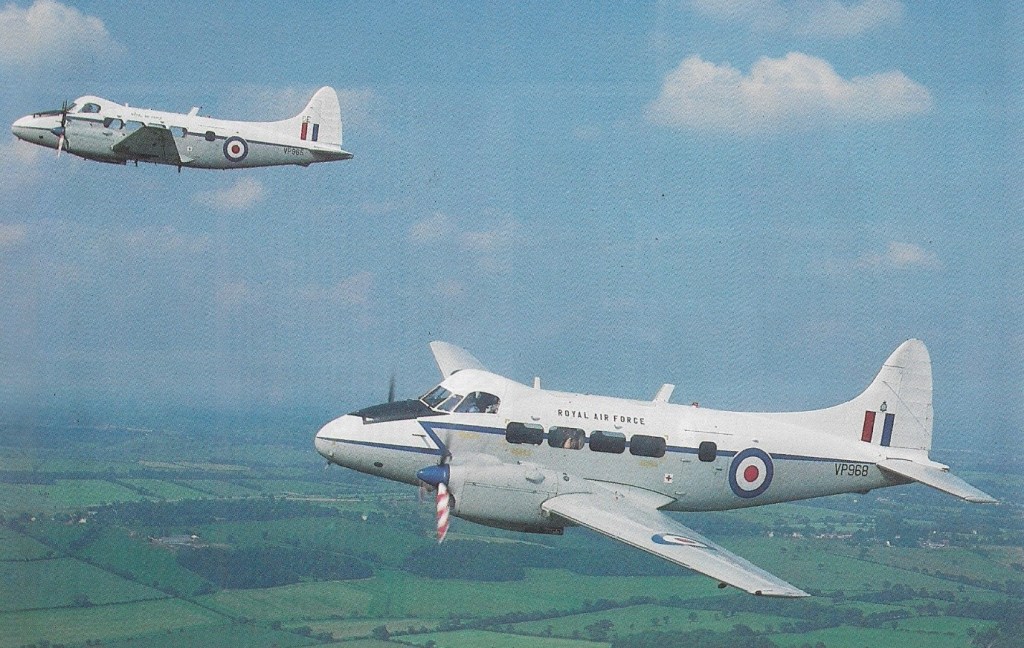
Just over 100 were supplied under the name Devon to many air forces, including the RAF, and a small number went to the Royal Navy with the name Sea Devon.
A number of Dove conversions carried out subsequently by Riley Aircraft in the USA as the Riley Turbo Executive 400 introduced 298kW Avco Lycoming IO-720-A1A flat-eight piston engines.
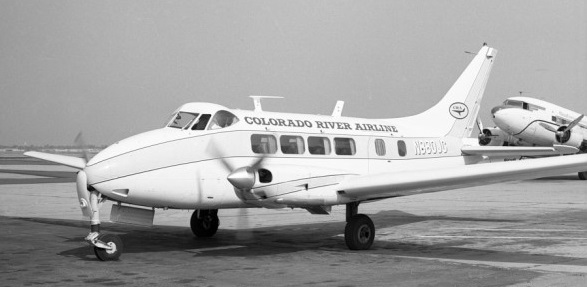
Carstedt went even further with the Carstedt CJ-600A Jet Liner with a fuselage stretch by 7 ft 5 in (2.21 m) to seat up to 18 passengers and two 575 SHP / 451kW Garrett TPE-331 turboprops. The type was supplied primarily to Apache Airlines.
Another version of the Dove was produced by Texas Airplane Manufacturing Co. that employed 705-eshp turboprops and a stretched fuselage.
DH104 Mk.1
Engines 2 x D.H. Gipsy Queen 70-2, 330 hp
Length 39 ft 2 in (11.96 m.)
Wing span 57 ft. (17.37 m.)
Weight empty 6,325 lb. (2,870 kg).
Max wt: 8800 lb (3992kg).
Seats 2 crew and up to 11 passengers
Maximum speed: 230 mph (370 kph)
Cruise speed 200 mph (320 kph)
Ceiling 21,700 ft. (6,600 m) full loaded
Maximum range: 880 miles (1415 km)
DH104 Mk.1B
Engines: 2 x DH Gipsy Queen 70-3, 345 hp.
Dove 7
Engines: 2 x Gipsy Queen Mk 3.
Dove 7
Engine: 2 x Havilland Gipsy Queen 70-3 inline, 298kW, 400 hp
Max take-off weight: 4060 kg / 8951 lb
Empty weight: 2985 kg / 6581 lb
Wingspan: 17.37 m / 56 ft 12 in
Length: 11.99 m / 39 ft 4 in
Height: 4.06 m / 13 ft 4 in
Wing area: 31.12 sq.m / 334.97 sq ft
Max. speed: 378 km/h / 235 mph
Cruise speed: 261 km/h / 162 mph
Service Ceiling: 6615 m / 21700 ft
Range: 1891 km / 1175 miles
Crew: 2
Payload: 11 pax
Dove 8
Engines: 2 x Gipsy Queen Mk 3, 400 hp.
Riley Dove
Engines: 2 x Lycoming IO-720, 400 hp.
Carstedt CJ-600A
Engines: two x Garrett TPE-33 1 turboprops, 575 shp
 All Aero