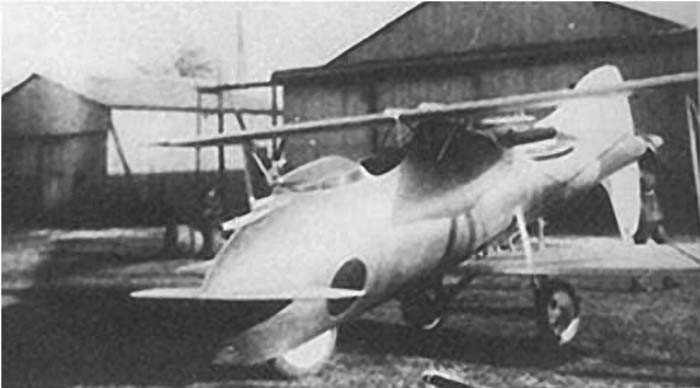
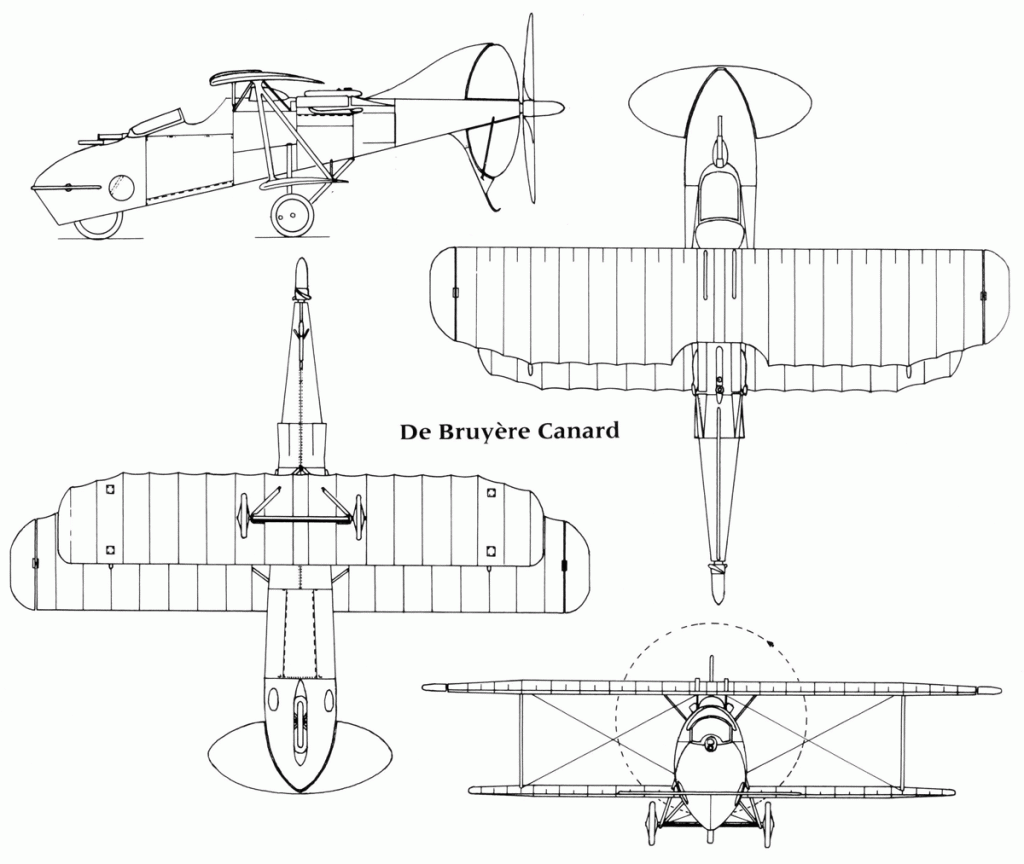
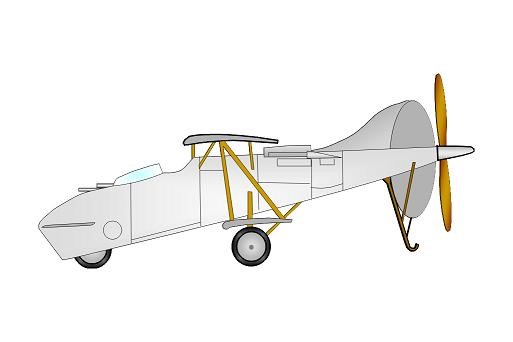
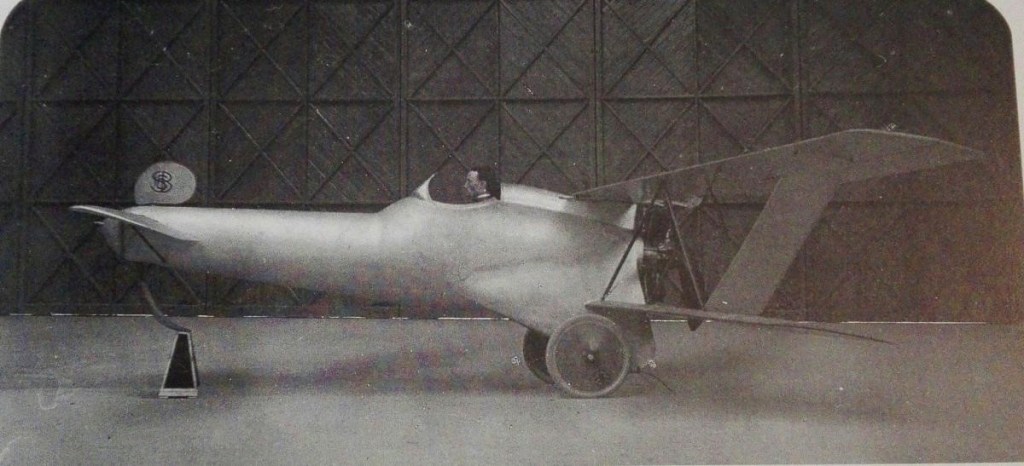
A fighter of the First World War created by French engineer Marcel de Bruyere in 1917, the C 1 was a biplane with equal-span, staggered wings supported by inverted V-struts. Pitch control came from a one-piece, all-moving canard foreplane, while roll was managed by full chord tip ailerons managed roll on the upper wing. The 150-horsepower Hispano-Suiza 8Aa engine was placed behind the wings.
A long shaft connected the engine to a pusher propeller mounted at the tail. The aircraft lacked a fixed horizontal stabiliser but had a short vertical fin and long tail skid to protect the rear-mounted propeller. Its tricycle landing gear and metal fuselage were extremely advanced for the time.
Large circular side windows gave reasonable downward visibility, and it was armed with a single Hotchkiss M1902 37mm cannon.

The fighter, designated de Bruyere C1, first flew in April 1917 from the Etampes test aerodrome in Belgium.
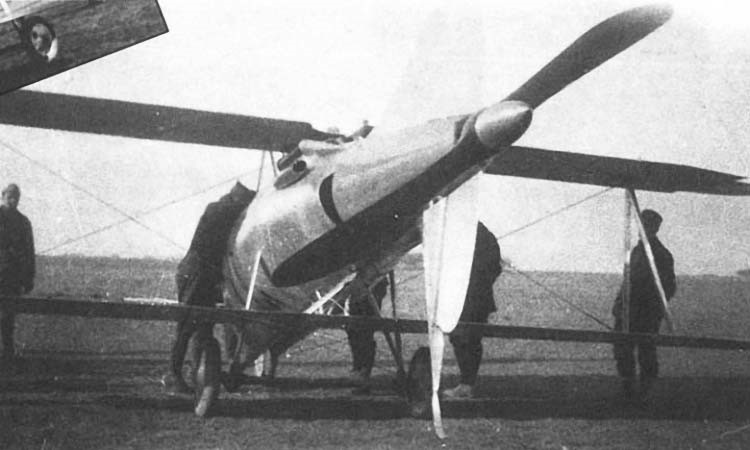
During the test flight, the plane climbed several meters, rolled over and crashed. The craft was not rebuilt and received no further development.
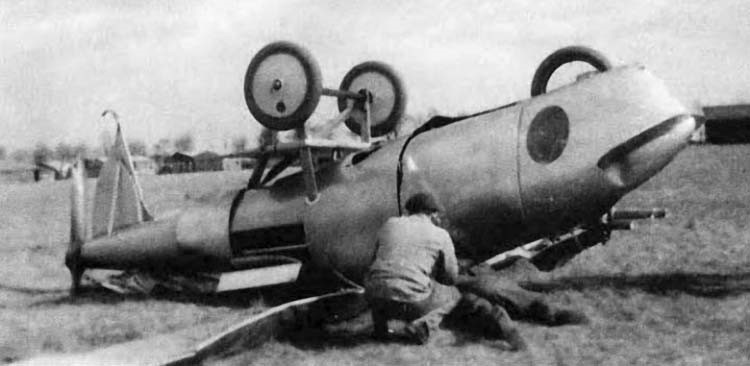
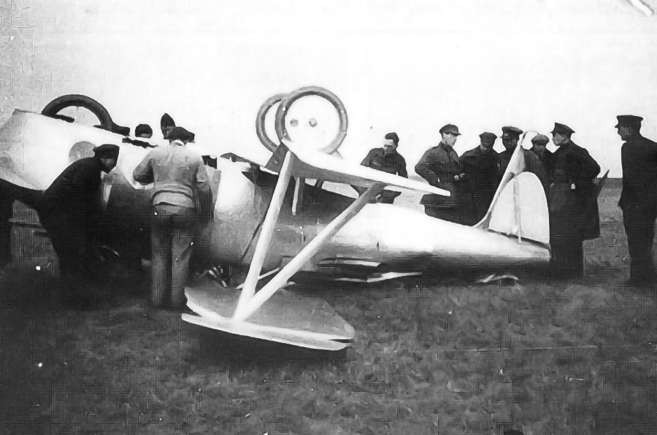
de Bruyere С1
Engine: 150 hp Hispano-Suiza 8a
Wing span: 8.20 m
Length: 7.50 m
Crew: 1
Armament: 1 x 37 mm Hotchkiss M1902
 All Aero