
The one-of-a-kind Gulfhawk was flown from 1930 to 1936 by Al Williams, former chief test pilot for the U.S. Navy and famous aerobatic pilot. Originally it was mostly a Hawk 1 export version with different tail surfaces and landing gear. This version was powered by a Bristol Jupiter engine built by Bliss and was painted in a red and silver scheme.

It was converted to a Hawk 1A with a Wright Cyclone air-cooled radial engine, then further modified by Williams several times. He flew the Gulfhawk in military and public air shows to promote military aviation during the inter-war years, when aviation budgets were low.
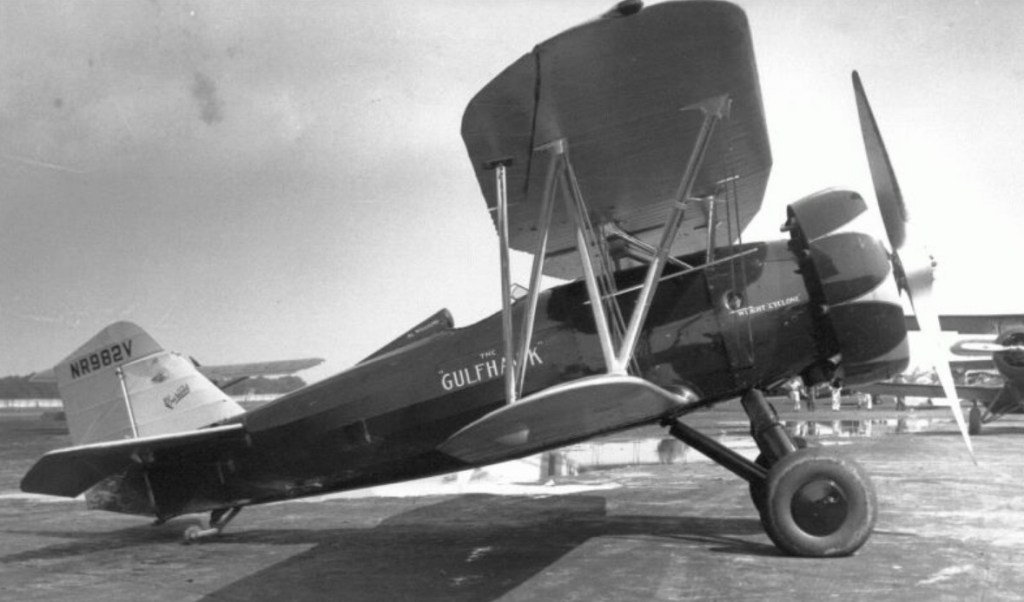
After a crash, the plane was rebuilt with a metal-skinned fuselage (version #3) and given its now iconic orange and white paint scheme. Williams flew this plane through 1936 when he replaced it with the more well-known G-22 “Gulfhawk II”, a modified Grumman F3F.
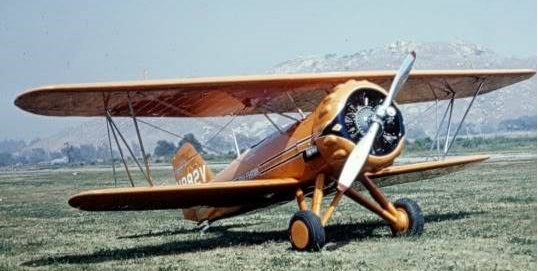
By 1933, Williams managed and flew for the aviation department of Gulf Oil Company, which painted the Gulfhawk in its familiar color scheme of orange with white and blue trim. After Williams’ death, movie stunt pilot Frank Tallman restored and flew the airplane and displayed it between shows at the Tallmantz Movieland of the Air Museum.
Flying Al Williams’ Curtiss GulfHawk

In 1958 Frank Tallman found the airplane and purchased it from Al Williams. He spent 4 years restoring the plane and installed the P&W Wasp and radial bumped cowl that is still on it today. It currently resides in the National Air & Space Museum.
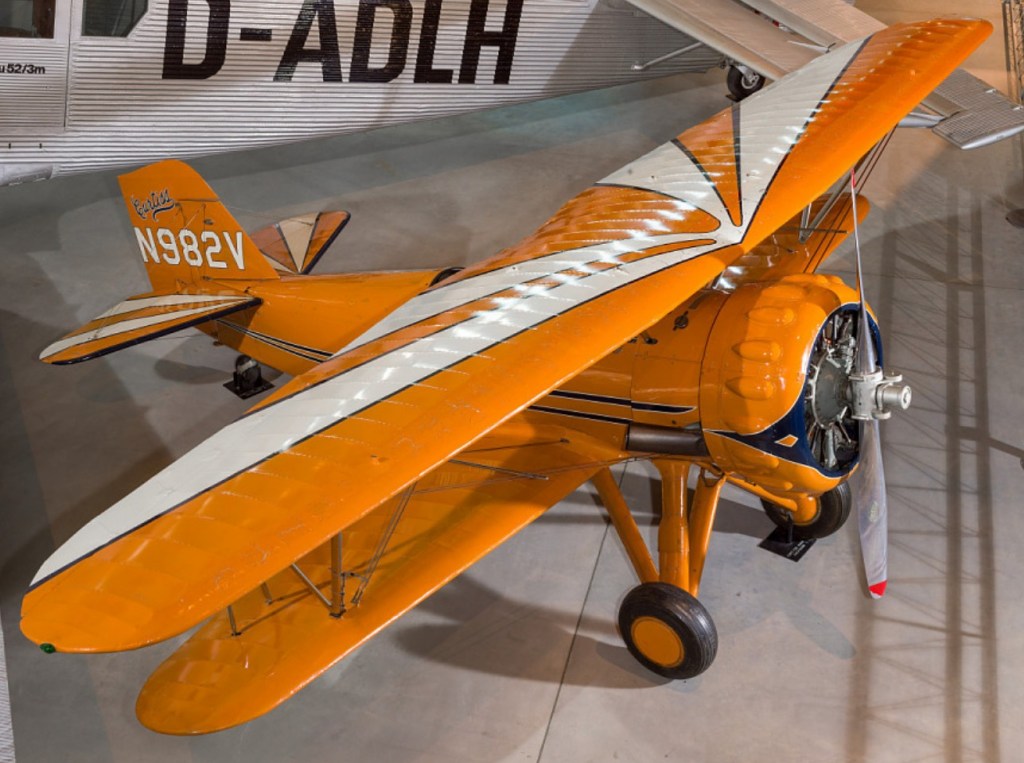
Engine: Pratt & Whitney Wasp R-1340, 600 hp
Wingspan: 9.9 m (31 ft 6 in)
Length: 6.7 m (22 ft 10 in)
Height: 2.4 m (8 ft 11 in)
Weight, empty: 978 kg (2,161 lb)
Weight, gross: 1,342 kg (2,963 lb)
Top speed: 249 km/h (155 mph)
 All Aero