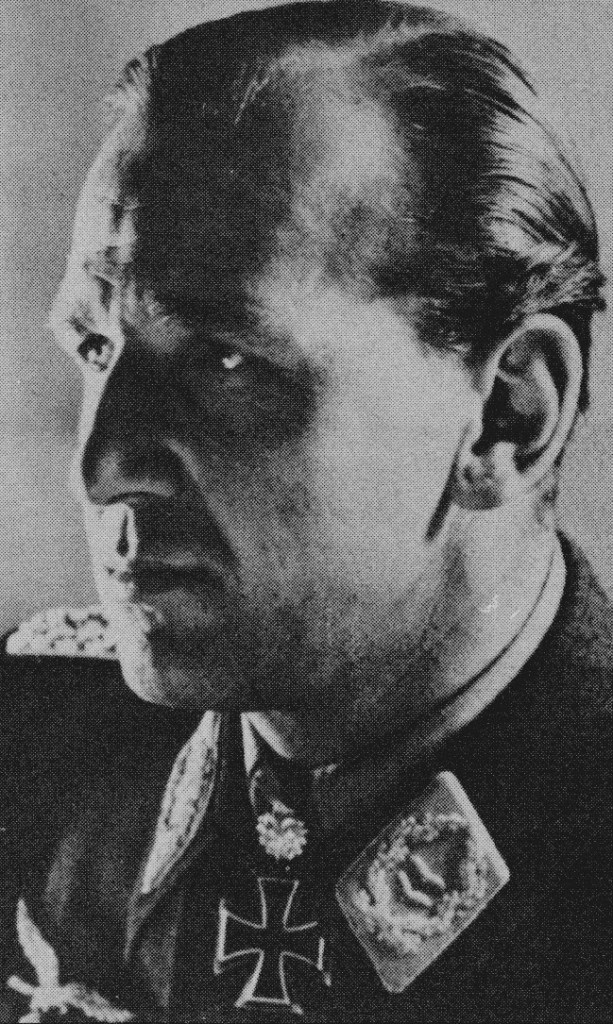
Werner Streib was born on 13 June 1911 in Pforzheim/Baden. Upon graduation from high school he attended a business school then served a three year apprenticeship in the banking business. When he was 23 Werner joined the new German Army and was assigned to Infantry Regiment No.14 based at Konstanz. He entered officer training. Two years later, in 1936, as a Lieutenant Streib transferred to the Luftwaffe as an observer in a reconnaissance group. He soon applied for pilot training, went through the instrument flying schools at Wesendorf and Brandis during 1937. The following year the new pilot was in No.2 Staffel of the Richthofen Jadegeschwader flying Heinkel 51 biplanes at Juterborg-Damm.
At the beginning of the war Oberleutnant Streib was Chief of Air Base Operations with Zerstorergeschwader (Destroyer Wing) No.1. He also flew a Messerschmitt 110 twin engine heavy fighter and was soon promoted to Staffel Fuhrer or Squadron Leader. On 10 May 1940 Streib scored his first victory, which remained his only day victory, when he shot down a British Bristol Blenheim bomber. Shortly after that the night fighting experiments began and he was transferred to the newly formed Nachtjageschwader (Night Fighter Wing) No.1 as the Stafffel Fuhrer of No.3 Staffel.
It was only after the RAF bombers began accelerating their nocturnal activities to forestall the German invasion of Denmark and Norway during early 1940, that the Luftwaffe admitted the need for a night fighter organisation. Despite this realisation little was done. It remained for the pilots in combat to forge ahead and experiment with equipment at hand.
The first German unit to take the initiative was a Zerstorergeschwader based in Aalborg, near the Kategat, in the newly occupied Denmark. This destroyer unit had been moderately successful in air battles with the British bombers by day but when the night bombing increased in intensity the Geschwader Kommodore, Oberst Wolfgang Falck, decided to act on his own. He selected a few of his best pilots and exposed them to a short period of vigorous night flight training as well as a special diet to improve their eyesight in the darkness.
When they were considered ready Falck selected his two most promising trainees, Oberleutnants Streib and Moelders, to attempt an interception
It was a bright night in the late sprig of 1940 when the two pilots took off in Messerschmitt 110 fighters to intercept British bombers over the North Sea. With no radar or radio contact to assist the Streib and Moelders had to rely on visual contact in the dark sky. Neither was able to score. They did discover that by flying above 10,000 ft visibility increased considerably. The entire wing then began intensive training but no bombers fell until the night of 20 July 1940 when a British bomber squadron flew over the Ruhr. Streib sighted a twin-engine Armstrong-Whitworth Whitley bomber at 2.15am. The initial attack was wide and the bomber undamaged. After a second attack with 20mm cannon the bombers fuel tank burst into flames. The intruder exploded and became the first German night victory in the second world war.
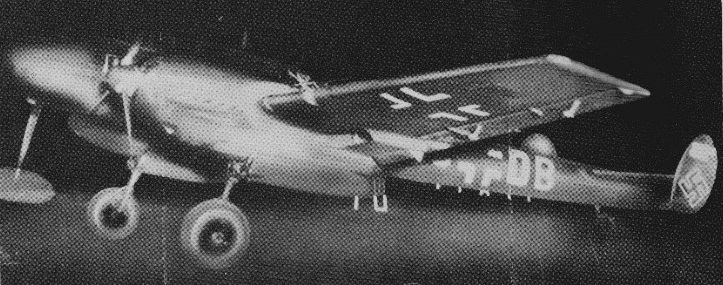
Streib repeated this 48 hrs later when he shot down another Whitley bomber. On 30 August he destroyed a Vickers Wellington, and another during the following night. In the early morning of 30 September he shot down three twin-engine Wellingtons within 40 minutes.
Streib was awarded the Knights Cross of the Iron Cross on 16 October for his performance as a night fighter pilot. By September 30 the Luftwaffe decided to develop a potent night fighter force. Pilots, including Streib, began to meet with considerable success.
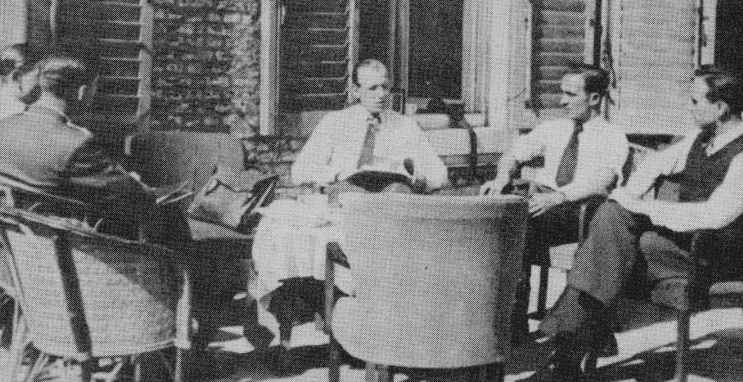
By October 1940 Streib held the Rank of Hauptmann and was the leader of Number One Gruppe in the Luftwaffe’s first night fighter wing. His unit was based in Schleswig near the Danish-German border. The Gruppe Kommabder’s victories continued to mount during the night of 14 October he shot down his tenth bomber. Streib’s score reached fifteen by 4 July 1941. In November Number One Gruppe was shifted to Venlo, Holland, directly in the path of British bombers on their way to the Ruhr. Streib became the Geschwader’s leading ace.
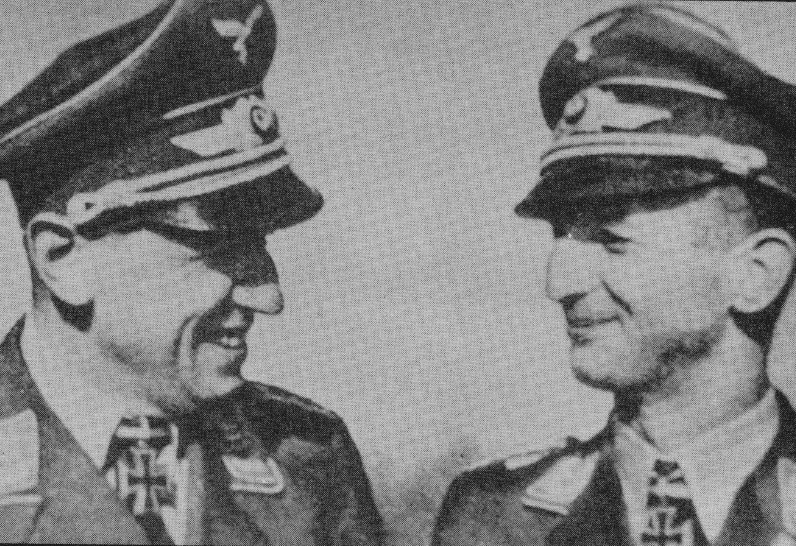
On the night of 26 March 1942, Streib attacked British bombers from 17,000 ft and within eight minutes two bombers fell. With his Messerschmitt 110 on the night of 30 May Streib scored his twenty-fifth and twenty-sixth victories.
By the middle of 1941 Telefunken had developed an airborne radar set for night fighter use. The Lichtenstien B.C. 409 Megacycle radar was given top industrial priority to ensure quick production.
In early spring of 1942, two Junkers 88 night fighters equipped with the Lichtenstien B.C. 409 Megacycle radar entered operational service with Nachtjagdgeschwader No.1 in Holland. The antennae mounted in the nose of the aircraft reduced the plane’s speed by as much as 25 mph, the first radar-directed victory being attained by Hauptmann Becker in the summer of 1942. Many night fighters being manned by a crew of three; pilot, radar operator, and radio operator – tail gunner.
The effectiveness of the Telefunkenwas evident by the mounting losses among the RAF night bomber squadrons. The British tried several jamming techniques but finally employed radar equipped Bristol Beaufighters and de Havilland Mosquitos beginning in June 1943.
During the following three months they accounted for forty-three German interceptors yet Streib attained his fiftieth victory in the early summer of 1943. He had been awarded the Oak Leaves and Swords to his Knight’s Cross of the Iron Cross on 26 February 1943. He was now a Major. Streib’s Gruppe No.2 had shot down its 250th bomber on 4 April 1943.
The techniques of night interception were improved and although the modified Messerschmitt 110 and Junkers 88 continued to be moderately effective, the RAF escorts made life difficult. In January 1942 the Heinkel 219 was revived for adaptation as a night fighter.
Major Streib was in close touch with Heinkel during the 219 development and formulating the final design. During the first week of June 1943, the first 219 was delivered to Number One Gruppe of Nachtjageschwader No.1 in Venlo. It was accompanied by a team of Heinkel engineers.
On the night of June 11-12 Major Streib took off in his new He 219 with Unteroffisier Fischer operating the newest Telefunken Lichenstein SN-2 radar, and over half an hour, scored five Lancaster bombers. The operational debut of the Heinkel 219 was a success. But as Streib prepared to land on the dark Venlo airfield he discovered that several vital instruments were not functioning properly. Although the Heinkel had not been hit, electrical trouble caused the landing flaps to malfunction. Each time that the pilot depressed the flaps they automatically returned to their closed position resulting in an approach speed of nearly two hundred miles an hour. Visibility was reduced due to condensed water and oil mixture from bomber slipstreams. The craft touched down heavily on its starboard side causing the right engine to tear away.
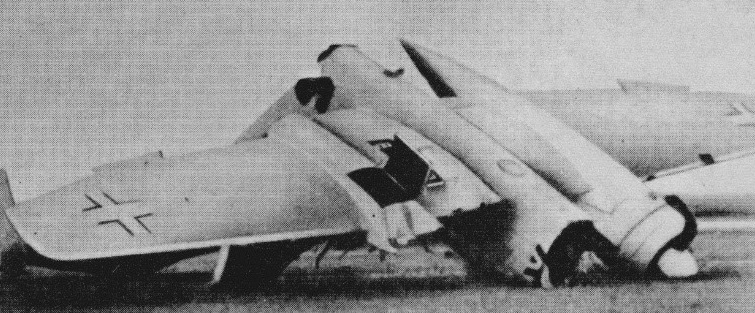
As Streib’s plane slid along the concrete its cockpit section broke free, shot through the air for 50 yards with the rest of the plane coming to a halt with its fuselage snapped in two at the wing trailing edge.
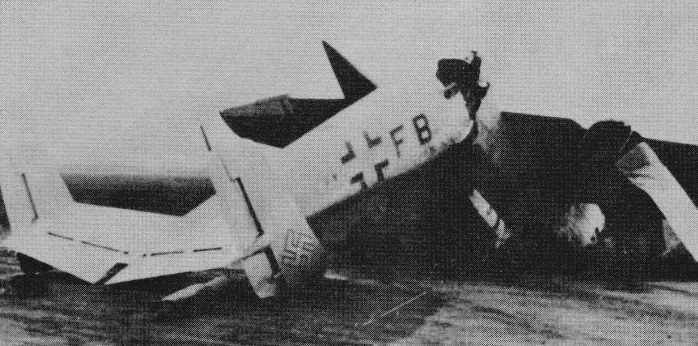
Pilot and radar operator emerged unscathed.
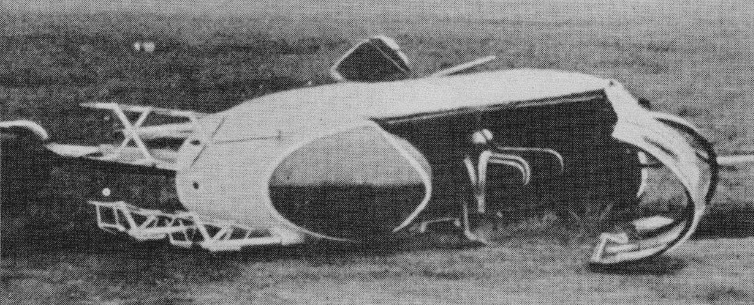
The He 219 had proved itself in combat and was quickly placed on operational status. During the following ten-day period the Heinkel sog NJG-1 destroyed twenty more bombers as well as six de Havilland Mosquitos.
On 1 July 1943 Werner Streib was made Kommodore of Nachtjagdgeschwader No.1 and promoted to the rank of Oberst. His victories were then approaching 60. On 11 March 1944 Streib was named Inspector of Night Fighters. Under his leadership the twin engine night fighter force increased to about 650 aircraft.
At the war’s end Werner Streib was credited with 65 official night victories and one day victory. Upon returning to civilian life the ace entered the packaged food business and was manager and co-owner of a successful firm. He was married in Munich in November 1947. During March 1956, he again entered military service as Commander of the Flight Training School at Landsberg in order to help his country fulfil its military commitments to NATO. In 1958 Werner Streib was Commander “Fliegerfuhrer Sud”; by 1961 he was Commander Air Division South. In 1965 he was Deputy
Brigadegeneral Streib’s military career ended with his retirement on 31 March 1966. His last position was Inspizient Fliegende Verbände (Inspector of Flying Forces).
He died on 15 June 1986 and is buried in Munich, Germany.
 All Aero