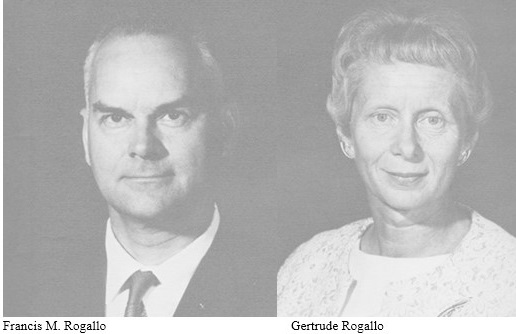
In 1919, when Francis M. Rogallo was seven years old, an aeroplane flew over his town (Sanger, California) and he decided to make aeronautics a career. Around 1925 when he was 23, he saved enough money to buy a ride in a Curtiss Jenny in Fresno without consulting his parents.
In 1933 and about 1937 he applied for the US Army Air Corps flight training program but was turned down. The Navy turned him down around 1934 before because a childhood accident had eliminated the two largest toes on his right foot.
In 1946 Rogallo spent several days in Lock Haven, Pennsylvania, helping the Piper company build an experimental airplane with a full-span slotted flaps and plug-type spoiler aileron. Shortly, Meyers, a Piper pilot, gave him about 10 hours of dual instruction and he got a student permit to solo.
In the late 1940s Francis M. Rogallo was working at the Langley Research Center for a government agency soon to be known as NASA. Rogallo’s working concern was with the stability of conventional aircraft, but at home he and Gertrude Rogallo, his wife, began to tinker with kite designs.
Rogallo had been fascinated with kites since childhood, but as a skilled engineer he felt that not only could kite designs be improved, but that the flexible surface and easy dismantling of kites could in some way be adapted to low speed flight situations.
The Rogallos made numerous paper models and flew or towed them with thread around their living room. The parachute had the collapsible characteristics they were looking for, but they wanted a more streamlined design that could glide and maneuver as well as float. When they had some success with a paper model, they would take a larger version to the beach for testing.
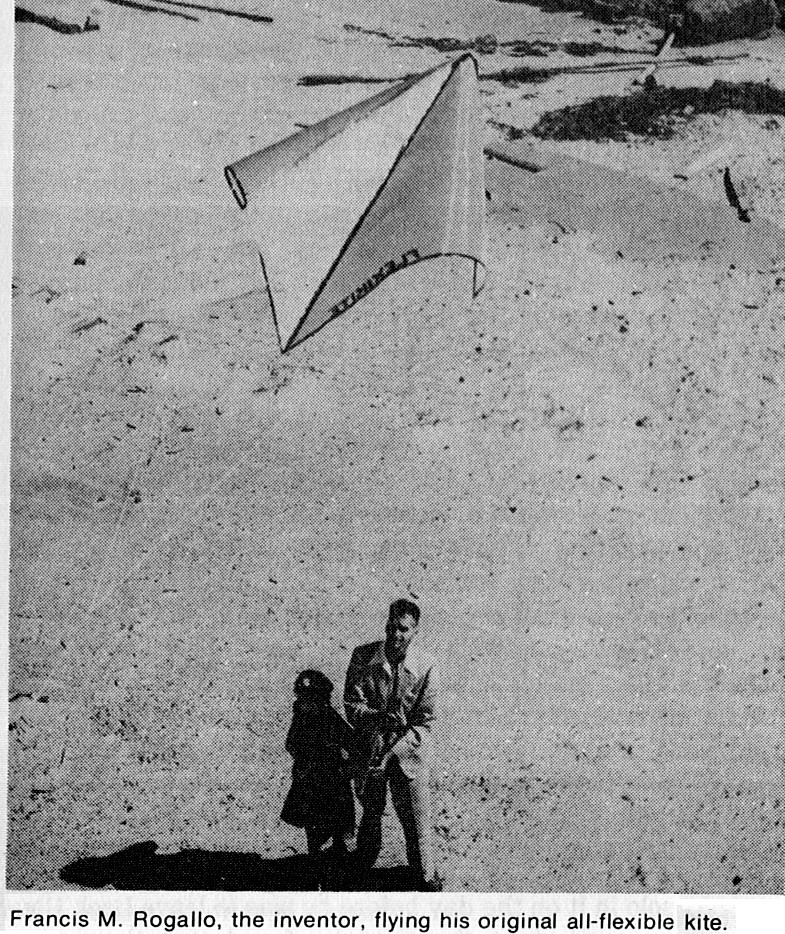
When the design showed particular efficiency, Rogallo built a wind tunnel from a 36 inch fan to test it more thoroughly. Gertrude then cut pieces for the finished design from an old curtain of flowered chintz and rummaged through the children’s toys for a small, plastic astronaut to tie below the kite.
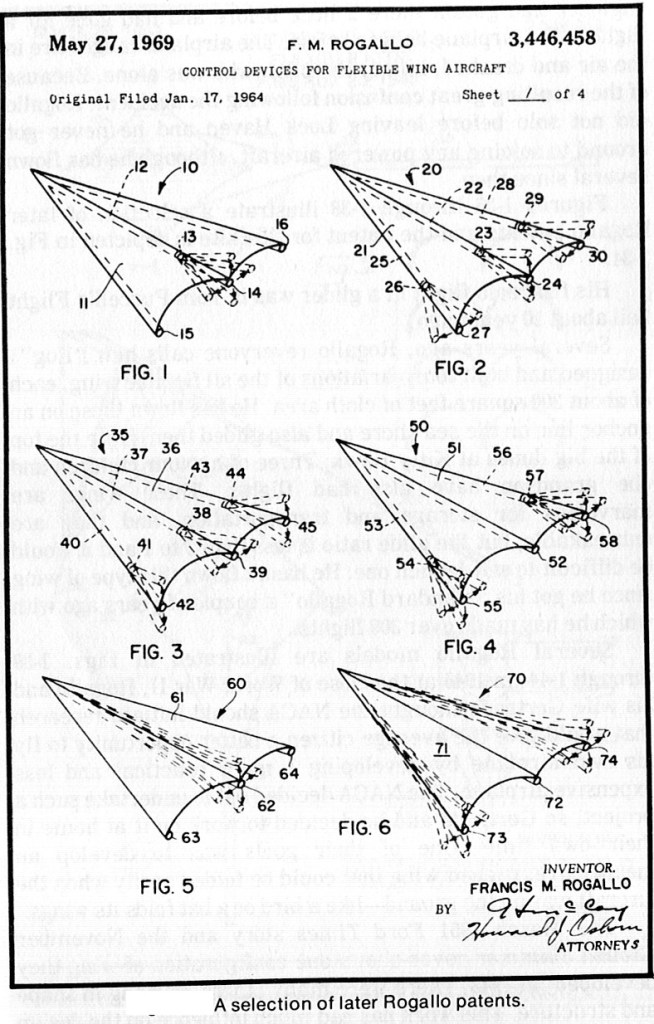
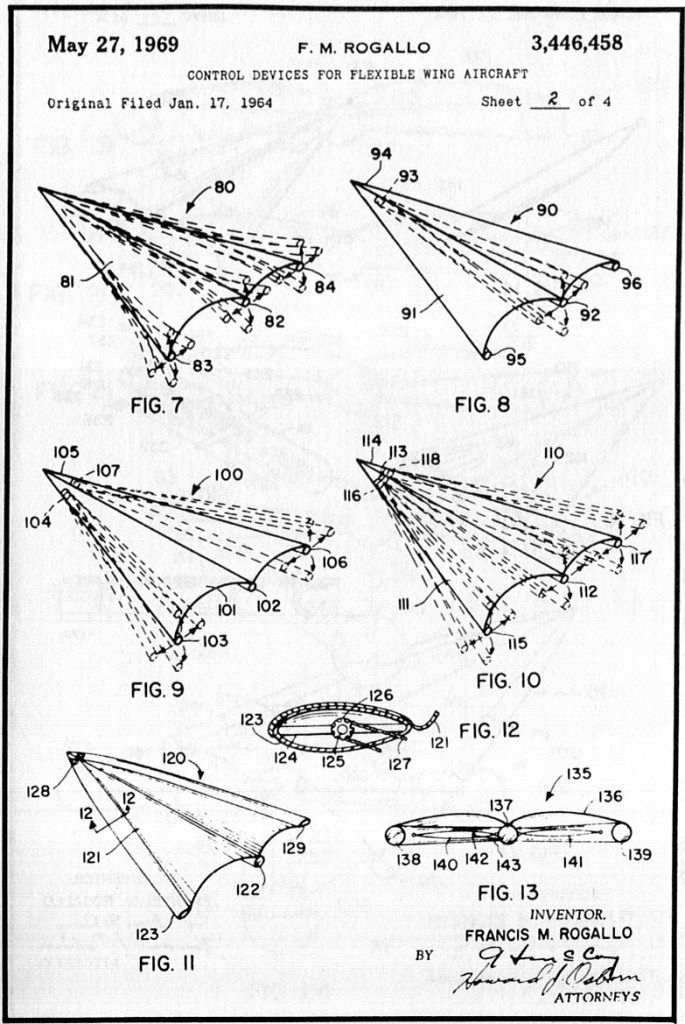
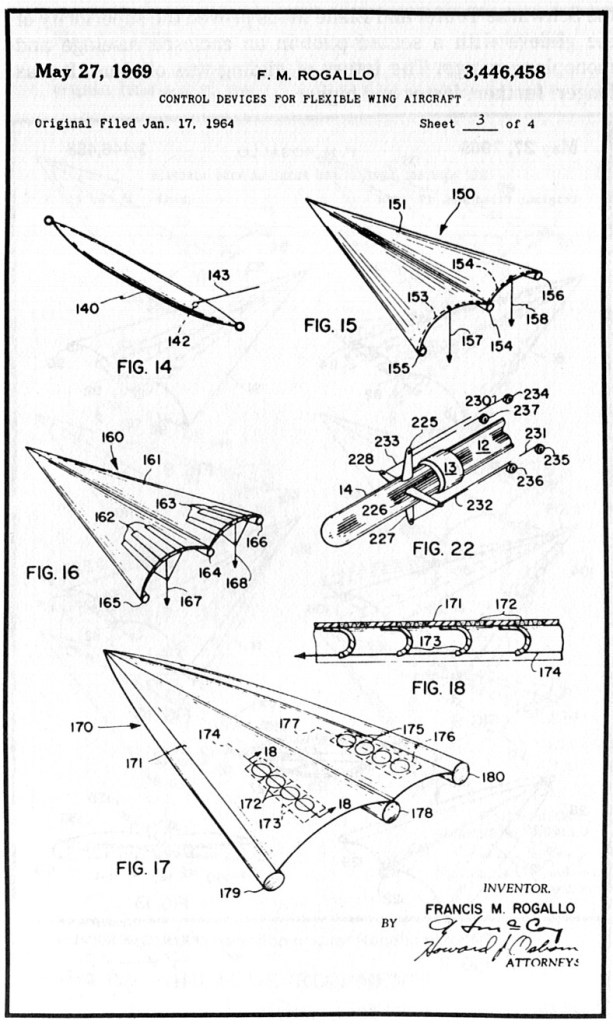
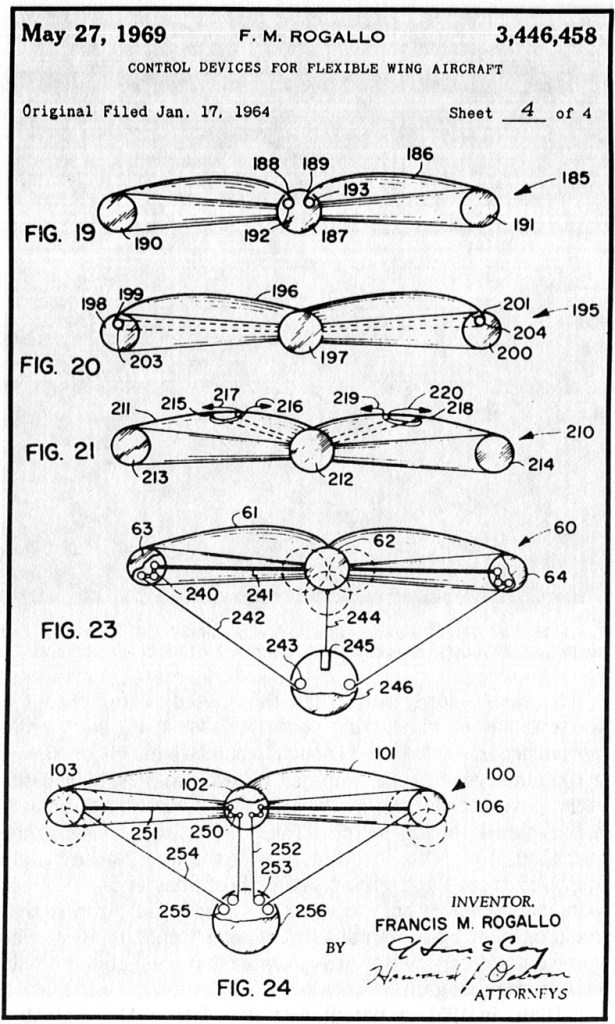
The model flew amazingly well and in 1948, after continual testing under various conditions, they applied for a patent. Their design (which came to be known as the flexible parawing) was an original concept involving a flexible fabric lifting surface of delta shape. Its in-flight biconical form was determined by a balance between the forces of the air load on the canopy and the tension in the suspension lines. Unlike the parachute, the parawing could maintain a forward glide angle by venting air out its loose trailing edge. Rogallo envisioned a multitude of possibilities for his stable, easily guidable aircraft, including use as a re-entry vehicle for space equipment, but NASA at first ignored his invention. The only commercial interest was from the Silly Putty people who made a mylar kite with the Rogallo’s design.
 All Aero