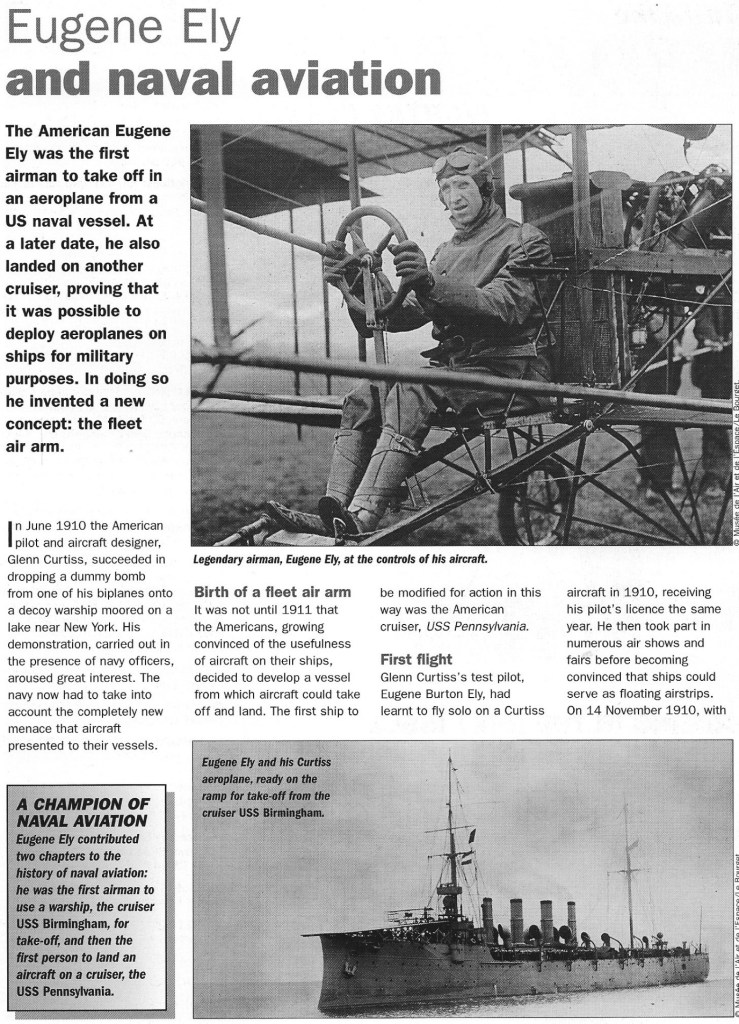
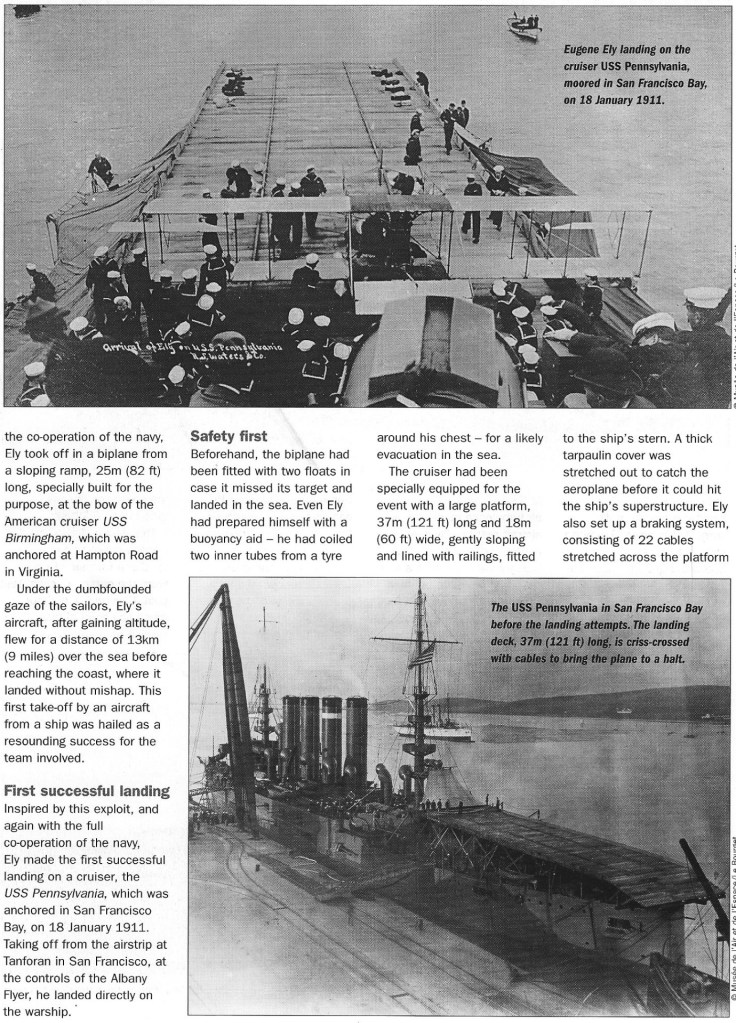
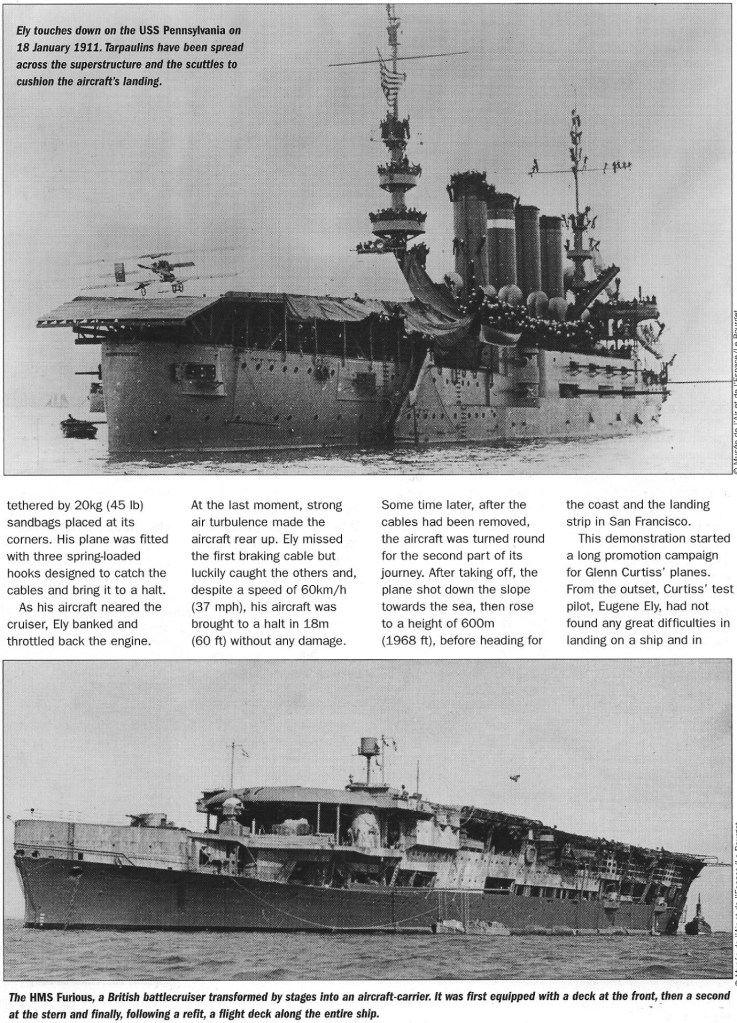
After receiving an engineering degree in 1904 from Iowa State University, Eugene Ely began a career in the fledging automobile industry as a salesman, mechanic, and racing driver. He taught himself to fly in 1910 and never looked back. He had natural skills as an aviator and quickly became a well-known pilot with the Curtiss Exhibition Team that toured all around the county. In the fall of 1910, the Navy identified Captain Washington I. Chambers “to observe everything that will be of use in the study of aviation and its influence upon the problems of naval warfare.” Chambers quickly realized the most important first step to prove that the airplane could operate at sea was to show that landings and take-offs from ships were possible. Chambers attended one of the first major flying meetings, being held at Belmont Park, NY, in October 1910. He met Glenn Curtiss and Eugene Ely at the competition and made a proposition. If he would supply the ship, would they make the attempt to land on board? Ely was excited at the prospect and agreed.
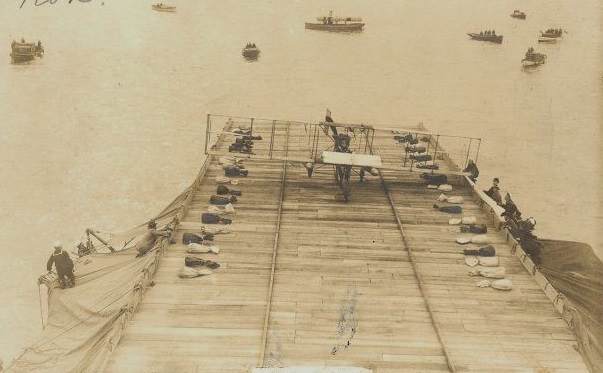
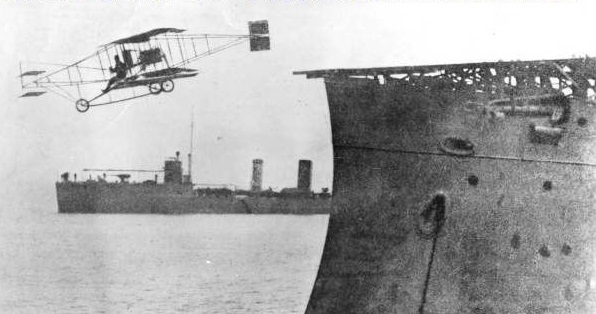
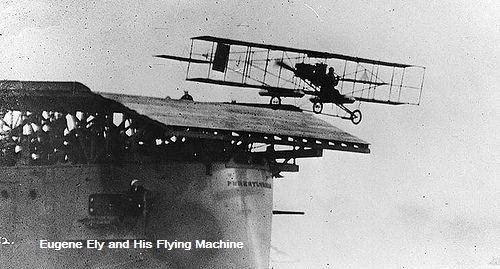
On November 14, 1910, the light cruiser USS Birmingham was readied at Norfolk, Va., with a wooden platform erected on the bow, approximately 80 feet long. Ely’s Curtiss Pusher aircraft, equipped with floats under the wings, was hoisted aboard and the ship moved off shore. Ely succeeded in making the first take-off from a ship, barely. The Curtiss rolled off the edge of the platform, settled, and briefly skipped off the water, damaging the propeller. Ely managed to stay airborne and landed 2 ½ miles away on the nearest land, called Willoughby Spit.
 All Aero