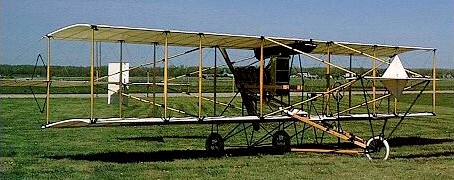
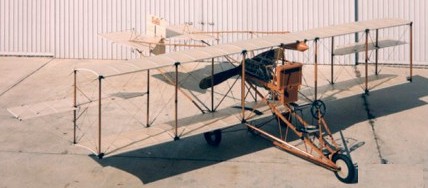
In 1910, Curtiss set up shop in San Diego and taught the first naval aviators to fly, and in that year, he introduced the Model D biplane. In 1911, Curtiss began to concentrate on the military market, selling three airplanes to the U.S. Navy. The Model D was the second military airplane purchased by the U.S. Army Signal Corps. It was known as Signal Corps Airplane No. 2. Curtiss continued the evolution of the pusher design with the development of the D-II (the Golden Flyer was considered the Model D) and the D-III, to which a second set of elevators were added to the rear in place of the fixed horizontal stabilizer formerly used on the D and D-II models. The two-seater aircraft was built in sections so it was easy to disassemble and transport. The elevons were operated by the pilot’s shoulders.
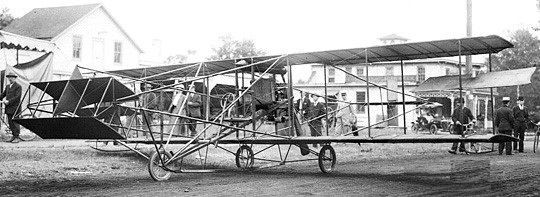
The Curtiss D-III Headless Pusher resulted from an accident incurred by exhibition pilot, Lincoln Beachey. While flying in a competition with a standard Curtiss D-III, Beachey hit a fence upon landing and destroyed the front elevator. Rather than drop out, Beachey continued to fly without the front elevator control and found that the aircraft performed better than before. Navy pilots had independently realized that stability was enhanced without the forward elevator and they removed them from their airplanes. Curtiss concurred with the results and began producing the 1912 Model D Headless Pusher as a new offering.
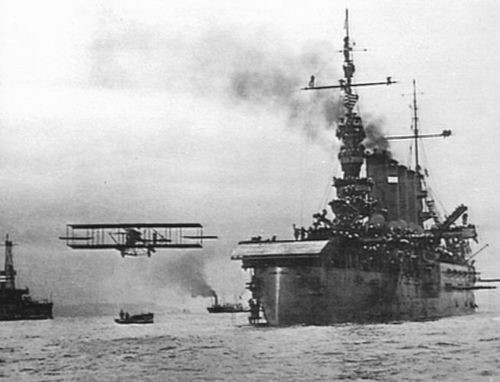
Glenn Curtiss persuaded the US Navy to fit a wooden platform over the deck of the US cruiser Birmingham, and on 14 November 1910, a Model D Curtiss plane, piloted by Eugene Ely made a successful flight from this platform in a standard Curtiss biplane at Hampton Roads, Virginia. On January 18, 1911, Ely landed on the deck of the USS Pennsylvania.
In 1909 Arthur P Warner of Beloit WI., USA, purchased and assembled Curtiss pusher components and taught himself to successfully fly his own creation at Turtle Ridge.
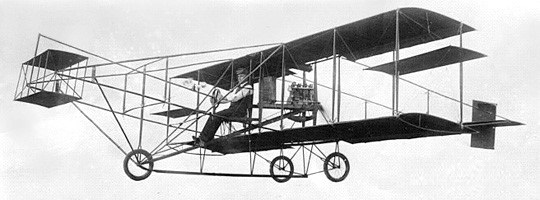
Curtiss’ first flying boat attempt was the Model D. A combination of hull shape, insufficient power and wing area prevented it from flying.
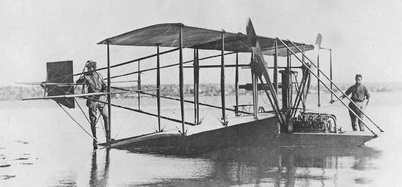
Undetered, Curtss left San Diego in the spring of 1912 to return to Hammonsport, where he commenced work on Flying Boat No.2.
Curtiss D-III Headless Pusher
Engine: Curtiss V-8, 50 hp
Wingspan: 11.6 m (38 ft 1 in)
Length: 7.8 m (25 ft 6 in)
Height: 2.7 m (9 ft)
Weight: 632 kg (1,390 lb)
Airframe: Wood
Covering: Fabric
Curtiss Model D Engine IV Pusher
Engine: Curtiss V-8, 59 hp
Length: 31.463 ft / 9.59 m
Height: 8.366 ft / 2.55 m
Wingspan: 41.142 ft / 12.54 m
Max take off weight: 1301.0 lb / 590.0 kg
Weight empty: 701.2 lb / 318.0 kg
Max. speed: 43 kt / 80 km/h
Endurance: 3 hr
Engine: 75 hp (56 kW) Curtiss O
Crew: 1+1
 All Aero