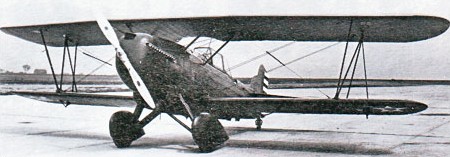
The US Army Air Service staged two competitions, in late 1924 and early 1925, to find successors to the DH 4 series of observation and light bomber aircraft.
The first Curtiss biplane to bear the name Falcon was the Liberty-powered Curtiss L-113 (Model 37). It was unsuccessful when evaluated in 1924 as the XO-1 in competition with the Douglas XO-2 but was accepted for production the following year when re-engined with a 380kW Packard 1A-1500. It was a conventional unequal-span biplane with a wing of wooden construction that incorporated sweep-back on the outer panels of the upper wing. The fuselage was built up from aluminium tubing with steel tie-rod bracing, and the tail unit included a balanced rudder; the fixed divided landing gear was of tailskid type.
The Packard engine proved a failure, and the 102 production O 1s were fitted instead with various models of the 435 hp Curtiss D 12 (V¬1150) engine.
The new biplane went into production as the O-1 (Model 37A) for observation duties with the US Army. The initial order was for 10 aircraft re-engined with a Curtiss D-12. One of these was completed later as the O-1A with a Liberty engine, and the first O-1 was converted to O-1 Special configuration as a VIP transport.
Forty-five examples of the O-1B (Model 37B) were ordered in 1927, this first major production version incorporating such refinements as wheel brakes and an underbelly auxiliary fuel tank which could be jettisoned in flight. They were followed by four O-1C aircraft, part of the O-1B order, converted to serve as VIP transports by enlargement of the rear cockpit and the addition of a baggage compartment. (The designation O-1D was not used).
In 1929 the US Army ordered 41 of the O-1E (Model 37I) with V-1150E engines developed from the original Curtiss D-12. A number of other improvements included the introduction of oleo-pneumatic shock-absorbers, Freise ailerons, and horn balanced elevators. One O-1E was modified subsequently as a VIP transport becoming redesignated O-1F (Model 37J). The XO-1G (Model 38) replacing the twin Lewis guns on a Scarff mounting that equipped the earlier models by a single gun on a post mounting. Other modifications introduced redesigned horizontal tail surfaces and a steerable tailwheel.
The XO-1G was originally an O-1E which had been modified previously to contend as a new US Army basic trainer under the designation XBT-4 (Model 46).
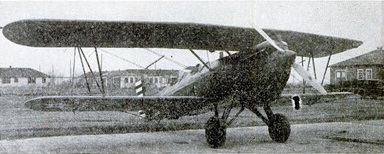
The XBT-4 of 1930 was produced at the Curtiss-Wright experimental facility in Garden City in 14 days. For its training role, the rear cockpit is higher than previous models, and the squared cowling is sloped to give good visibility. A full thickness sponge rubber pad is mounted over the instrument panel with cutouts for the dials. The seats may be raised or lowered 7.5 in, and are tilted back at 13˚ from level. All cockpit mechanism is hidden behind wooden veneer walls.
Successful tests led to construction of 30 series examples of the O-1G with improved strearnlining, slightly smaller wings, and redesigned rear cockpits, were 16 km/h (10 mph) faster than the O 1B, bringing total O-1 production for the US Army to 127.
Two O 1 conversions (to O 1A and XO 11) to a 420 hp Liberty engine, 66 Liberty engined models were produced for the US Army.
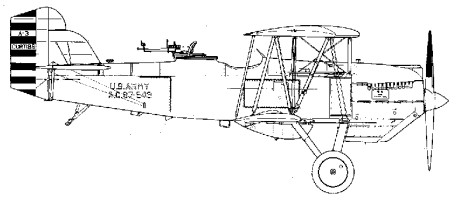
The O-1 Falcon and its variants saw a decade of service with the observation squadrons of the US Army Air Corps and ended their days with reserve National Guard units. The basic design was adapted also as the A-3 attack biplane which saw considerable use. The A 3, based on the O 1B was an attack version of the Falcon. It had two additional 0.30 in (7.62 mm) machine guns in the lower wings and could carry up to 91 kg (200 lb) of underwing bombs. The standard armament for most Falcons was four 0.30 in (7.62 mm) guns, two in the wings and a twin mount on a Scarff ring in the rear cockpit.
There were also export versions and a number of commercial Falcons.
Several experimental Falcons flew with 600 hp Curtiss V 1570 Conqueror engines. They included the XO 13 and XO 13A (two converted O 1s) for the 1927 national air races; one O 13B; three YO 13Cs, otherwise similar to the O 1E; one YO 13D (super¬charged Conqueror); one XO 16, a Con¬queror engined O 11 with Prestone (ethylene glycol) cooling; and one Y10 26, similar to the O 1E but with a GIV 1570A geared Con¬queror and modified cooling system. How¬ever, the only Conqueror powered production version, was the O 39, with Prestone cooling and a smaller rudder, but otherwise similar to the O 1G. Ten of these were built in 1932. Other one off engine testbeds included the XQ 12 (Pratt & Whitney Wasp), con¬verted from an O 11, and XO 18 (Curtiss Chieftain). Other conversions, not involving an engine change, were four O 1Bs to O 1C unarmed VIP transports; one O 1E to an unarmed O 1F; another O 1E to XBT 4 basic trainer configuration, this later becoming the prototype for the O 1G; and one O 11 to O-¬11A (incorpora~ the improvements of the O 1E).
Except for the O 1C and O 1F, standard armament on the observation Falcons was four 0.30 in (7.62 mm) machine guns: two fixed, forward firing guns in the nose and two on a Scarff ring in the rear cockpit. Between 1927 30, Curtiss also produced 154 attack versions (76 A 3s, based on the O 1B, and 78 A 3Bs, based on the O 1E). These had two additional 0.30 in (7.62 mm) guns in the lower wings and could carry up to 91 kg (200 lb) of underwing bombs. There was also, in 1928, one XA 4, equivalent to the A 3, but with a 421 hp R 1340 1 Wasp engine.
Variants
U.S. Army Air Corps
A-3
Model 44, attack aircraft version of O-1B, armed with two 0.30 in (7.62 mm) machine guns and 200 lb (91 kg) of bombs; 66 built for the USAAC.
A-3A
Six A-3s converted into trainers.
A-3B
Model 37H, attack version of O-1E, with six machine guns, including two mounted in wings; 78 built.
Curtiss XA-4 Falcon
XA-4
One A-3 with a Pratt & Whitney R-1340-1 Wasp radial piston engine. Scrapped in March 1932, but the design was the basis for the naval variants.
A-5
Proposed A-3 variant with Curtiss V-1570 Conqueror engine
A-6
Proposed A-3 variant with Curtiss H-1640 Chieftain engine
XBT-4
XBT-4
Model 46, one O-1E converted into a basic trainer for the USAAC.
XO-1
Liberty 12A powered Prototype, later modified to use a Packard 1A-1500, one built.
O-1
Model 37A, two-seat observation aircraft, the first production model, ten built. One converted into the O-1 Special VIP transport.
O-1A
Two-seat observation aircraft, powered by the Liberty piston engine, one built.
O-1B
Model 37B, first major production version, powered by Curtiss D-12D (V-1150-3) engine; 45 ordered, 25 built and 20 diverted on the production line to the A-3.
O-1C
Four O-1Bs converted into VIP transports.
O-1E
Model 37I, variant powered by 435 hp (324 kW) Curtiss D-12E (V-1150-5) piston engine; 41 built.
O-1F
Model 37J, one O-1E converted into VIP transport.
O-1G
Model 38, final O-1 variant, powered by a 712 hp (531 kW) Wright R-1820F-2 Cyclone engine; 30 built for USAAC.
XO-11
Two O-1 modified as O-11 prototypes.
O-11
O-1 airframe powered by the Liberty V-1650 piston engine; 67 built concurrently with the O-1s.
XO-12
One XO-11 prototype redesignated XO-12.
XO-13
O-1 fitted with 720 hp (540 kW) Conqueror engine for the 1927 National Air Races.
XO-13A
Second XO-13, fitted with wing skin radiators.
O-13B
One O-1C fitted with a Conqueror engine, tested as an observation aircraft, and provided to Secretary of War.
YO-13C
Three O-1Es re-engined with 600 hp (450 kW) direct-drive Conqueror engines.
YO-13D
One O-11 fitted with supercharged Conqueror engine.
XO-16
One O-11 with Prestone cooling system.
XO-18
One O-1B testbed for Curtiss H-1640 Chieftain engine.
Y1O-26
One O-1E fitted with a geared Conqueror engine.
O-39
O-1G refitted with a Conqueror engine and cockpit canopy; ten built.
U.S. Navy and Marine Corps
Marine Corps Curtiss OC-2 Falcon, c. 1929
The XF8C-2 prototype
The XF8C-4 prototype
A-3 Helldiver
Registry name of XF8C-8, not adopted by USN.
A-4 Helldiver
Civil version of XF8C-8 for use by Assistant Secretary of Navy David Ingalls. Later redesignated XF8C-7.
XF8C-1
Model 37C variant developed from XO-12; two built for the U.S. Navy.
F8C-1 Falcon
Model 37C powered by the 420 hp (310 kW) Pratt & Whitney R-1340 Wasp radial piston engine; four built in 1928 for the U.S. Marine Corps as light bombers, fighters and observation aircraft, later redesignated OC-1.
XF8C-2
Model 49, one prototype for F8C Helldiver. Original crashed on first factory flight and was replaced by Curtiss with a second bearing identical sn.
F8C-3 Falcon
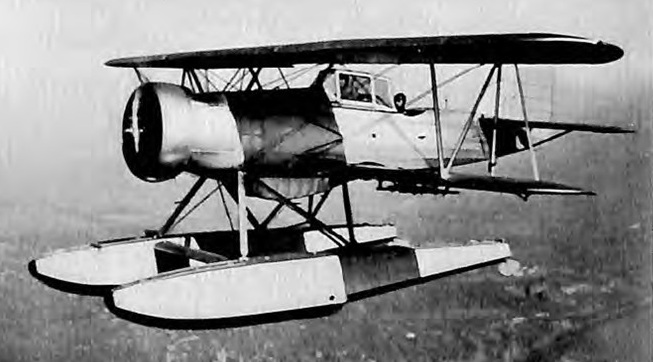
Second production batch of Navy Falcons; 21 built for USN/USMC in 1928, later redesignated OC-2.
XF8C-4
Second Helldiver prototype, modified tail skid assembly.
F8C-4 Helldiver
Model 49B, production dive-bomber variant for the USN/USMC; 25 built, later designated O2C.
F8C-5 Helldiver
Model 49B with ring cowling; 63 built in 1930–31, later designated O2C-1.
XF8C-6
Two F8C-5s modified with superchargers, slats, and wing flaps; one later modified as O2C-2.
XF8C-7
Redesignation of A-4 Helldiver, later redesignated XO2C-2.
XF8C-8
Two prototypes built with canopy-enclosed front cockpit, later redesignated O2C-2.
O2C-1 Helldiver
Redesignation of 63 F8C-5; 30 production O2C-1s in 1931.
O2C-2 Helldiver
Redesignation of XF8C-8s and one XF8C-6.
XOC-3
One XF8C-1 prototype fitted with a Chieftain engine.
XF10C-1
O2C-2 re-engined with a R-1510 engine, also temporary designated XS3C-1.
Civil and export
Civil Falcon
20 civil versions: Conqueror Mail plane; D-12 Mailplane; Lindbergh Special, sold to Charles Lindbergh; Liberty Mailplane, 14 single-seat mailplanes, powered by a Liberty piston engines, sold to National Air Transport.
Export Falcon
also South American D-12 Falcon. One seaplane version of the O-1B was sold to Colombia, followed by an order for 15 more. Another 10 Model 35Fs were sold to Peru.
Colombia Cyclone Falcon
Model 37F fitted with the 712 hp (531 kW) Wright Cyclone radial piston engine. 100 built for Colombia.
Chilean Falcon
O-1E design built under license in Chile, 10 later sold to Brazil. One example ended up in Paraguay as passage fee for the remaining aircraft. It operated mostly as a VIP transport, but made at last one reconnaissance flight over the Chaco war fields armed with two 7.7 mm (0.303 in) machine-guns from a Potez.
Bolivia Cyclone Falcon
Similar to Colombian Falcon, it was fitted with the 712 hp (531 kW) Wright SR-1820F-2 Cyclone radial piston engine. A total of nine were built for Bolivia in some odd variants from the Colombian ones. Bolivian Cyclone Falcons mounted one frontal .30 MG and most also one rear .30 MG instead of the two wing-mounted ones. Two had semi-cockpit canopies over pilots cockpit; two had windscreens instead of canopy in both cockpits, these two had no ring mount for rear machine gun.
Specifications
Curtiss O 1B
Span: 11.58 m (38 ft)
Length: 8.64 m (28 ft 4 in)
Gross weight: 1989 kg (4385 lb)
Maximum speed: 218 km/h (135.4 mph)
Curtiss O-1E
Engine: 1 x 324kW Curtiss V-1150E inline piston engine
Take-off weight: 1972 kg / 4348 lb
Loaded weight: 1325 kg / 2921 lb
Wingspan: 11.58 m / 37 ft 12 in
Length: 8.28 m / 27 ft 2 in
Height: 3.20 m / 10 ft 6 in
Wing area: 32.79 sq.m / 352.95 sq ft
Max. Speed: 227 km/h / 141 mph
Ceiling: 4665 m / 15300 ft
Range: 1014 km / 630 miles
Armament: 1 x 7.62mm machine-gun
Curtiss A 3B
Span: 11.58 m (38 ft)
Length: 8.28 m (27 ft 2 in)
Gross weight: 2030 kg (4475 lb)
Maximum speed: 224 km/h (139 mph)
 All Aero