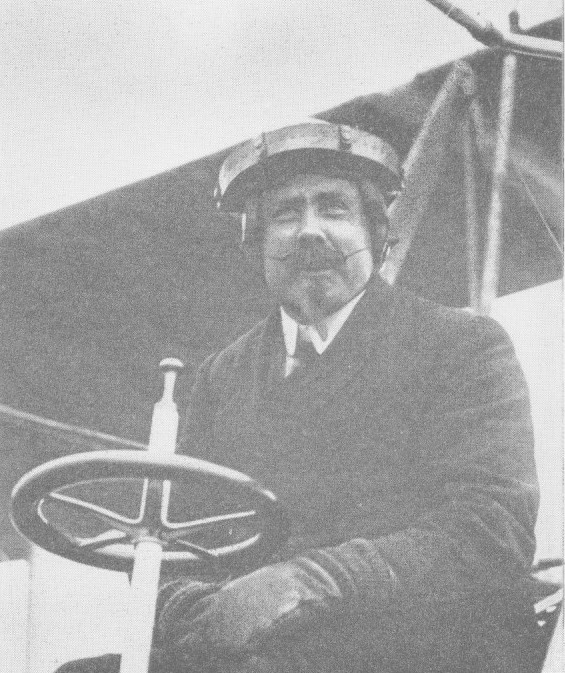
A native of Texas, USA, Samual Franklin Cody had been a buffalo hunter and cowboy in America. Because of this, he was often mistaken for “Buffalo Bill” Cody, who was Colonel W.F.Cody of the US Cavalry.
S.F.Cody adopted the title of Colonel when King George V, falling into the mistake, called him Colonel in a telegram of congratulation. The airman said, “As His Majestry has referred to me as ‘Colonel’ Cody, so in future ‘Colonel’ Cody it has to be.”
It was about 1900 when Cody began to improve on earlier man-lifting kites, and even before the Wright brothers had made their flights, he had flown his kites for the Royal Navy. In 1904, he was engaged by the War Office to make kites for the Army. It was hoped that kites could be used in war for watching the movements of the enemy.
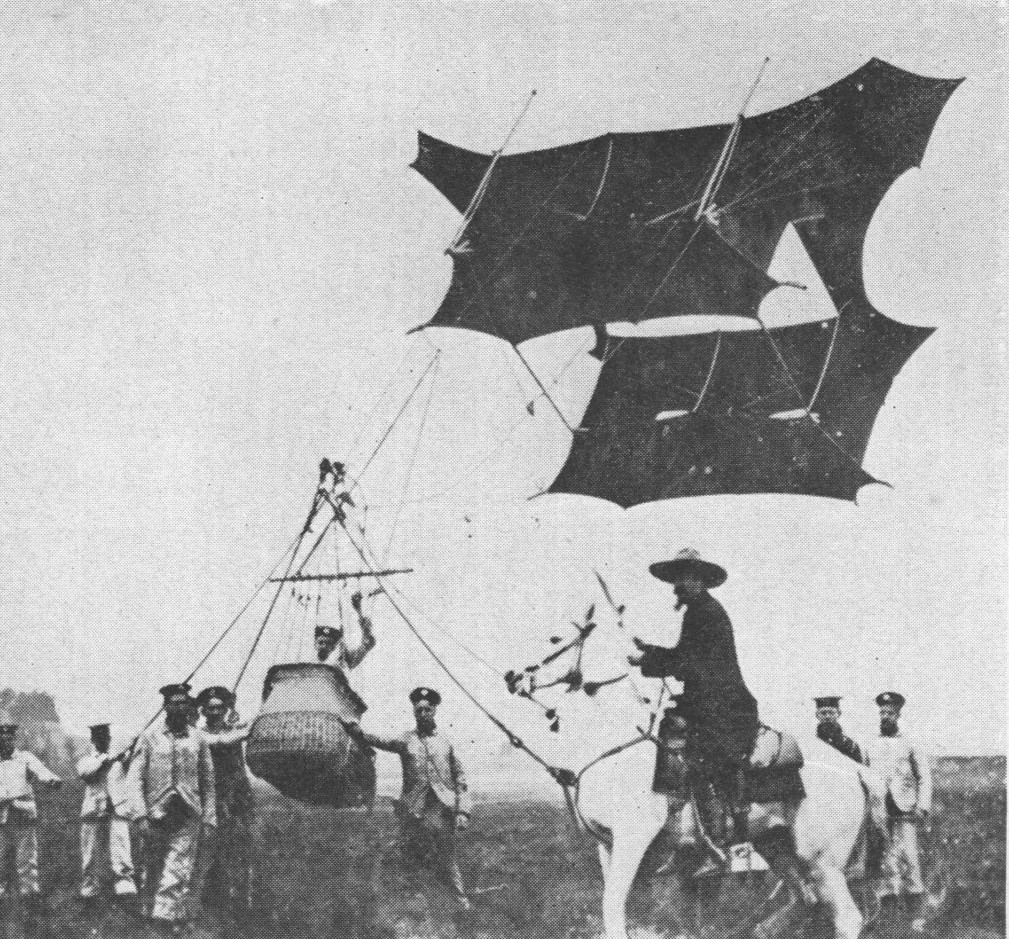
By 1906 Cody’s kites were regularly used to carry men of the Royal Engineers up to 2,000 ft. One kite remained at a height of 2,600 ft for more than an hour, and another reached 3,000 ft, which was a world record.
In 1907 Cody rebuilt one of his kites and fitted it with a petrol engine to drive a propeller. This machine, with no one on board, was set off on Farnborough Common in Hampshire and remained off the ground for four and a half minutes.
In the spring of 1908, Cody finished building British Army Aeroplane No.1. He fastened this aircraft to a tree with a spring balance, so that he could measure the power of the engine. The tree can still be seen today on Farnborough Common. It is known as :Cody’s Tree.” A tablet below it says, “nearby he made…..his flight of 1,390 feet on 16th October, 1908…..the first powered and sustained flight in Great Britain.”
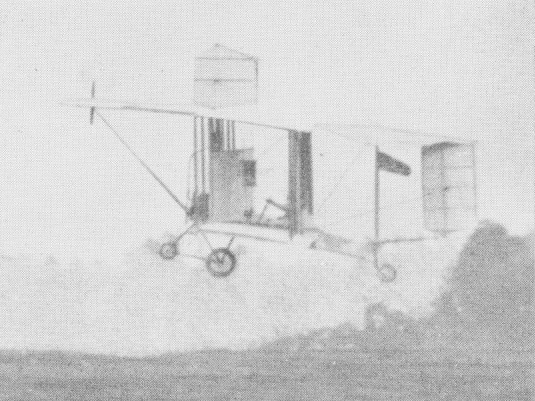
This flight ended in a crash, but next year, Cody made successful flights in a new biplane. By the end of 1908, he could only stay in the air for twenty-even seconds, whereas the Wright brothers had by then achieved two hours, twenty minutes.
At Doncaster in 1909, Cody completed his naturalisation as a British subject and announced his intention of trying for the Daily Mail £1000 prize offered for the first British pilot to fly a mile in an all-British aircraft.
The cross English Channel prize was given by the Daily Mail. It had been offered in October 1906, together with a prize of £10,000 for the first flight from London to Manchester, a distance of 183 miles.
Cody set out in an attempt to win the London-Manchester prize on 8 October 1909. After four miles he had engine trouble which caused him to give up the attempt.
When the channel had been crossed attention turned to the London-Manchester prize. Interested was Colonel Cody.
In September 1909, Cody became the first man in England to make a flight lasting more than an hour. He was in the air for 66 minutes, flying over Aldershot, Farnborough, Fleet and the surrounding countryside at a height of about 700 feet.
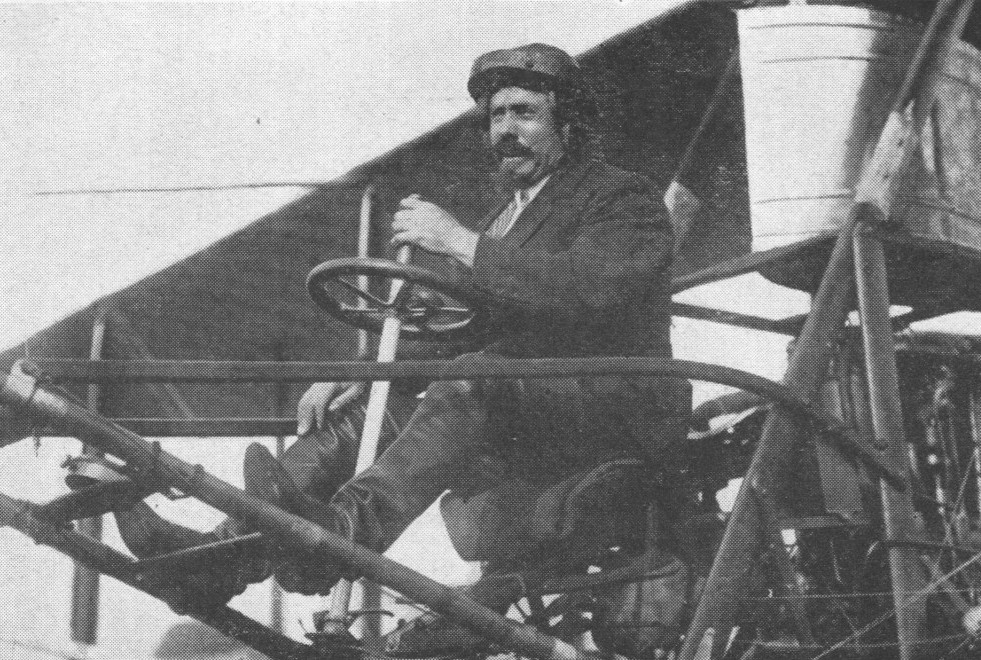
 All Aero